1-minute walk from the station, excellent access to nearby transportation such as Olympic-daero (Amsa IC)... "Will become a Seoul landmark linked with prehistoric sites, Amsa History Park, Amsa Green Road, and the Han River"

Gangdong-gu (Mayor Lee Soo-hee) announced on the 20th that it will create the "Gangdong Hanok Village," a place where history, tradition, and nature harmonize, in the Amsa-dong area.
In September, Seoul City conducted a "Hanok Village Autonomous District Contest" as part of the "Seoul Hanok 4.0 Re-creation Promotion Plan." After document review and on-site inspections, the area around 248-1 Amsa-dong was finally selected.
The area around 248-1 Amsa-dong is the second largest among the six Hanok village sites announced by the city this time (70,244㎡). Unlike most Hanok villages in Seoul, which are located in the Gangbuk area (Bukchon, Namsangol, Eunpyeong, etc.), the Amsa-dong Hanok Village is the only one in the Gangnam area.
1-minute walk from Line 8 Amsa History Park Station, adjacent to Olympic-daero (Amsa IC)... Excellent transportation accessibility
First, the Amsa-dong Hanok Village has excellent transportation accessibility. The subway Line 8 Amsa History Park Station, scheduled to open in June next year, is just a 1-minute walk away. This allows residents from not only Seoul but also Guri, Namyangju, Hanam, and Seongnam in Gyeonggi Province to easily visit by subway.
Additionally, it is easy to access by car. The nearby Olympic-daero (Amsa IC) is 5 minutes away, and the Sejong-Pocheon Expressway (tentatively named Gangdong Godeok IC) is 8 minutes away, making it expected to be easy to enter and exit by car from suburban areas of Seoul.
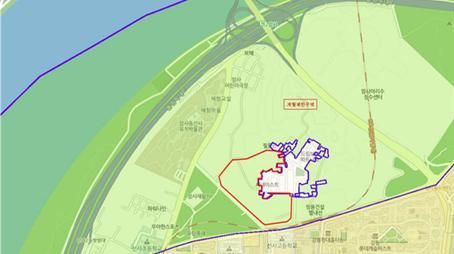
Will become a representative Seoul attraction linked with prehistoric sites, Amsa History Park, and Amsa Green Path (Han River)
First, near the Amsa-dong Hanok Village is the "Amsa-dong Prehistoric Site," where you can explore the lifestyle of the prehistoric era from 6,000 years ago. You can see restored pit houses within the site and visit a museum that showcases the lifestyle of the Neolithic period. Above all, prehistoric experience programs such as pottery and pit house making for children are regularly operated.
Also, adjacent to the Amsa-dong Hanok Village, Amsa History Park (111,198㎡) is being developed with a target completion in 2026. The park will include a forest playground for toddlers, forest experience areas, picnic spots, and a lawn yard. Furthermore, the Amsa Green Path, which connects the Amsa-dong prehistoric site and the Han River waterfront green space separated by Olympic-daero, is scheduled to be completed by the end of 2024. Once the Amsa Green Path is established, it is expected that visitors will be able to walk from the Hanok Village to the Han River.
Lee Soo-hee, Mayor of Gangdong-gu, said, "The area around 248-1 Amsa-dong is a region where history and tradition live, adjacent to Amsa History Park and prehistoric sites." He added, "With the opening of Line 8 Amsa History Park Station in 2024 and excellent urban accessibility via Olympic-daero (Amsa IC), we will do our best to develop it into a representative Hanok Village of Seoul."
The district has implemented restrictions on development permits to prevent real estate speculation and indiscriminate development activities in the target area. After public inspection, hearing residents' opinions, and review by the Gangdong-gu Urban Planning Committee, the restriction on development permits and topographic maps were officially announced on October 12.
In the future, Seoul City plans to carry out services necessary for establishing basic and management plans for the sites selected in the Hanok Village autonomous district contest. Accordingly, the district plans to actively consult with Seoul City to ensure that residents' opinions and site conditions are comprehensively reviewed and reflected during administrative procedures.
© The Asia Business Daily(www.asiae.co.kr). All rights reserved.


















