Focus on In-House AI Semiconductor Development
"Not Currently Under Development"
Sam Altman, CEO of OpenAI, hinted at the possibility of developing AI-specific semiconductors independently.
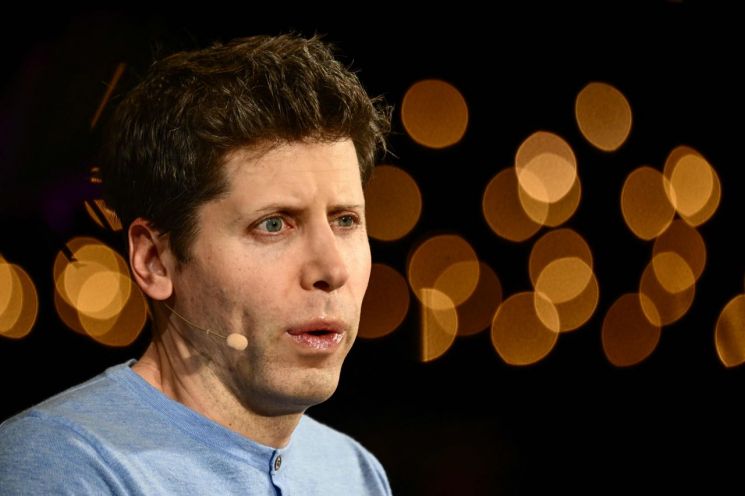
On the 18th (local time), Altman, who participated in the Tech Live event hosted by The Wall Street Journal (WSJ), said that OpenAI would "never rule out" developing its own AI chips to address the global shortage of AI chip supply.
He stated, "We are not currently developing our own chips," but added, "To achieve the ultimate ambition of developing general-purpose AI, we may need to develop chips in the future."
He continued, "OpenAI is working to scale and commercialize large language models (LLMs) like GPT-4," and noted, "Customized hardware may not be necessary for this."
He also emphasized, "We are currently partnering with very excellent people," and said, "While the basic policy is clearly not to develop our own AI chips, we will never completely rule it out."
Altman observed that although Nvidia dominates more than 80% of the global AI chip market, the increasing demand could soon ease supply shortages and bring about competitors that lower prices.
He said, "Nvidia definitely has something amazing," but added, "However, I believe the magic of capitalism is working. Many other companies are trying, and we will see how it turns out."
Meanwhile, Nvidia's latest AI chip, the H100, is essential for training and running LLMs like GPT-4, but supply is significantly short compared to demand.
Accordingly, Microsoft (MS), Google, and others are also reportedly developing their own AI chips, and earlier this month, foreign media cited sources reporting that OpenAI is also considering developing its own AI semiconductors.
However, it has not yet been decided whether to start independent AI chip development, and various options are being discussed to resolve the shortage of expensive AI chips.
© The Asia Business Daily(www.asiae.co.kr). All rights reserved.
![Clutching a Stolen Dior Bag, Saying "I Hate Being Poor but Real"... The Grotesque Con of a "Human Knockoff" [Slate]](https://cwcontent.asiae.co.kr/asiaresize/183/2026021902243444107_1771435474.jpg)











