Aimed, Developer of 'No.1 DTx'
Plans to Prescribe as Non-Reimbursable First
Welt Continues Concerns Amid 'Reimbursement Weight'
Balancing Market Expansion and Product Trust
The first domestic digital therapeutic device (DTx) prescription is about to begin. At the same time, as the DTx industry deepens its concerns about models for successful market entry, various efforts are underway to enhance patient accessibility.
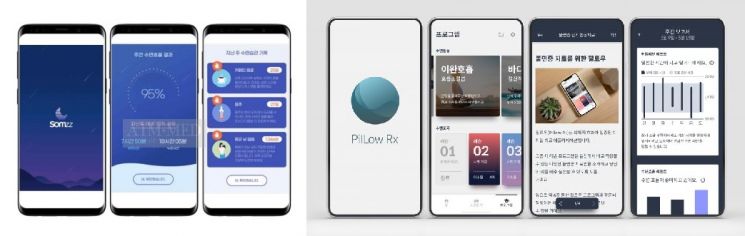 Aimed's 'Somz' (left) and Welt's 'Welt-i,' domestic digital therapeutics (DTx) devices approved for insomnia treatment [Photo by each company]
According to the related industry on the 19th, the first prescription of Somzz, the 'first domestic DTx' for insomnia, is expected to actually take place as early as next month. The developer, AimMed, recently received approval for the implementation of innovative medical technology for Somzz and has begun preparations for prescribing Somzz at six hospitals, including Seoul National University Hospital, Severance Hospital, and Samsung Seoul Hospital. Once all procedures such as Institutional Review Board (IRB) review and insurance assessment are completed, the first prescription is expected to start as early as the end of next month.
Regarding the much-anticipated issue of health insurance coverage, AimMed has chosen the 'non-reimbursed' path. The Health Insurance Review and Assessment Service has granted companies the option of non-reimbursement or 10% selective reimbursement for temporary registration of DTx. AimMed CEO Jinwhan Im explained, "While there are advantages to reimbursement, I believe non-reimbursement has more benefits," adding, "We plan to start with the non-reimbursed track." Considering the unique characteristics of the medical market, where not only patients but also medical institutions and healthcare professionals prescribing DTx are important consumers, the plan appears to focus first on doctors with prescribing authority to expand the market.
On the other hand, Welt, which developed another Ministry of Food and Drug Safety (MFDS)-approved insomnia DTx called 'WELT-i,' is still deliberating. Since the company has emphasized gaining credibility through institutional entry, it is known to be weighing reimbursement heavily but has not yet finalized its strategy. Welt CEO Sungji Kang stated, "We are focusing on reimbursement," but added, "We are continuing various reviews regarding a payment system suitable for DTx as a Software as a Medical Device (SaMD)."

The importance of reimbursement or non-reimbursement lies in the issue of patient accessibility through pricing. Cognitive Behavioral Therapy (CBT) for insomnia, which can be considered a model for insomnia DTx, costs about 40,000 to 50,000 KRW per session under reimbursement standards. For a six-week cycle, which is one treatment period for insomnia DTx, the cost amounts to approximately 300,000 KRW. The final price needs to be lower than this to provide cost benefits to patients, but if the price is set too low, it could reduce patients' trust in the product, which is a concern within the industry. Additionally, if reimbursement prices are set too low, there are worries that the economic incentives for healthcare providers prescribing DTx will diminish.
Jaeyong Shin, professor of preventive medicine at Yonsei University College of Medicine and CEO of Evertry, explained, "For companies, market entry itself is important, so non-reimbursement might be advantageous," adding, "However, authorities need to consider encouraging entry into the reimbursement system by providing mid- to long-term incentives for DTx that choose reimbursement."
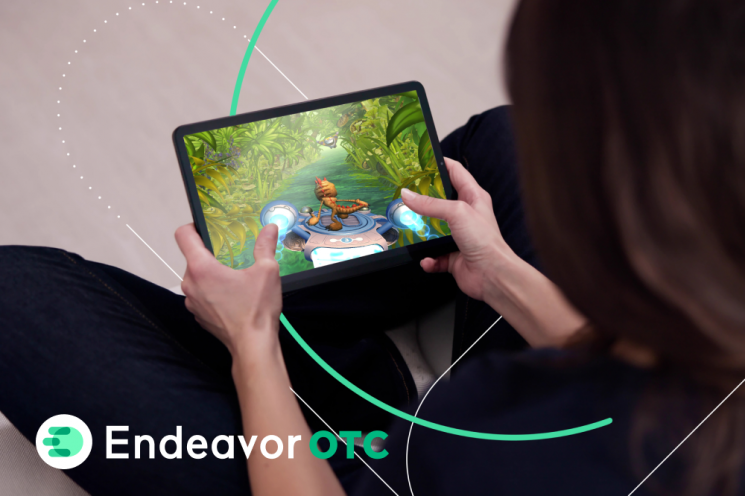
Meanwhile, some analysts suggest that models such as over-the-counter (OTC) drugs or wellness products, which can be purchased at pharmacies without prescriptions, should be pursued alongside prescriptions to successfully expand the market. In the United States, where DTx faces difficulties entering the insurance market, there have been turnaround cases through this approach. Akili Interactive, a U.S. company that developed 'EndeavorRx,' a DTx approved by the U.S. Food and Drug Administration (FDA) for treating attention deficit hyperactivity disorder (ADHD), recently launched 'EndeavorOTC.' As the name change from 'Rx' (prescription) to 'OTC' indicates, this version does not require a prescription.
The results were remarkable. By reaching patients directly without intermediaries such as insurance or doctors, the product achieved sales of $340,000 (approximately 460 million KRW) within three months of launch. Considering that cumulative sales of EndeavorRx since FDA approval in 2020 were $760,000 (about 1.03 billion KRW) and Akili's total sales last year were $320,000 (about 434 million KRW), this is a significant achievement. Akili also cites the ability to bypass intermediaries and reach patients directly as its greatest strength, enhancing patient accessibility by allowing direct downloads from app stores and improving profitability.
Domestic DTx developers are also working on various OTC and wellness models. AimMed is developing an OTC model for post-prescription management of Somzz and preparing a wellness model utilizing Samsung Electronics' Galaxy Watch. Recently, AimMed signed a memorandum of understanding (MOU) with Samsung Electronics to obtain user consent and develop a preventive tool that helps smooth sleep by using Somzz's sleep prediction model with data collected from the Galaxy Watch, such as sleep and exercise. Welt is also reportedly developing additional OTC and wellness models using WELT-i.
© The Asia Business Daily(www.asiae.co.kr). All rights reserved.














