Lithium Plummets 70% This Year
Nickel and Cobalt Drop 40% Each
Caused by China's Demand Slowdown and Raw Material Oversupply
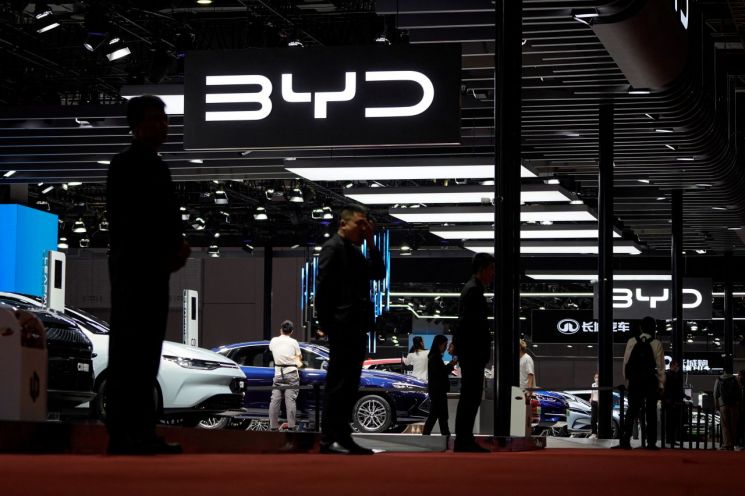
Prices of key battery minerals such as lithium, cobalt, and nickel are plummeting due to a slowdown in demand for electric vehicles (EVs) in China. The oversupply of raw materials, which arose from expectations of EV market expansion, is also cited as a cause of the price decline.
According to Benchmark Mineral Intelligence, a global commodity market research firm, on the 17th (local time), lithium prices have crashed more than 70% this year, falling from $80,000 per ton at the end of 2022 to the current $23,000 per ton.
Lithium, known as "white petroleum" as a key battery material, was traded at around $25,000 per ton in mid-2021. Since then, buoyed by expanding EV demand, its price has more than tripled in just over a year. Nickel prices have dropped from $30,000 per ton at the end of last year to $18,000 currently, and cobalt prices have fallen from $52,000 per ton during the same period to about $33,000, slightly above the all-time low. Each has decreased by approximately 40%.
 Decline in Lithium Prices Due to Slowing Demand for Electric Vehicles in China (*Unit: USD per ton, Source: Benchmark Mineral Intelligence)
The slowdown in growth of the Chinese EV market, the world's largest EV market, has led to a decline in raw material prices. From January to September this year, EV sales in China increased by 25% compared to the previous year, significantly lower than last year's growth rate of 100%. Not only China but also the global EV growth rate is slowing down. Accordingly, General Motors (GM) announced on the same day that it has postponed the start of operations at its electric truck production plant in Detroit, Michigan, by one year to the end of 2025, later than originally planned. Earlier, Ford also announced that it would delay its goal of producing more than 600,000 EVs annually from the end of this year to the second half of next year.
While demand has decreased, supply is showing signs of oversupply. In the case of cobalt, supply is expected to be twice the market demand over the next 3 to 4 years. Benjamin Hope, Global Head of Commodity Research at Soci?t? G?n?rale, a French investment bank, said, "This is not a sign of pessimism but rather a correction of the irrational overheating seen in the market during 2021-2022."
The accelerated decline in battery raw material prices this year is likely to lead to a reduction in EV prices with some time lag. Batteries account for between one-fifth and one-third of the total EV price. The sharp drop in raw material prices is also expected to stimulate mergers and acquisitions (M&A) activities among companies seeking to acquire mines or mineral extraction rights.
Experts predict that battery raw material prices will surge again once EV demand in China begins to rise. Jim Lennon, Senior Commodity Consultant at Macquarie Investment Bank, forecasted, "When the EV discount war in China ends and demand starts to increase, manufacturers will begin purchasing raw materials to ramp up production and replenish inventory, causing prices to soar like a spring." Sarah Marisiel, Chief Strategy Officer (CSO) of Livent, the world's largest lithium company, said, "Prices of EV battery raw materials will remain highly volatile and are expected to naturally cycle between booms and busts."
© The Asia Business Daily(www.asiae.co.kr). All rights reserved.
![Clutching a Stolen Dior Bag, Saying "I Hate Being Poor but Real"... The Grotesque Con of a "Human Knockoff" [Slate]](https://cwcontent.asiae.co.kr/asiaresize/183/2026021902243444107_1771435474.jpg)

















