Economist: "Virtual Influencers Popular in Korea"
Estimated Annual Income of 2.5 Billion KRW for Rozy, Also Engaged in Expo Promotion
Virtual Idols Also Popular, Public Institutions Produce Their Own
"Virtual influencers are heating up Koreans' Instagram."
 Korea Tourism Organization independently produced and appointed Yeoriji as an honorary ambassador (Photo by Korea Tourism Organization)
Recently, the British economic media outlet The Economist reported that virtual influencers are gaining popularity in Korea. It cited 'Rozy' as a representative example. Rozy is a virtual human created by Locus X in 2021. At 22 years old, she is actively engaged as a singer, model, and brand ambassador. She also serves as a promotional ambassador for the 2030 Busan World Expo, working hard to support the expo bid. The Economist estimated that Rozy's annual income is about 2.5 billion KRW. The 2021 Shinhan Life YouTube advertisement featuring Rozy recorded over 10 million views.
The reason for Rozy's high popularity is the great effort made to give her a human-like feel. Her appearance was created by combining facial features preferred by the MZ generation. She has an East Asian mask with a height of 171 cm and a Western body type. Locus X utilized AI technologies such as machine learning to enable about 800 different facial expressions. Rozy can also respond to fans' questions through SNS (social networking services). Rozy's Instagram followers number 160,000.
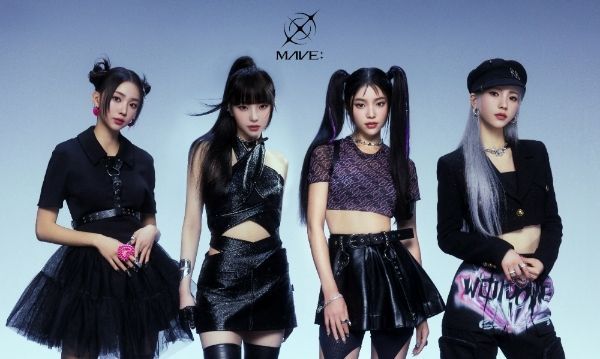
Since Rozy's debut, more than 150 virtual humans have been created domestically. They stand out especially in K-pop. The four-member virtual idol group 'Mave,' jointly created by Kakao Entertainment and Netmarble, has gained global popularity with music video views surpassing 25 million and streaming exceeding 41 million. Another virtual idol, 'Playve,' surpassed 200,000 album sales in its first week in August. SM Entertainment also plans to introduce virtual idols soon. Public institutions are actively utilizing virtual humans as well. The Korea Tourism Organization appointed 'Yeoriji,' a virtual human it produced, as an honorary promotional ambassador. Virtual humans have taken over the model roles previously held by famous stars such as Son Heung-min and EXO to promote Korea.

According to data from the global market platform MarketsandMarkets, the virtual influencer market is expected to grow more than sixfold from 2.4 trillion KRW in 2020 to 14 trillion KRW in 2025. The influencer market for 'real people' is predicted to grow from 7.6 trillion KRW to 13 trillion KRW during the same period. This means the market size will be reversed. The reason companies are entering the virtual human market is that once the initial investment cost is paid, they can be utilized in various ways regardless of time and place. The controllability is also attractive. Professor Kim Sang-gyun of Kangwon National University said, "Virtual humans do not complain to the company," adding, "There is no worry about reputation damage (due to privacy issues, etc.)."
© The Asia Business Daily(www.asiae.co.kr). All rights reserved.



















