Japan and China Overseas Investment Rate Only 7%
Attempts to Shift Bases to Southeast Asia and North America
Criticism of Inefficiency in Dispersing Production Bases
Low Overseas Investment Returns in North America and Southeast Asia
As tensions between the US and China intensify, Japan, a manufacturing powerhouse, is dispersing production facilities that were concentrated in China to North America and Southeast Asia. While the goal is to mitigate risks arising from geopolitical conflicts, there are concerns that this could lead to decreased efficiency in overseas investments by Japanese companies.
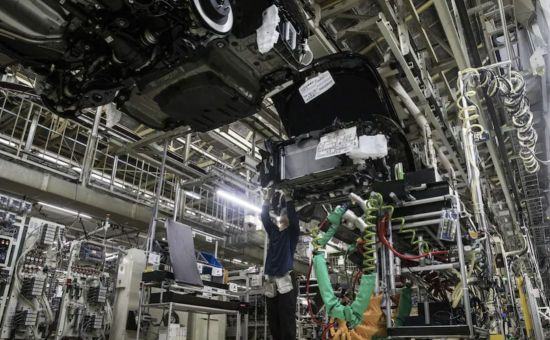
According to the Nihon Keizai Shimbun on the 16th, Japanese electronics manufacturer Kyocera recently decided to invest 100 billion yen to establish a production facility in Thailand that will manufacture capacitors for smartphones and electric vehicles. Kyocera plans to develop Thailand as a major production hub so that 10% of its products are produced there.
Electronics manufacturer Murata Manufacturing has also built a new capacitor production plant in northern Thailand. Product shipments from the Thai factory will begin next month. Japanese manufacturing company Meiko, which produces electronic circuit boards, has started establishing production facilities in Vietnam with the goal of operating the factory by 2025.
There is also a growing trend of relocating production facilities to North America. According to Nihon Keizai, Japanese manufacturers' investments in North America increased by 28.7% compared to the previous year.
On the other hand, the proportion of China in total overseas investment has decreased. In the first quarter of this year, the country-specific investment shares were 36.2% for North America, 10% for the five major ASEAN countries (Thailand, Indonesia, Vietnam, Malaysia, and the Philippines), but only 7% for China. In 2017, China accounted for 15% of Japan's overseas investment.
The shift away from China by Japanese manufacturers is analyzed as an attempt to escape supply chain risks caused by geopolitical crises. As the US-China hegemonic conflict expands into the realm of economic security, the Joe Biden administration has sought to exclude China from the global supply chains of batteries and semiconductors. Meiko’s president, Yuichiro Naya, stated, "There is a growing demand from customers to manufacture products in countries other than China."
The disruption in production caused by China’s zero-COVID policy during the pandemic also prompted companies to move away from China. At that time, Daikin Industries, a major Japanese air conditioning and chemical products manufacturer, faced significant difficulties in production due to parts supply interruptions caused by prolonged lockdowns in major cities under the zero-COVID policy. Based on this experience, manufacturers are reducing their dependence on China and diversifying their supply chains.
However, experts point out that relocating production bases from China to other countries could actually increase management inefficiencies. This is because the return on investment that Japanese companies achieve through direct investment in China is significantly higher compared to other countries. According to the Japan External Trade Organization, the return on direct investment by Japanese companies in China was 15.1% in 2021, more than double the average overseas return of 6.95%. Even when compared by country, investing in China yields more profit than in Thailand (10.4%) or the United States (4.2%).
Kazuo Ueda, Governor of the Bank of Japan, also pointed out at the Jackson Hole meeting in the US last August, "An analysis of corporate investment behavior influenced by geopolitical factors and national industrial policies shows that such investments affect the supply and demand of Japanese companies, making economic forecasts uncertain."
© The Asia Business Daily(www.asiae.co.kr). All rights reserved.

















