Revealing Content of Deputy Secretary-General's Meeting at National Audit
Also Disclosing Proposal of Member States to World Heritage Committee
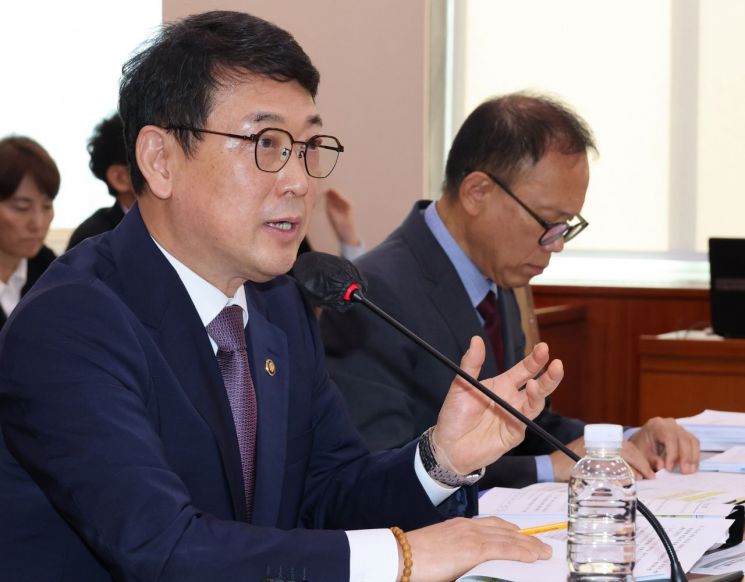
Choi Eung-cheon, the Commissioner of the Cultural Heritage Administration, revealed that he protested against issues related to Japan's Hashima (Gunkanjima) coal mine and Sado mine at the UNESCO World Heritage Committee held in Saudi Arabia last month. During the National Assembly's Culture, Sports and Tourism Committee's audit on the 12th, in response to a question from Kim Yoon-duk, a member of the Democratic Party of Korea, asking whether a strong response was necessary, he said, "I met with Ernesto Ottone Ramirez, UNESCO Assistant Director-General for Culture, and once again conveyed a strong opposition."
Japan has promoted the registration of the 'Meiji Industrial Revolution Heritage,' which includes the Hashima coal mine, as a World Heritage site, reflecting forced labor of Koreans in the delegation's statements and annotations. At that time, the delegation stated, "In some facilities during the 1940s, many Koreans and other nationals were mobilized against their will and subjected to harsh labor conditions," and "We will take measures to ensure understanding of the implementation of Japan's conscription policy during World War II." They further expressed confidence, saying, "We are prepared to include victim memorial measures such as the establishment of an information center in the interpretation strategy."
However, the promises have not been kept. Far from memorializing the victims, the Industrial Heritage Information Center, opened in June 2020, was filled with testimonies and materials denying the facts of forced labor. In the implementation plan reports (SOC) submitted to the World Heritage Center by Japan's Cabinet Secretariat, local governments, and individual heritage element owners, there is no mention of forced labor.
Commissioner Choi also disclosed that during his meeting with Assistant Director-General Ramirez, he was offered a proposal to be elected as a member country of the World Heritage Committee. "I received a response that they would actively support us," he said. Regarding the concerns expressed by the World Heritage Committee about the large-scale high-rise apartments built in front of Jangneung (章陵) in Gimpo, he pledged to work on preventing recurrence. Calling it a "painful mistake and error," he said, "I will propose and pass the 'World Heritage Impact Assessment Act' to ensure that such incidents never happen again."
© The Asia Business Daily(www.asiae.co.kr). All rights reserved.

















