The US Consumer Price Index (CPI) inflation rate for September slightly exceeded market expectations due to rising housing costs and strong gasoline prices. However, the core inflation rate, which the Federal Reserve (Fed) closely monitors, continued to slow down. The market still largely expects the Federal Open Market Committee (FOMC) to keep interest rates unchanged at its November meeting.
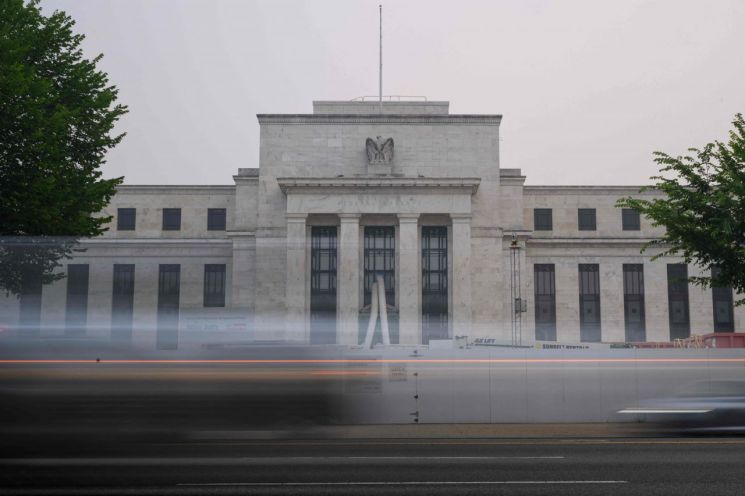
CPI Slightly Exceeds Expectations... Core Inflation Continues to Slow
According to the US Department of Labor on the 12th (local time), the September CPI rose 3.7% year-over-year. This is the same increase as the previous month but slightly exceeds Wall Street experts' forecast of 3.6%. The CPI increased 0.4% month-over-month, surpassing Wall Street expectations, though it slowed compared to the previous month's 0.6% rise.
The core CPI, which excludes the volatile energy and food sectors, rose 4.1% year-over-year and 0.3% month-over-month. This matched market expectations and continued the slowing trend. The core CPI, which surpassed 6% last year in June, is one of the key indicators the Fed watches when deciding monetary policy direction as it reflects the underlying inflation trend.
Specifically, housing costs including rent and strong gasoline prices were prominent. Housing costs rose 7.2% year-over-year and 0.6% month-over-month. The Department of Labor noted that "housing costs account for half of the CPI increase." Energy prices also rose due to the increase in oil prices. Gasoline prices rose 2.1% and fuel oil prices increased 8.5% over the month, pushing overall energy prices up by 1.5%. Food prices increased 3.7% year-over-year and 0.2% month-over-month. Service prices excluding energy services rose 5.7% year-over-year and 0.6% month-over-month. Among major CPI components, items showing a decline included clothing and medical supplies.
With the September CPI matching expectations, the market showed little reaction. Dan Suzuki of Richard Bernstein Advisors described the CPI report as "one that will be forgotten immediately," noting it was almost exactly as expected. He added, "The Fed reacts to inflation, and inflation reacts to growth, which must always be kept in mind." Ian Lingen of BMO Capital Markets called it a "Goldilocks report." As of the morning, the New York Stock Exchange was fluctuating with little change from the previous day. Treasury yields rose slightly but did not experience the sharp increase seen last week.
FedWatch Shows Over 90% Probability of November Rate Hold
Expectations that the Fed will hold rates steady in November continue. According to the Chicago Mercantile Exchange (CME) FedWatch tool, as of this morning, federal funds futures reflect over a 90% probability that the Fed will keep rates unchanged in November. The probability of a hold at the final FOMC meeting in December stands at around 61%. Andrew Hunter of Capital Economics stated, "There is nothing that would persuade the Fed to raise rates at the next FOMC."
On the same day, the US reported 209,000 new unemployment claims for the week of October 1-7, an increase of 2,000 from the previous week, in line with Wall Street expectations.
The minutes from the September FOMC meeting, released the previous afternoon, revealed a split among members regarding further rate hikes. While the majority of participants judged that one more increase in the federal funds rate target would be appropriate at future meetings, some believed no further hikes were necessary. At the last FOMC meeting, the Fed held rates steady at 5.25-5.5% as expected but signaled one more hike could occur before year-end.
However, the recent acceleration in long-term Treasury yields and the addition of geopolitical risks from the Israel-Hamas conflict in the Middle East have led many market analysts to conclude that the Fed no longer needs to raise rates further. Fed officials, including Governor Christopher Waller, have made dovish remarks, saying "financial markets are tightening and doing some of the work for us," lending weight to this view.
Inflation Concerns Persist... High Rates Likely to Continue
Nevertheless, concerns about inflation remaining above target remain strong. The September FOMC minutes showed participants agreed that "the focus of rate decisions and public communication should shift from 'how much to raise policy rates' to 'how long to maintain restrictive policy rates,'" but also emphasized that "monetary policy should remain restrictive until there is confidence that inflation is moving down toward the 2% target." This reaffirmed the message that even if rate hikes pause, the tightening cycle could last longer than expected.
Anna Wong of Bloomberg Economics noted, "The September CPI report is unlikely to convince Fed officials that rates are sufficiently restrictive," pointing out that "there has been encouraging progress in the goods sector but less so in services. The Israel-Hamas conflict has tilted the balance toward higher inflation risks." While supporting a hold scenario through year-end, she warned that "the risk of another rate hike cannot be ignored."
The Wall Street Journal (WSJ) assessed that "the path to fully quelling inflationary pressures remains challenging" and that "(September CPI) will not allow the Fed to declare victory." Bloomberg News also highlighted the trend in supercore inflation, noting "it has come down from its peak but remains higher than the Fed would like to see."
© The Asia Business Daily(www.asiae.co.kr). All rights reserved.
![A Woman Who Jumps Holding a Stolen Dior Bag... The Mind-Shaking, Bizarre Con of a "Human Knockoff" [Slate]](https://cwcontent.asiae.co.kr/asiaresize/183/2026021902243444107_1771435474.jpg)
















