The three major indices of the U.S. New York stock market showed a firm opening on the 11th (local time), despite producer prices exceeding expectations and geopolitical risks stemming from the Middle East, as Treasury yields continued to decline. The minutes of the September Federal Open Market Committee (FOMC) meeting will also be released in the afternoon.
At around 10:28 a.m. on the New York Stock Exchange, the Dow Jones Industrial Average was trading at around 33,794, up 55.55 points (0.16%) from the previous close. The S&P 500, which focuses on large-cap stocks, rose 3.8 points (0.09%) to 4,361, while the tech-heavy Nasdaq index was up 41.85 points (0.31%) at 13,604.
Currently, eight of the 11 sectors in the S&P 500 are rising, excluding energy, health care, and consumer staples. Energy stocks are down nearly 2%. ExxonMobil fell more than 4.5% after reports emerged that it would acquire Pioneer Natural Resources for about $60 billion. Meanwhile, Pioneer’s stock showed a firm performance. Humana dropped more than 1% following news that its CEO will step down in the second half of the year. Walgreens Boots Alliance rose nearly 2% after announcing the appointment of Tim Wentworth as the new CEO.
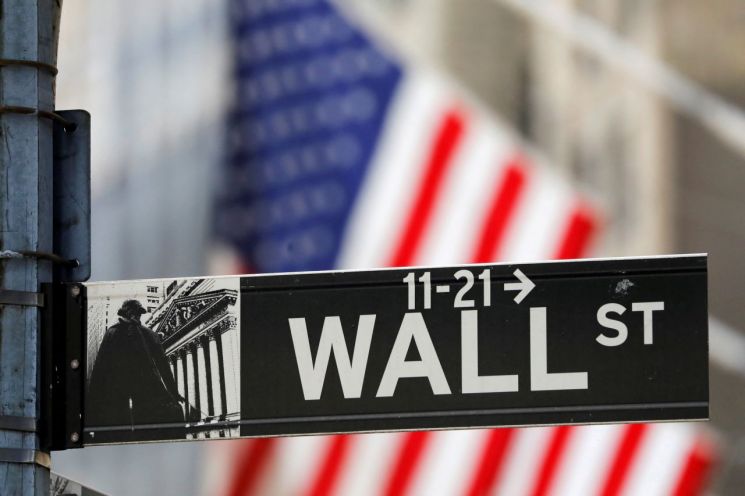
Investors monitored economic indicators such as the Producer Price Index (PPI), Treasury yield movements, and geopolitical risks from the Israel-Hamas conflict while awaiting the release of the September FOMC minutes in the afternoon.
According to the U.S. Department of Labor, the September PPI rose 0.5% month-over-month, exceeding market expectations of 0.3%. The year-over-year increase was also 2.2%, the highest since April (2.3%). However, the core PPI, which excludes energy and food, rose 2.8% year-over-year, slightly slowing from the previous month. This news contributed to the continued decline in Treasury yields. The Consumer Price Index (CPI) for September is scheduled to be released the following day.
In the New York bond market, the benchmark 10-year U.S. Treasury yield fell to around 4.59%. The 30-year yield also dropped to about 4.74%. Expectations that the Federal Reserve’s rate hikes are nearing an end have been interpreted as downward pressure on Treasury yields. Given that long-term Treasury yields have already surged and the Middle East situation adds uncertainty, market participants are urging caution in rate decisions to avoid triggering an unnecessary recession due to excessive tightening.
The market largely expects a rate hold in November. According to the Chicago Mercantile Exchange (CME) FedWatch tool, as of the morning, federal funds futures are pricing in more than an 84% chance that the Fed will keep rates unchanged in November. The probability of a baby step (a 0.25 percentage point rate hike) stands at around 15%. There are two remaining FOMC meetings this year, in November and December. Investors are seeking additional clues about future monetary policy from the FOMC minutes released at 2 p.m. Eastern Time, the CPI announcement the next day, and comments from officials.
Lauren Goodwin, Portfolio Strategist at New York Life Investments, told CNBC, "The market has found some relief from recent Fed officials’ remarks," and added that if Treasury yields continue to decline, it could provide momentum for a stock market rebound.
European markets are mixed, with Germany’s DAX up 0.17%, the UK’s FTSE rising 0.01%, and France’s CAC down 0.28%.
Oil prices, which surged earlier due to the Israel-Hamas conflict, continued to decline for the second day. November West Texas Intermediate (WTI) crude oil prices fell nearly 3% from the previous close, trading around $83.4 per barrel.
© The Asia Business Daily(www.asiae.co.kr). All rights reserved.
![Clutching a Stolen Dior Bag, Saying "I Hate Being Poor but Real"... The Grotesque Con of a "Human Knockoff" [Slate]](https://cwcontent.asiae.co.kr/asiaresize/183/2026021902243444107_1771435474.jpg)
















