The Supreme Court has ruled that victims who received compensation under the Buma Uprising Compensation Act can still separately claim damages for mental suffering, i.e., consolation money.
Even if a special law includes a provision that deems legal reconciliation to have been reached when victims or their families agree to the compensation payment decision for the sake of prompt relief and stability of the compensation payment decision, if the compensation stipulated in that law does not include an item corresponding to mental damages and there is no provision allowing the committee to consider mental damages when calculating compensation, it cannot be considered that appropriate compensation for mental damages has been made solely by the payment of compensation, according to the ruling.
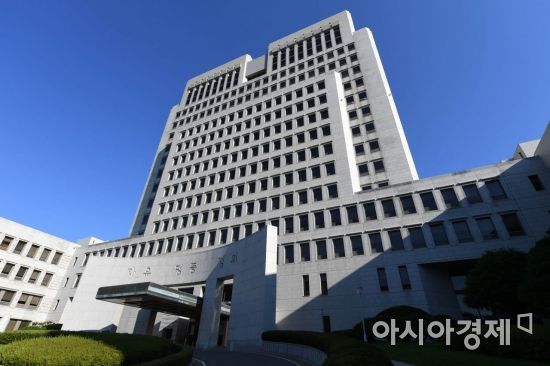
According to the legal community on the 11th, the Supreme Court's First Division (Presiding Justice No Tae-ak) upheld the lower court's partial ruling in favor of plaintiff A, who claimed 300 million KRW in consolation money from the state after receiving compensation under the Buma Uprising Compensation Act, ordering the state to pay A 100 million KRW plus delayed interest.
A was arrested on October 19, 1979, on charges of spreading false rumors that "the current government is anti-dictatorship, and the Central Intelligence Agency tortures protesting students with electric shocks and sprinkles chili powder on their wounds," and was detained four days later.
At that time, uprisings opposing the Yushin Constitution and Emergency Decree No. 9 were spreading mainly in Busan and Masan, leading to the declaration of martial law in the Busan area, with the martial law commander issuing a martial law proclamation under the Martial Law Act. Proclamation No. 1 strictly prohibited the fabrication and dissemination of false rumors and acts that divided public opinion, and allowed arrest, detention, seizure, and search without a warrant for violators.
A was sentenced to three years in prison by the martial law ordinary military court, reduced to one year, then appealed and received a one-year prison sentence with two years probation in the appellate court. A appealed again, but the Supreme Court dismissed the appeal in October 1980, finalizing the sentence.
Later, in March 2013, the Constitutional Court ruled Emergency Decree No. 9 unconstitutional, and a month later, the Supreme Court also declared it unconstitutional and invalid. In November 2018, the Supreme Court ruled that the martial law proclamation, which was the basis for A's punishment, was also unconstitutional and illegal, thus invalid.
The Buma Uprising Committee, established under the Buma Uprising Compensation Act, recognized A in June 2019 as "a person detained in relation to the Buma Uprising" and "a person convicted in relation to the Buma Uprising."
Based on this decision, A filed for retrial and was acquitted by the court. Using the acquittal as grounds, A claimed criminal compensation under the Criminal Compensation Act and received 46.76 million KRW in March 2020.
In 2021, A was also recognized as a person who suffered injury related to the Buma Democratic Uprising due to mental disability caused by water torture during police detention and investigation.
In November 2021, A filed a civil lawsuit against the state under the State Compensation Act, demanding 300 million KRW in damages for mental suffering caused by illegal acts of the police.
The first trial court acknowledged that A clearly suffered mental distress due to harsh treatment such as water torture during the investigation and awarded 100 million KRW in damages, partially ruling in favor of the plaintiff.
The court did not deduct the 46.76 million KRW criminal compensation previously received by A. Although Article 6, Paragraph 3 of the Criminal Compensation Act stipulates that if a person entitled to damages under other laws has received compensation under this Act for the same cause, the amount of compensation must be deducted when determining damages, the criminal compensation A received was for detention due to violation of the martial law proclamation and subsequent acquittal, whereas the consolation money in this case was for police torture and harsh treatment, thus the causes differ.
In other words, the deduction rule in the Criminal Compensation Act aims to prevent double compensation, but since the causes differ in A's case, it cannot be considered double compensation.
The appellate court assessed a higher amount for A's consolation money than the first trial court, calculating it at 160 million KRW.
However, unlike the first trial court, the appellate court ruled that the criminal compensation A received should be deducted.
Furthermore, the appellate court considered this an exceptional case where the criminal compensation can be deducted first from the principal of the consolation money, rather than the usual principle of deducting delayed interest and principal in order, and thus calculated the amount the state must pay as consolation money at 113.24 million KRW after deducting 46.76 million KRW from 160 million KRW.
Nevertheless, since only the defendant state appealed and the plaintiff A did not, the appellate court dismissed the appeal, maintaining the first trial court's ruling of 100 million KRW compensation.
Meanwhile, in the appellate court, the state argued as a preliminary defense on the merits that according to Article 32, Paragraph 2 of the Buma Uprising Compensation Act, which stipulates that "when the applicant agrees to the decision on the payment of compensation, it shall be deemed that a legal reconciliation has been established regarding damages related to the Buma Democratic Uprising," this lawsuit lacks the interest in protecting rights, but this argument was rejected.
The court stated, "Even after examining the relevant provisions of the Buma Uprising Compensation Act and its enforcement decree, there is no item corresponding to mental damages, nor any provision allowing the committee to consider mental damages when calculating compensation. Prohibiting claims for damages for mental suffering after paying compensation unrelated to mental damages does not align with the public interest of promptly relieving affected persons and ensuring stability of payment decisions based on appropriate compensation."
It added, "The restriction on private interests caused by depriving the right to claim damages for mental suffering caused by unlawful acts of public officials, such as receiving a guilty verdict or detention, without appropriate compensation is excessively severe and lacks balance of legal interests."
For these reasons, the court concluded, "It is reasonable to consider that the 'mental damages' portion of the damages related to the Buma Democratic Uprising is not included in the legal reconciliation established by agreeing to the compensation payment decision under Article 32, Paragraph 2 of the Buma Uprising Compensation Act."
The Supreme Court also found no problem with the appellate court's judgment.
The court stated, "The lower court, for the reasons stated, judged that the 'mental damages' portion of the damages related to the Buma Democratic Uprising is not included in the legal reconciliation under the reconciliation presumption clause in this case, and thus rejected the defendant's preliminary defense that there is no interest in protecting rights in this lawsuit. Reviewing the reasons for the lower court's ruling in light of relevant laws and records, this judgment is justifiable under the principle of constitutional interpretation, and there is no error in the interpretation of Article 32, Paragraph 2 of the Buma Uprising Compensation Act that would affect the ruling as claimed by the defendant's grounds for appeal," thus dismissing the appeal.
© The Asia Business Daily(www.asiae.co.kr). All rights reserved.

















