Amid the alarming spread of influenza (flu) recently, it has been revealed that only one otolaryngology clinic is participating as a sentinel surveillance institution under the Korea Disease Control and Prevention Agency (KDCA). Experts analyze that the effectiveness of predicting actual infectious diseases is low due to the small amount of data from otolaryngology, the department most frequently visited by patients with respiratory diseases.
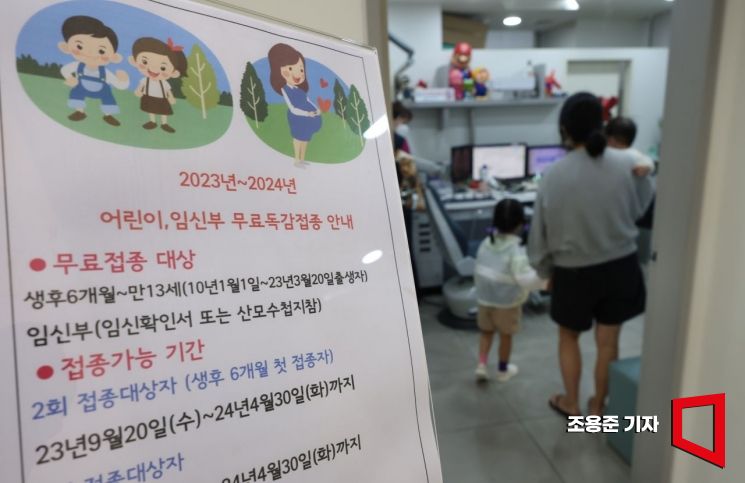
According to data submitted by the KDCA to Baek Jong-heon, a member of the National Assembly's Health and Welfare Committee (People Power Party), only 196 out of 11,092 clinic-level medical institutions nationwide (1.8%) are participating as sentinel surveillance institutions under the KDCA. By medical specialty, pediatrics had the highest number with 95 clinics, followed by internal medicine with 72, family medicine with 28, and otolaryngology with just one.
The respiratory sentinel surveillance system is a representative infectious disease data collection and monitoring system operated by the KDCA that analyzes a total of 19 types of Category 4 infectious diseases (60 subcategories), including influenza and COVID-19. The purpose is to predict the level and trends of infectious disease outbreaks to prepare for epidemics. Through this system, the KDCA confirmed that the influenza-like illness rate (suspected cases per 1,000 outpatients) reached 20.8 last month. This figure is 3.2 times higher than this year’s influenza epidemic threshold of 6.5.
However, Baek pointed out that it is currently difficult to produce meaningful statistics through the respiratory sentinel surveillance system. The number of sentinel surveillance institutions per 100,000 population in South Korea is 0.38, which is lower than the United States’ 4 and Japan’s 0.88, and the otolaryngology clinical data is minimal.
Nearly half of the respiratory infectious disease sentinel surveillance institutions are concentrated in the Seoul metropolitan area, making it difficult to confirm regional representativeness. There are 43 institutions (21.94%) in Gyeonggi, 36 (18.37%) in Seoul, and 11 (5.61%) in Incheon, totaling 90 institutions (45.92%) in the metropolitan area alone. Sejong had only two institutions (10.02%).
Assemblyman Baek Jong-heon emphasized, “To prevent new and mutant respiratory infectious diseases and to enable early detection and response, a more thorough influenza sentinel surveillance and respiratory pathogen monitoring system is necessary,” adding, “The KDCA must make active efforts to expand the number of participating sentinel surveillance institutions.”
© The Asia Business Daily(www.asiae.co.kr). All rights reserved.

















