Some Exhibition Halls Left Empty on Opening Day Due to Customs Clearance Delays
Products Stored in Bonded Warehouse for 10 Days Before Receipt
"Causing Damage to Participating Companies and an International Embarrassment"
It has been revealed that part of the South Korean exhibition hall at the Anuga Food Fair in Germany was operated in a vacant state. This was because the Korea Agro-Fisheries & Food Trade Corporation (hereinafter ‘aT’), which is responsible for distribution, failed to deliver the products due to customs clearance issues in Germany.
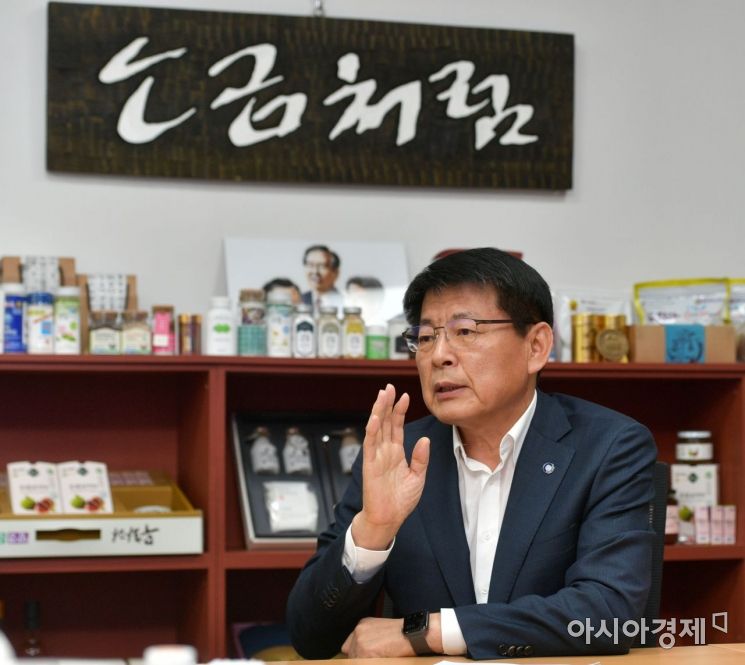
Seo Sam-seok, a member of the National Assembly from the Democratic Party of Korea and the Agriculture, Forestry, Livestock, Food, and Maritime Affairs Committee (representing Yeongam, Muan, and Sinan), sharply criticized the situation, stating, “An unprecedented incident occurred where part of the exhibition hall of companies representing South Korea’s flavors was operated empty due to aT’s poor management,” pointing out the reality of product shortages caused by delays in customs procedures.
The Anuga International Food Fair in Cologne, Germany (hereinafter ‘Anuga Fair’) began in 1942 and is held biennially as one of the world’s top three food events. This year’s fair was held from the 7th to the 11th. aT recruited 76 companies to participate through the ‘2023 International Food Fair Participant Recruitment’ last December.
Afterwards, aT provided customs clearance company information to the participating companies, and the products departed from Busan Port on August 5th. However, due to customs clearance issues in Germany, it was revealed that products from 12 companies were not exhibited in the Korean pavilion even when the fair started.
According to officials from the affected companies identified by Seo Sam-seok’s office, “Companies from other countries are showcasing their product competitiveness with national pride, but due to aT’s irresponsible handling, the Korean pavilion was operated empty,” adding, “Each company, having prepared for over a year to discover overseas buyers with their business at stake, is frustrated at losing this export opportunity.”
Ultimately, the customs clearance procedures were completed three days after the fair began, and the products stored in bonded warehouses were only delivered on the 10th. During this time, the affected companies reportedly either brought their products back from Korea or procured them locally to operate their booths.
Assemblyman Seo Sam-seok emphasized, “If aT had thoroughly reviewed the restrictions imposed by German customs in advance, this international embarrassment would not have occurred,” and stressed, “aT must take full responsibility for the damage to companies and the loss of national prestige caused by the failure to participate in the fair.”
He also urged the government, saying, “The Ministry of Agriculture, Food and Rural Affairs should promptly conduct a thorough inspection of aT’s fair operations to establish measures to prevent recurrence, and also prepare appropriate compensation plans for the affected companies that operated the exhibition hall under difficult conditions for the national interest of South Korea.”
© The Asia Business Daily(www.asiae.co.kr). All rights reserved.

















