Reduction of Police Investigation Termination Rights and Strengthening of Prosecutors' Supplementary Investigation Rights
Establishment of Mandatory Provisions for Receipt of Complaints and Accusation Documents
Introduction of Stepwise Investigation Deadlines and Mandatory Consultation Provisions between Police and Prosecutors
The revised investigation guidelines aimed at resolving issues such as investigation delays and inadequate investigations caused by the adjustment of investigative authority between the prosecution and the police, which was promoted through amendments to the Prosecutors' Office Act and the Criminal Procedure Act under the Moon Jae-in administration, have passed the Cabinet meeting.
The amendment includes provisions on the obligation of investigative agencies to accept complaints and accusations, investigation deadlines for each investigation stage, reduction of the police's authority to close investigations, and strengthening of the prosecution's supplementary investigation authority.
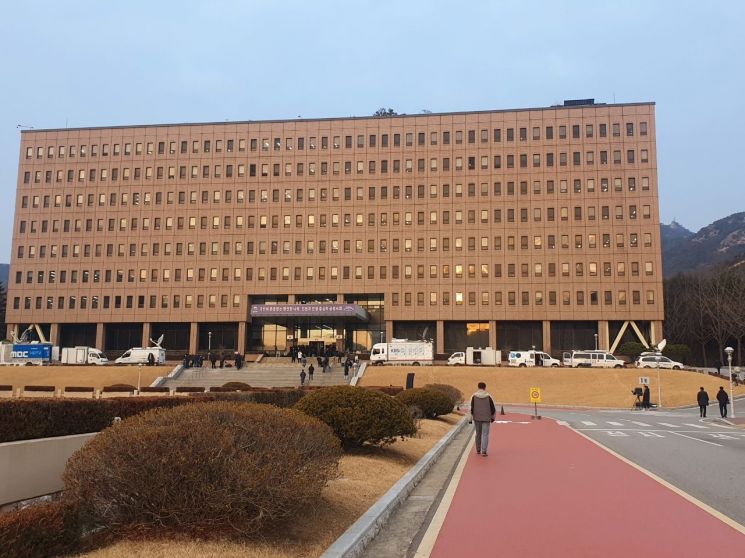
On the 10th, the Ministry of Justice announced that the "Regulations on Mutual Cooperation between Prosecutors and Judicial Police Officers and General Investigation Guidelines" (Presidential Decree, hereinafter referred to as the Investigation Guidelines), which aim to resolve problems such as investigation delays and inadequate investigations through cooperation between the prosecution and the police, passed the Cabinet meeting on the same day and will be enforced from the 1st of next month.
The revised Investigation Guidelines include ▲the obligation of investigative agencies to accept complaints and accusations ▲investigation deadlines for each stage to resolve investigation delays ▲division of supplementary investigations for cases transferred between the prosecution and police ▲strengthening judicial control functions over police decisions not to prosecute ▲and measures to enhance cooperation between the prosecution and police.
The revised Investigation Guidelines will be enforced from the 1st of next month according to the supplementary provisions. The revised guidelines will apply not only to cases initiated after the 1st of next month but also to cases already under investigation or ongoing in court.
First, a provision obligating investigative agencies to accept complaints and accusations was newly established to prevent rejection of complaints and accusations. Prosecutors or judicial police officers must accept complaints or accusations received, and if they investigate crimes based on complaints or accusations, the investigation must be completed within three months from the date of acceptance.
Standards for investigation deadlines that investigative agencies must comply with at each investigation stage have been established. The Ministry of Justice stated that by having prosecutors decide whether to request supplementary investigations from the police and requiring the police to promptly complete supplementary and reinvestigations, public inconvenience caused by chronic investigation delays such as "no news even after one year of supplementary investigation" is expected to be alleviated. The investigation deadline for complaint and accusation cases is set at three months, the deadline for prosecutors to request supplementary investigations is one month, the deadline for the police to carry out supplementary and reinvestigations is three months, and the deadline for prosecutors to transfer cases to the police is one month.
The scope of the prosecution's supplementary investigations for cases transferred by the police, which had been extremely limited, will be expanded. The "principle of police-exclusive supplementary investigations" has been abolished, allowing the prosecution and police to reasonably share responsibilities according to the specific characteristics and circumstances of individual cases. The criteria for sharing include ▲the extent of necessary supplementary investigations ▲investigation progress period ▲appropriateness of the investigative subject ▲and the spirit of mutual respect and cooperation between the prosecution and police.
Before the amendment, Article 59 (1) of the Investigation Guidelines stipulated that "prosecutors shall, in principle, request supplementary investigations from judicial police officers for cases transferred under Article 245-5 (1) of the Act, except in cases where direct supplementary investigation by the prosecutor is deemed necessary," thereby mandating that supplementary investigations be primarily handled by the police.
However, the revised Investigation Guidelines stipulate that "when prosecutors recognize the need for supplementary investigations for cases transferred from judicial police officers, they may either conduct direct supplementary investigations or request supplementary investigations from judicial police officers under Article 197-2 (1) 1 of the Act. However, except in cases where it is deemed necessary to request supplementary investigations from judicial police officers for decisions on whether to prosecute transferred cases, prosecutors shall, in principle, conduct direct supplementary investigations." This allows prosecutors to decide whether to conduct direct supplementary investigations or request them from the police.
Specifically, direct supplementary investigations by prosecutors are the principle except in cases such as ▲one month has passed since the case was accepted (or since the results of supplementary investigations were notified in cases where supplementary investigations had already been requested) ▲the prosecutor has conducted a considerable degree of supplementary investigation on the suspect and charges after the case was transferred ▲reports of suspected legal violations, human rights infringements, or significant abuse of investigative authority during the police investigation process, and despite the prosecutor's review and request for corrective action after receiving case records from the police, the police failed to comply without justifiable reasons, leading to a request for case transfer to the prosecution (Article 197-3 (5) of the Criminal Procedure Act) ▲the prosecutor requests the police to transfer the case when investigating the same criminal facts as the judicial police officer (Article 197-4 (1) of the Criminal Procedure Act) ▲the prosecutor orders immediate case transfer to the prosecution when the suspect's arrest or detention location inspected by the prosecutor within the jurisdictional police station is suspected to have been conducted without proper procedures (Article 198-2 (2) of the Criminal Procedure Act) ▲and when prosecutors and judicial police officers have completed consultations on matters to be investigated, evidence collection targets, and application of laws before case transfer according to Articles 7 or 8 of the revised Investigation Guidelines, except in cases where it is deemed necessary to request supplementary investigations from judicial police officers.
The judicial control function over police decisions not to prosecute has also been strengthened.
Under the current Investigation Guidelines, prosecutors were allowed to request reinvestigation only once regarding police decisions not to prosecute, and the reasons were very limited. However, the revised Investigation Guidelines supplement this by allowing prosecutors to request case transfer and take responsibility for concluding the case if the police fail to comply with the prosecutor's reinvestigation request due to illegal or unjust aspects of the police's decision not to prosecute.
Specifically, this applies in cases such as ▲violations of relevant laws or legal principles ▲failure to implement requested reinvestigations to clarify the presence or absence of criminal suspicion ▲cases where the received related documents, evidence, and reinvestigation results clearly establish criminal suspicion ▲errors in determining the statute of limitations or requirements for criminal prosecution.
Additionally, the revised Investigation Guidelines include provisions obligating either party between the prosecution and police to respond when the other requests consultation regarding investigations, and provisions obligating mutual consultation and exchange of opinions at least three months before the expiration of the statute of limitations for election cases with short statutes of limitations to prevent investigation delays, thereby strengthening cooperation between the prosecution and police.
Furthermore, procedural issues have been supplemented by reflecting legal amendments made after the establishment of the existing Investigation Guidelines, including ▲procedures for issuing copies of warrants ▲procedures related to notifications of suspect release ▲deadlines for approval requests in cases of emergency maritime arrests ▲transfer targets between the prosecution and police ▲and notification procedures for transferring suspects suspected of obstructing justice.
The Ministry of Justice stated that the revised Investigation Guidelines were created after sufficiently collecting opinions from academia and practical experts and consulting with the Ministry of the Interior and Safety to improve gaps in public protection within the investigation process through responsible attitudes and cooperation between the prosecution and police.
Han Dong-hoon, Minister of Justice, said, "The revised Investigation Guidelines align exactly with the public's desire for complaint and accusation cases to be processed more quickly and for their voices to be heard to clear their grievances," adding, "I hope the Investigation Guidelines will function as 'People's Guidelines' that can enhance public convenience in the investigation of the majority of livelihood-related cases directly connected to the daily lives of ordinary citizens."
© The Asia Business Daily(www.asiae.co.kr). All rights reserved.
!["The Woman Who Threw Herself into the Water Clutching a Stolen Dior Bag"...A Grotesque Success Story That Shakes the Korean Psyche [Slate]](https://cwcontent.asiae.co.kr/asiaresize/183/2026021902243444107_1771435474.jpg)
















