The three major indices of the U.S. New York Stock Exchange all opened lower on Monday, the 9th (local time), amid ongoing concerns over inflation and rising interest rates, as uncertainty grew due to the war between Israel and the Palestinian militant group Hamas. International oil prices have surged by more than 3%. This week, key inflation indicators and other data that could influence the Federal Reserve's (Fed) interest rate decisions are also scheduled for release.
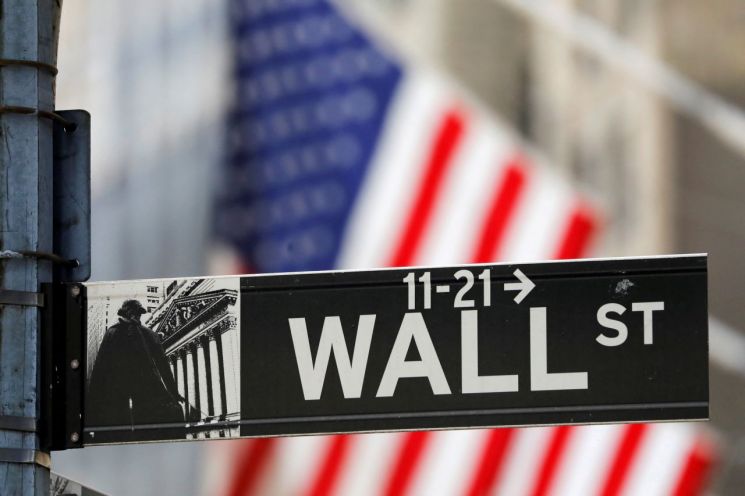
At around 9:57 a.m. at the New York Stock Exchange, the Dow Jones Industrial Average was trading at around 33,388, down 19.06 points (0.06%) from the previous close. The large-cap S&P 500 index was down 7.52 points (0.17%) at the 4,300 level, and the tech-heavy Nasdaq index was down 71.17 points (0.53%) at 13,360.
Currently, within the S&P 500, energy, industrial, and healthcare stocks are rising, while consumer discretionary, consumer staples, and materials stocks are falling. Energy stocks surged following the sharp rise in oil prices after Hamas's attack on Israel over the weekend. ExxonMobil rose by more than 3%, and Chevron increased by over 2%. Aerospace and defense company Lockheed Martin also jumped nearly 8% from the previous close due to the Israel-Palestine conflict. Major airlines showed weakness as Israeli flights were suspended. American Airlines, United Airlines, and Delta Air Lines all fell by more than 5%. Walt Disney rose nearly 1% following foreign reports that activist investor Nelson Peltz is increasing his stake and pushing for a board seat.
Investors are closely monitoring the heightened financial market uncertainty caused by the Israel-Palestine war, while awaiting key data releases such as the Consumer Price Index (CPI) and corporate earnings scheduled for this week.
The Fed is expected to determine the direction of monetary policy this week by reviewing inflation indicators following last week's employment report. Wall Street estimates that the September CPI, to be released on the 12th, rose 0.3% month-over-month and 3.6% year-over-year, a slowdown compared to the previous month's increases of 0.6% and 3.7%, respectively. The September Producer Price Index (PPI), released earlier, is also expected to have eased. The previously released employment report showed solid job growth, but a slowdown in wage growth, a key inflation factor, brought relief to investors.
The minutes of the September Federal Open Market Committee (FOMC) meeting will be released on the 11th. Additionally, speeches are scheduled from Fed Vice Chair Michael Barr, Vice Chair Philip Jefferson, Board Member Christopher Waller, Minneapolis Fed President Neel Kashkari, San Francisco Fed President Mary Daly, Board Member Michelle Bowman, and Atlanta Fed President Raphael Bostic on the same day.
Currently, the market largely expects the Fed to hold rates steady in November. According to the CME FedWatch tool, as of the morning of the 9th, federal funds futures reflect an over 86% probability that the Fed will keep rates unchanged in November. The probability of a "baby step" rate hike (0.25 percentage points) stands at around 14%. There are two remaining FOMC meetings this year, in November and December. Earlier, Goldman Sachs stated that the Fed's rate hikes have likely ended.
Starting this week, earnings reports from major banks such as JPMorgan, Wells Fargo, and BlackRock, as well as New York Stock Exchange-listed companies, will begin in earnest. Earnings announcements are also expected from PepsiCo, Domino's Pizza, Walgreens, and Delta Air Lines. Historically, the fourth quarter before a presidential election has shown strong market performance, but this time, market uncertainty is high due to expectations of prolonged high Fed rates and rising Treasury yields. However, strong corporate earnings could provide upward pressure on the stock market.
In observance of Columbus Day, the bond market was closed on this day. The Chicago Board Options Exchange (CBOE) Volatility Index (VIX), known as Wall Street's "fear gauge," rose more than 6% from the previous close to around 18.5, though this remains below the long-term average of 20. International oil prices are up about 3%. West Texas Intermediate (WTI) crude oil is trading around $85 per barrel, up 3.3% from the previous close.
European stock markets are mixed. Germany's DAX and France's CAC indices are trading slightly lower, while the UK's FTSE index is up 0.22%.
© The Asia Business Daily(www.asiae.co.kr). All rights reserved.

















