More than 3 Times That of 4-Year Universities... Concentration in Seoul
"A Representative Phenomenon of Educational Inequality" Also Pointed Out
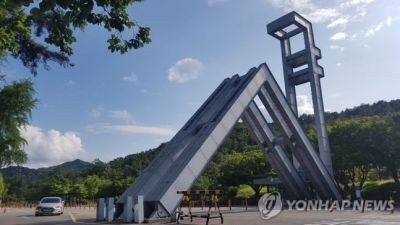
This year, it was revealed that 4 out of 10 new students at Seoul National University (SNU) graduated from specialized high schools or autonomous private high schools (Jasago). This is more than three times the rate of graduates from general four-year universities, industrial universities, and cyber universities.
According to the university information disclosure site ‘University Alimi’ on the 9th, among the 3,511 new students admitted to SNU this year, 1,368 (38.96%) were graduates of science high schools, foreign language high schools, international high schools, gifted schools, or Jasago.
This ratio is 6.6 times the national average of 5.91% for general four-year universities, industrial universities, and cyber universities, and 3.2 times the average of 12.05% for universities located in Seoul.
By school type, Jasago graduates numbered 604, accounting for 17.2% of all new students. Gifted school graduates were 335 (9.54%), foreign language and international high school graduates were 316 (9%), and science high school graduates were 113 (3.22%).
General high school graduates numbered 1,724, falling short of half (49.1%). This is more than 10 percentage points lower than the national average for general universities (71.46%) and the average for universities in the Seoul area (61.83%).
Regarding this phenomenon, some argue that “it is natural for the proportion of SNU entrants from specialized and autonomous private high schools to be high since top-tier students tend to concentrate in these schools.”
However, considering that students from specialized and autonomous private high schools make up about 5% of an entire grade, there are criticisms that the gap with general high schools is excessively large. This is pointed out as a representative educational inequality phenomenon caused by parents’ economic backgrounds and access to private education.
In fact, not only schools but also the students’ regions of origin showed severe concentration. Among SNU new students, those from Seoul accounted for 1,302 (37.08%). This is 16.08 percentage points higher than the proportion of Seoul-area test takers (21.0%) based on last year’s College Scholastic Ability Test (CSAT) application data. Including Seoul, the total number of students from special cities and metropolitan cities was 1,907, exceeding half at 54.31%.
Gu Bon-chang, director of the Policy Alternatives Research Institute at Education Concern-Free World, explained, “The concentration of students from specialized and autonomous private high schools and from Seoul means that differences in educational opportunities and college admission results are clearly influenced by parents’ economic ability and residential background.”
He added, “Even now, students enter specialized and autonomous private high schools more for the ease of university admission than for curriculum diversity,” and criticized, “The current government’s high school diversification policy will lead to a deepening of this high school hierarchy.”
© The Asia Business Daily(www.asiae.co.kr). All rights reserved.

















