Significantly Decreased in 2020, Then Rose Again Over 3 Years
Students Struggled to Adapt to In-Person Classes After COVID-19
Impact of University Admission System... "Education Authorities Need to Improve the System"
It has been confirmed that the number of high school dropouts has increased every year over the past three years. It is analyzed that many cases of dropping out are due to preparing for the College Scholastic Ability Test (CSAT) amid the expansion of regular admissions and absolute evaluation of school records.
According to the status of high school dropouts (academic discontinuation) from 2019 to 2022 in the Education Information Statistics (EDS) submitted by the Ministry of Education to the office of Kang Deuk-gu, a member of the National Assembly Education Committee from the Democratic Party of Korea, the number of high school students who quit school last year was ㅇ.
The number of dropouts was 24,068 in 2019 but sharply decreased to 15,163 in 2020. However, it then rose again, reaching 19,467 in 2021 and 23,440 in 2022, returning to pre-pandemic levels.
By grade level, last year’s high school dropouts were 12,078 (51.5%) in the first grade, accounting for the majority, and the number decreased as the grade increased. The second grade had 9,271 (39.6%), and the third grade had 2,091 (8.9%). This trend has been consistent over the past four years.
The sharp decline in dropouts in 2020 is analyzed to be due to a decrease in overseas students because of COVID-19 and a reduction in academic discontinuation caused by maladjustment as in-person classes were reduced. Since then, as in-person classes have gradually expanded, the number of dropouts has also been increasing.
Representative Kang stated, “Students who experienced remote classes during the COVID-19 period may have felt that school classes were unnecessary or had difficulty adapting to face-to-face classes.”
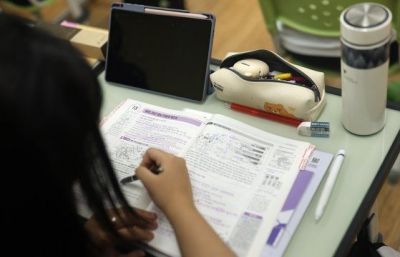
There are also criticisms that the increased importance of CSAT-focused regular admissions in high schools other than specialized high schools has encouraged dropping out.
Based on data from the university information disclosure site ‘University Alimi’ by Jongro Academy, the proportion of students admitted to Seoul National University, Yonsei University, and Korea University who passed the qualification exam has increased annually from 0.7% in 2019 to 0.9%, 1.1%, 1.2%, and 1.3%. Expanding the scope to four-year universities nationwide, the number of students admitted through the qualification exam increased by 70.1%, from 4,521 in 2019 to 7,690 this year.
Following the so-called ‘Cho Kuk incident’ in 2019, the Ministry of Education designated 16 major universities, including Seoul National University, and ordered them to select more than 40% of their total admissions through CSAT-focused regular admissions. These universities have been following this policy since the 2023 academic year admissions.
On the other hand, early admissions have seen a reduction in the proportion and method of reflecting non-curricular areas (clubs, volunteering, career activities) in school records every year since the 2019 policy to strengthen fairness in college admissions. The self-introduction letter was completely abolished starting with the college entrance for the current third-year high school students.
Since 2019, the ‘Career Elective Subjects,’ which are advanced courses taken in the second and third years of high school, have been changed to an absolute evaluation system with five grades. Since universities mainly reflect common and general elective subjects, which are relatively graded, the importance of first and second-year school record grades has increased.
Representative Kang emphasized, “There are concerns in the education field that this trend will deepen further,” and stressed, “Institutional supplementation by the education authorities and normalization of public education are urgent.”
© The Asia Business Daily(www.asiae.co.kr). All rights reserved.

















