International oil prices surged about 4% due to a surprise attack on Israel by the Palestinian armed group Hamas.
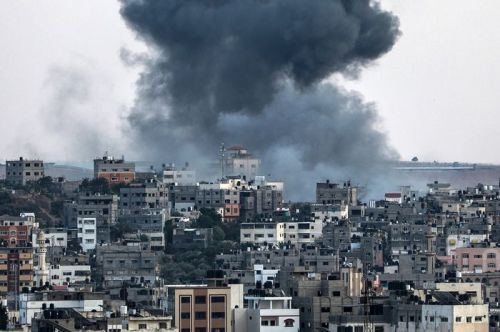 On the 8th (local time), a fire broke out due to an airstrike in the Gaza Strip, Palestine. Photo by Yonhap News
According to Bloomberg News, as of 8 a.m. Korea time on the 9th, West Texas Intermediate (WTI) crude oil futures traded at $86.35 per barrel, up 4.3% from the previous day.
Since neither Israel nor Palestine are oil-producing regions, the conflict between the two sides does not directly impact the oil market.
However, after reports emerged that Iran supported Hamas's attack, concerns among traders about the escalation of the conflict increased. Israel could retaliate against Iran, and some speculate that it could escalate into a proxy war between the United States and Iran.
In particular, with the United States forward-deploying the world's largest nuclear-powered aircraft carrier, the USS Gerald R. Ford, to support Israel, there is also a possibility that Iran could block the Strait of Hormuz, through which 20% of the world's oil passes.
WTI and Brent crude prices had fallen more than $10 this month due to concerns that the global economy would slow and demand would decrease amid prolonged high interest rates. Iran, which has entered a thawing phase in relations with the U.S., also contributed to the price decline by increasing its oil exports.
The U.S. dollar, a representative safe-haven asset, showed strength, with the Bloomberg Dollar Spot Index rising 0.2%, and the 10-year U.S. Treasury yield increasing by 0.08 percentage points to 4.80%.
Another safe-haven asset, spot gold, also rose 1% to $1,850.52 per ounce.
© The Asia Business Daily(www.asiae.co.kr). All rights reserved.
!["The Woman Who Threw Herself into the Water Clutching a Stolen Dior Bag"...A Grotesque Success Story That Shakes the Korean Psyche [Slate]](https://cwcontent.asiae.co.kr/asiaresize/183/2026021902243444107_1771435474.jpg)
















