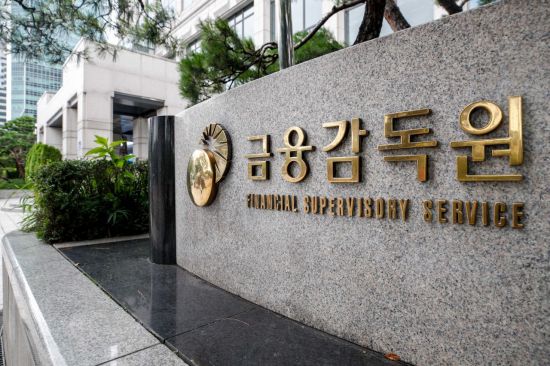
On the 9th, the Financial Supervisory Service (FSS) announced that it has prepared a reform plan for the inspection system in the financial investment sector, focusing on strengthening inspection capabilities and innovating inspection methods. The revised inspection system will be implemented on the 13th of this month.
This reform plan was prepared in response to changes in the capital market inspection environment. According to the FSS, the number of companies subject to inspection surged from 328 at the end of 2012 to 893 at the end of last year. However, the number of inspectors only slightly increased from 90 to 111 during the same period.
Recently, with a concentration of new entries into the asset management industry, illegal activities such as employees’ pursuit of private gains and embezzlement have also significantly increased. Complex cases involving multiple companies in the product launch, sales, and management processes, as well as linked cases where financial investment companies utilize other companies’ financial products or conduct transactions through other companies, have greatly increased. These factors led to a consensus on the need to prepare the reform plan.
The FSS plans to strengthen inspection capabilities through the reform. First, it will regularize the Special Inspection Team for Private Fund Managers, which is dedicated to inspecting private fund management companies. The inspection division will be reorganized into Financial Investment Inspection Departments 1, 2, and 3, distributing securities firms and asset management companies evenly to promote healthy business competition. A new Inspection Information Analysis Team will be established to collect, analyze, and evaluate all internal and external inspection information from securities firms and asset managers, maximizing the use of inspection information. Additionally, the planning team and the standing team will be integrated, expanding the number of inspection teams from the current 13 to 15, and increasing dedicated inspection personnel from 60 to about 80.
Innovative changes in inspection methods will also be pursued. Instead of institution-centered inspections based on the companies under each department’s jurisdiction, linked inspections will be conducted simultaneously on groups, affiliates, and related companies when specific incidents occur. Furthermore, in cases of serious or urgent incidents or when vulnerable areas are identified, all inspection personnel from the three inspection departments will be deployed.
A continuous expulsion system for insolvent and illegal companies will also be introduced. Previously, the expulsion criteria were operated restrictively, causing concerns that insolvent and illegal companies were not expelled in a timely manner, resulting in investor damage. Specifically, organizational customer interest violations at the company level, large-scale embezzlement or breach of trust will lead to immediate cancellation of registration even after a single violation. Strengthened criteria for judging non-operation of business will block attempts to avoid compulsory deletion and reinforce timely expulsion.
An FSS official stated, "The inspection system reform is scheduled to be implemented on October 13 this year. We will actively communicate with the financial investment industry to prevent confusion caused by the reform and closely cooperate with the Financial Services Commission to ensure the smooth operation of the reform plan."
He added, "Through the reform of the financial investment inspection system, we will establish an inspection system that can flexibly respond to the rapidly changing capital market environment, eradicate illegal business practices, and establish market order."
© The Asia Business Daily(www.asiae.co.kr). All rights reserved.

















