
Tmap Mobility, which has entered the middle-mile logistics market, has set a goal to grow its freight transportation business to a scale of 1 trillion KRW within three years. The company plans to transform the middle-mile market, which has remained analog to the extent that dispatch records are still handwritten, into a new logistics system through digital transformation.
Jin Seong-ju, head of Tmap Freight Strategy, stated at a press conference held at Tmap Mobility headquarters in Jung-gu, Seoul, "We will raise the value of the freight business to 1 trillion KRW by 2026."
The domestic middle-mile market, known to have a market size of 37 trillion KRW, is composed of a complex structure. The middle mile refers to the intermediate stage between the first mile, which transports goods from manufacturers, and the last mile, which delivers to customers. It consists of a multi-tiered structure involving shippers, brokers, information networks, and truck owners. In particular, there are about 8,000 small-scale brokers nationwide operating their businesses. Most of them conduct dispatch and settlement tasks manually.
Although digitalization is urgently needed to improve work efficiency, it is not easy due to the complex interests among industry players. However, from another perspective, this means there are many areas open for pioneering. Jin said, "Compared to the large market size, digital transformation has not yet been achieved, leaving opportunities for platform innovation. Especially in the brokerage market, there is a strong need for platforms to improve work efficiency and reduce transportation costs."
Tmap Mobility has long focused on the middle-mile market. In 2021, it acquired YLP, a middle-mile brokerage startup. Having secured YLP’s transportation data, Tmap Mobility analyzed more than 1.1 million data points over two years. Based on this, it launched the data-driven analysis platform ‘Tmap Freight’ in February and is currently providing the service.
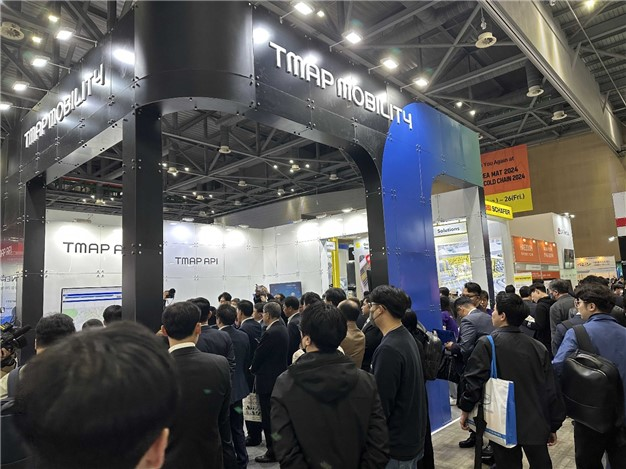
Tmap Mobility plans to actively pioneer the market based on big data and AI. Specifically, the plans include ▲increasing operational efficiency through automation of manual dispatch and settlement tasks ▲expanding the distribution of SaaS-type solutions for integrated logistics management beyond simple brokerage tasks ▲introducing linked and consolidated freight dispatch service models to reduce transportation costs and increase truck owner profits.
Results are already showing. The initial dispatch success rate of Tmap Freight is 94%. Song Ji-won, in charge of TMAP Freight, explained, “Since the launch of Tmap Freight in February, we have maintained this dispatch success rate. Currently, we are working to continuously increase the probability that when freight request information is entered and Tmap shows the price, the dispatch will be made at that price.”
The freight rates, which used to fluctuate irregularly relying only on the intuition of truck owners, are also becoming more rational. The logistics market has high uncertainty in transportation rates due to fluctuating supply and demand ratios depending on weather, holidays, and other timing factors. With Tmap Freight, optimal freight charges based on real-time supply and demand data between shippers and truck owners can be confirmed.
Tmap Mobility plans to continue pursuing various strategies, including ▲building processes for handling large volumes of freight such as milk run freight with multiple stops ▲providing real-time transportation status monitoring using Tmap Freight navigation ▲improving costs through freight matching solutions such as linking and consolidation.
Jin said, "Our goal is to build a logistics ecosystem where various operators in the market can create mutual value together. Through an open platform policy, we will build a network where capable partners can connect with each other."
© The Asia Business Daily(www.asiae.co.kr). All rights reserved.

![Clutching a Stolen Dior Bag, Saying "I Hate Being Poor but Real"... The Grotesque Con of a "Human Knockoff" [Slate]](https://cwcontent.asiae.co.kr/asiaresize/183/2026021902243444107_1771435474.jpg)
















