Daishin Securities Receives More Favorable Ruling Than First Trial... Expected to Impact Other Civil Cases
Financial Authorities' Sanctions Decision Pending for CEOs of Financial Firms Involved in Lime Scandal
The first civil lawsuit between investors and securities firms related to the Lime Asset Management scandal, which caused damage worth 1.6 trillion KRW, has come to a conclusion for now. The court ruled that the securities firm must compensate investors about 80% of their principal investment. Neither the investors, who initially expected 100% compensation, nor the securities firms, which bore most of the responsibility for the crisis caused by the asset manager's insolvency, were satisfied. Additional civil lawsuits and further investigations by financial authorities are ongoing, so aftershocks are expected to continue. In particular, attention is focused on whether financial authorities will impose sanctions on the CEOs of securities firms involved in the Lime scandal, such as Park Jeong-rim, CEO of KB Securities; Jeong Young-chae, CEO of NH Investment & Securities; and Yang Hong-seok, Vice Chairman of Daishin Securities.
The Civil Division 14-3 of the Seoul High Court (Presiding Judges Chae Dong-su, Yoo Heon-jong, Jeong Yoon-hyung) on the 21st of last month delivered a partial plaintiff victory ruling in the second trial of a lawsuit filed by four investors, including broadcaster Kim Han-seok, who suffered losses after investing in Lime Asset Management funds, against the distributor Daishin Securities. The ruling ordered the return of about 80% of the investment amount. In the first trial on April 28 last year, the court had ordered a full refund (100%) of approximately 2.5 billion KRW invested by the four investors, but the ratio was reduced in this second trial.
There was little change in the claims and submitted evidence from both sides compared to the first trial. The first trial court recognized all deceptive acts by branch manager Jang, who recommended the investment on behalf of Daishin Securities, as if the product guaranteed the principal. According to evidence specified in the judgment, branch manager Jang introduced the fund, which carried a risk of loss, as a "fixed interest product with an annual return of 8%." The branch manager was found guilty and sentenced to two years in prison and recently completed his sentence.
The second trial court judged that investors could have sufficiently recognized the possibility of loss risk. The main basis for this was the "boilerplate clause" written in the investment prospectus prepared at the time of the investment contract. This is a clause often applied unfavorably to investors in financial lawsuits. Furthermore, the court found that investors who had prior experience investing in funds other than this one could have sufficiently confirmed the risks but did not do so. In other words, the court held that investors also bear some responsibility for the fund losses.
The investors who filed the lawsuit still feel aggrieved. Above all, the investment documents that became the basis for lowering the compensation ratio were "post-contracts" written up to about a month later than the actual fund transfer date, making it difficult for investors to know the fund's risks in advance. They argue it is hard to understand that the compensation ratio was lowered due to the boilerplate clause in the documents, especially when branch manager Jang, who made false explanations to induce investment, was found guilty and sentenced to prison. Kim Jeong-cheol, a lawyer from Law Firm Woori representing the investors, said, "Despite fully arguing that the investment contract was written after the fact, the ruling that the risk was notified through a small boilerplate clause in the document is a flawed judgment," adding, "We plan to appeal to the Supreme Court."
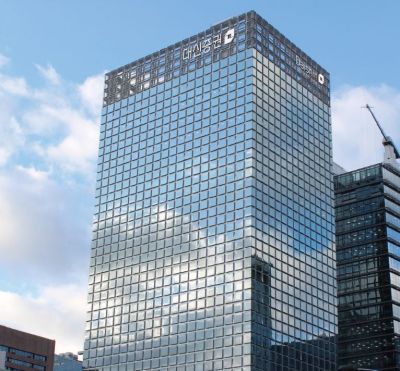
Within the securities industry, including Daishin Securities, there is a sense of relief that although they will have to compensate most of the investment losses, they avoided a full 100% compensation. While some responsibility for incomplete sales was acknowledged, having a precedent that requires distributors to compensate 100% for investment products would be a significant burden for the industry. Daishin Securities stated that they are "considering" whether to appeal.
The reason this lawsuit's outcome was important is that it was the first civil lawsuit between securities firms and investors related to the Lime scandal. It has already been four full years since the crisis erupted. After the sudden suspension of redemptions, some affected investors accepted mediation by the Financial Dispute Mediation Committee (FDM) of the Financial Supervisory Service, while others dissatisfied with the compensation ratios proposed by the FDM have filed or are preparing separate civil lawsuits.
If the ruling in this precedent-setting lawsuit had maintained 100% compensation for investors, the number of follow-up lawsuits would likely have increased. However, the compensation ratio resulting from the lawsuit was not significantly different from the ratios proposed by financial authorities and securities firms, which is a point of concern. Shinhan Investment Corp., which sold Lime funds worth about 300 billion KRW, announced at the end of August that it would voluntarily compensate victims through "private settlements." Although the compensation ratio is still under discussion, considering the FDM and Daishin Securities cases (80%), it is expected to be at a similar level.
However, from the securities industry's perspective, this is not the end. The question remains whether financial authorities will impose sanctions on the CEOs of financial firms involved in the Lime scandal. Park Jeong-rim, CEO of KB Securities; Jeong Young-chae, CEO of NH Investment & Securities; and Yang Hong-seok, Vice Chairman of Daishin Securities are among those mentioned. Although the results were initially expected last month, considering the Chuseok holiday and this month's National Assembly audit schedule, the sanctions are expected to be discussed after next month. If the authorities impose disciplinary actions beyond a "reprimand" on these CEOs, their reappointment and employment in the financial sector will be restricted for 3 to 5 years.
© The Asia Business Daily(www.asiae.co.kr). All rights reserved.

















