45% of Generation Z in Their 20s Unfamiliar with "Simsimhan Sagwa"
Video Media Consumption Cited as Main Cause of Literacy Decline
A survey found that 45% of Generation Z in their 20s (those born from the mid-1990s to the late 2010s) do not know the meaning of the phrase "simsimhan sagwa" (sincere apology).
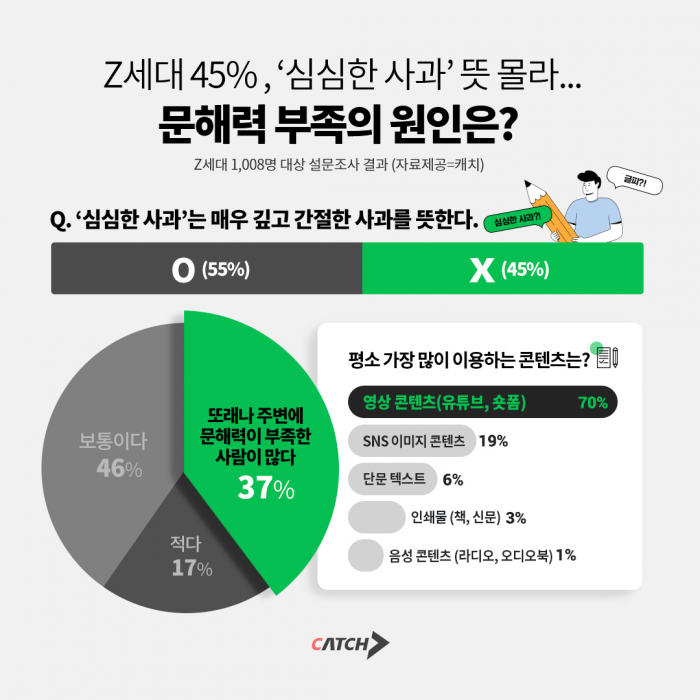
On October 6, AI matching recruitment content platform Jinhaksa Catch announced the results of a survey on "Generation Z literacy" conducted with 1,008 Gen Z respondents in their 20s.
Among the respondents, 37% said, "There are many people around me or among my peers who lack literacy skills." The proportion who answered "average" was 46%, while only 17% said "few."
Jinhaksa Catch conducted a simple vocabulary test, asking participants to match words with their correct meanings, to assess the actual literacy level of people in their 20s from Generation Z.
The results showed that 45% did not know the meaning of "simsimhan sagwa" (sincere apology). The correct response rate for "geulpi," which means "three days later," was just over 60%. Only 5% of respondents answered all five vocabulary quiz questions correctly.
The main reason for this literacy deficiency among younger generations was identified as the increased consumption of video media. In fact, 70% of respondents said that among various types of media, they use "video content such as YouTube and short-form videos" the most.
"SNS image content such as Instagram feeds" followed at 19%, and "short-form text content such as X (formerly Twitter) and Threads" accounted for 6%. Only 3% said they most preferred print media such as books and newspapers.
When asked how many books they read per year, the largest proportion, 39%, answered "about 1 to 3 books." This was followed by 23% who read "3 to 5 books," and 16% who said they do not read any books at all.
Kim Junghyun, department head at Jinhaksa Catch, commented, "Generation Z and subsequent generations are more accustomed to video content than to text-based content. Making time to read books or regularly practicing long-form reading can help improve literacy skills."
© The Asia Business Daily(www.asiae.co.kr). All rights reserved.

















