Video Reaches 2.6 Million Views in Two Days
"South Korea's Population Expected to Be 24 Million by 2100"
A YouTube channel with 21.2 million subscribers is drawing global netizens' attention by spotlighting South Korea as a country facing a low birthrate crisis.
The YouTube channel 'Kurzgesagt,' which focuses on science, medicine, and the future, posted a video titled "Why Korea is Dying Out" on the 4th.
 The YouTube thumbnail features an image of a dripping Taegeukgi, and this video has reached 2.6 million views in just two days. There were also more than 18,000 comments.
 [Photo by YouTube channel 'Kurzgesagt - In a Nutshell']
The thumbnail of the video features an image of a dripping Taegeukgi (the South Korean flag), and the video recorded 2.6 million views within two days. It also received over 18,000 comments.
Kurzgesagt reported that South Korea's total fertility rate (the average number of children a woman is expected to have in her lifetime) was 0.78 last year. They described this as "the lowest figure in the world."
They added, "The fertility rate is rapidly declining, meaning that if there are currently 100 young people, by 2100 that number will shrink to 6. If nothing changes, 94% of Korea's youth will disappear within 100 years, turning the country into a nation of elderly."
They also mentioned, "South Korea's population is expected to be 24 million by 2100, which is a level comparable to the 1950s."
"The problem is South Korea's aging population"
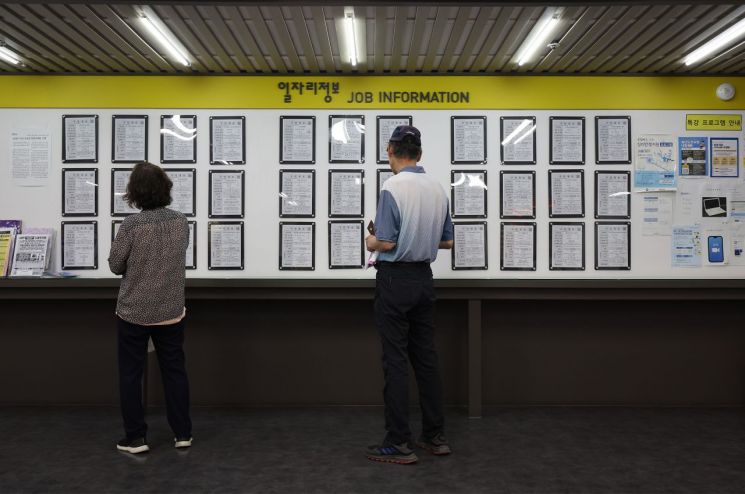 Amid the aging trend, the number of employed people in their 60s has surpassed that of those in their 20s. It was found that 6 out of 10 people in their 60s are working.
 [Photo by Yonhap News]
Kurzgesagt pointed out that South Korea's aging population is the main issue.
Specifically, Kurzgesagt said, "If the average age in South Korea was 18 years old (19 in international age) in 1950, it will be 45 in 2023 and 59 in 2100." They explained that as the working-age population (ages 15-64) shrinks and ages, the medical costs and poverty that society must bear will increase explosively, and innovation will become difficult. They cited China as currently experiencing these problems.
They also stated, "In an aging society, elected governments represent the interests of the elderly population. This leads to a society that thinks short-term and prefers maintaining the status quo over innovation. Solving future issues like climate change requires massive investment and fresh ideas, which become difficult."
As solutions, they suggested financial benefits for parents such as gender equality and childcare support, as well as stable housing prices.
Global netizens express empathy and concern, mentioning cases from various countries
 Earlier, in the EBS documentary aired last July titled 'Population Project: Ultra-Low Birthrate,' Joan Williams, an expert in race, gender, and class from California State University, was shown on screen reacting to South Korea's total fertility rate by saying, "South Korea is completely ruined. Wow! I've never heard of such a low birthrate." This broadcast scene has spread online and become a hot topic.
 [Photo by EBS]
Global netizens who watched the video expressed empathy and concern by mentioning cases from their own countries. A netizen identifying as Greek commented, "In Greece, politicians have been elected by providing welfare for retirees, and as the younger generation burdened by this leaves, the population supporting the elderly has decreased."
A British netizen also empathized, saying, "The UK is also on the edge. There is a shortage of teachers and childcare facilities, and the condition of affordable housing is poor. I want to have children someday, but I doubt if I actually can."
A Norwegian netizen in their 30s commented, "In Norway, despite going through various jobs, I still haven't had the chance to buy an apartment. How can I have children when I can't even date?"
Earlier, in the EBS documentary "Population Project: Ultra-Low Birthrate" aired in July, Joan Williams, an expert on race, gender, and class from California State University, reacted to South Korea's total fertility rate by saying, "South Korea is completely doomed. Wow! I've never heard of such a low fertility rate," and the broadcast clip went viral online, becoming a hot topic.
© The Asia Business Daily(www.asiae.co.kr). All rights reserved.
![Clutching a Stolen Dior Bag, Saying "I Hate Being Poor but Real"... The Grotesque Con of a "Human Knockoff" [Slate]](https://cwcontent.asiae.co.kr/asiaresize/183/2026021902243444107_1771435474.jpg)


















