Notice of Designation for Hadong Chilbulsa Ajabang Ondol
"A Unique Cultural Heritage Combining Ondol Culture and Seonbang"
'Hadong Chilbulsa Ajabang Ondol,' representing the history of Korea's ondol culture, will be designated as a National Folk Cultural Heritage. The Cultural Heritage Administration announced on the 6th that it will finalize the designation after collecting opinions from various sectors for a month and undergoing a review by the Cultural Heritage Committee.
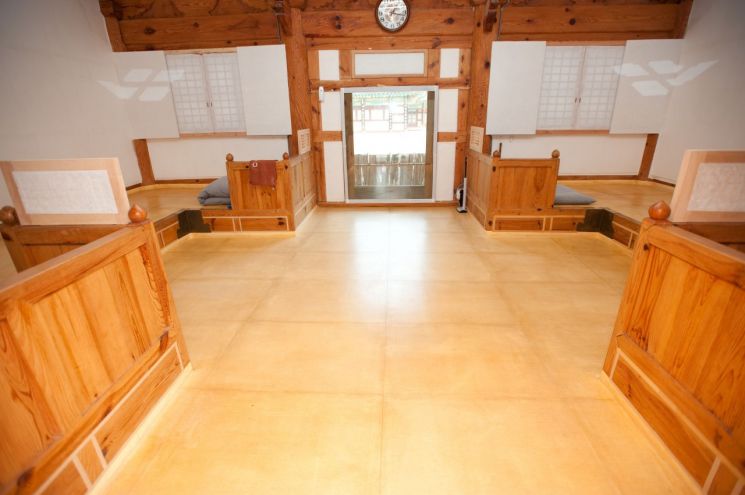
This is a uniquely shaped ondol room located on the southern slope of Banya Peak in Jirisan, at Chilbulsa Temple (Hwage-myeon, Hadong-gun, Gyeongnam). Chilbulsa is a branch temple of Ssanggyesa, the head temple of the 13th district of the Jogye Order of Korean Buddhism. It is famous as Chilbulam Hermitage, where the seven princes of King Kim Suro of Garak Kingdom became monks and attained enlightenment.
Within the temple grounds, there is a room called 'Ajabang (亞字房).' The corners inside the room are constructed one step higher than the floor level so that monks can practice facing the walls. The entire room forms a floor plan shaped like the character '亞' and is equipped with ondol heating. It is said to have been first created during the Silla period.
According to artifacts excavated in 2017 from the Goryeo period (including roof tiles, foundation stones, and hearth stones) and various records, the Ajabang ondol functioned as a Seon (Zen) meditation room in a Seon Buddhist temple. Its existence is also confirmed in travelogues left by old scholars who visited Jirisan and newspaper articles from the Japanese colonial period. It is presumed that monks meditated in the elevated corners and read Buddhist scriptures on the lower central platform.
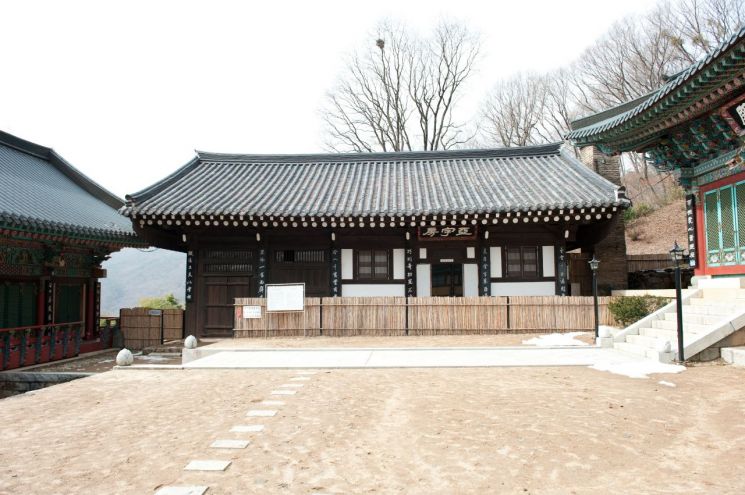
This ondol is said to have never been repaired for about 1,000 years. Once heated, the ondol and walls retain warmth for a month. A Cultural Heritage Administration official stated, "It is a unique cultural heritage combining traditional Korean ondol culture and the Seon meditation rooms of Seon Buddhist temples," adding, "It holds great academic significance in Buddhist history and architectural history, and is extremely rare among existing examples."
© The Asia Business Daily(www.asiae.co.kr). All rights reserved.
![User Who Sold Erroneously Deposited Bitcoins to Repay Debt and Fund Entertainment... What Did the Supreme Court Decide in 2021? [Legal Issue Check]](https://cwcontent.asiae.co.kr/asiaresize/183/2026020910431234020_1770601391.png)

















