Tokyo Electric Power Company (TEPCO) will begin the second phase of releasing contaminated water from the Fukushima Daiichi Nuclear Power Plant into the ocean on the 5th.
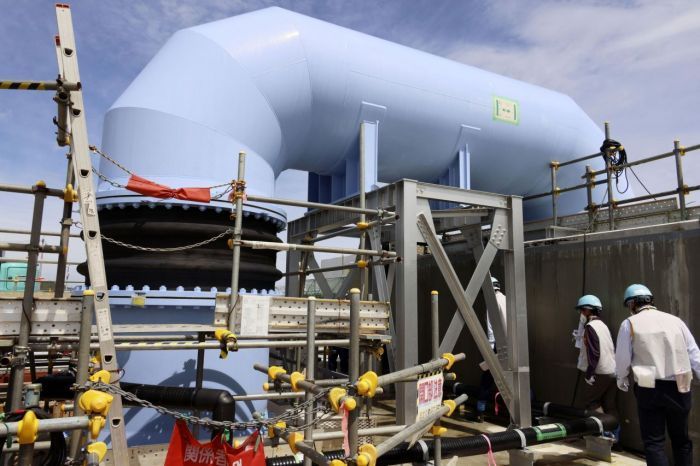 Fukushima Daiichi Nuclear Power Plant contaminated water discharge facility.
 [Image source=Yonhap News]
TEPCO plans to discharge approximately 7,800 tons of contaminated water, the same amount as the first phase, from the start of the second release period on this day until the 23rd of this month. The daily discharge volume is expected to be around 460 tons. Local media reported that TEPCO will start the release at 10:30 a.m. on this day.
TEPCO dilutes the contaminated water stored in tanks on the Fukushima Daiichi Nuclear Power Plant site, which has passed through the Advanced Liquid Processing System (ALPS), with seawater and releases it into the sea in front of the plant through an approximately 1 km long underwater tunnel. The ALPS purification process can remove 62 types of radioactive substances, including cesium. However, radionuclides such as tritium and carbon-14 remain in trace amounts.
Tritium, which cannot be filtered out by ALPS, is diluted with seawater to a concentration below 1,500 becquerels (Bq) per liter (L), which is 1/40th of Japan's regulatory standard, before being discharged into the ocean.
TEPCO announced that the tritium concentration in the contaminated water diluted with seawater, measured the day before, was up to 87 Bq per liter, which is below the discharge standard.
Additionally, trace amounts of four radioactive nuclides?carbon-14, cesium-137, cobalt-60, and iodine-129?were detected in the contaminated water stored in the tanks for the second discharge, but all were well below the official concentration limits, TEPCO added.
Previously, TEPCO discharged 7,788 tons of contaminated water during the first phase from August 24 to September 11.
The Japanese government, Fukushima Prefecture, and TEPCO have regularly collected seawater and fish around the nuclear power plant after the contaminated water discharge and analyzed tritium concentrations, announcing no abnormalities.
The Japanese government and TEPCO plan to discharge a total of 31,200 tons of contaminated water in four phases by March next year.
© The Asia Business Daily(www.asiae.co.kr). All rights reserved.
!["I'd Rather Live as a Glamorous Fake Than as a Poor Real Me"...A Grotesque Success Story Shaking the Korean Psyche [Slate]](https://cwcontent.asiae.co.kr/asiaresize/183/2026021902243444107_1771435474.jpg)
















