7 Years After Geonbo Union Strike
National University Hospitals Also Strike
"Strikes May Increase Further"
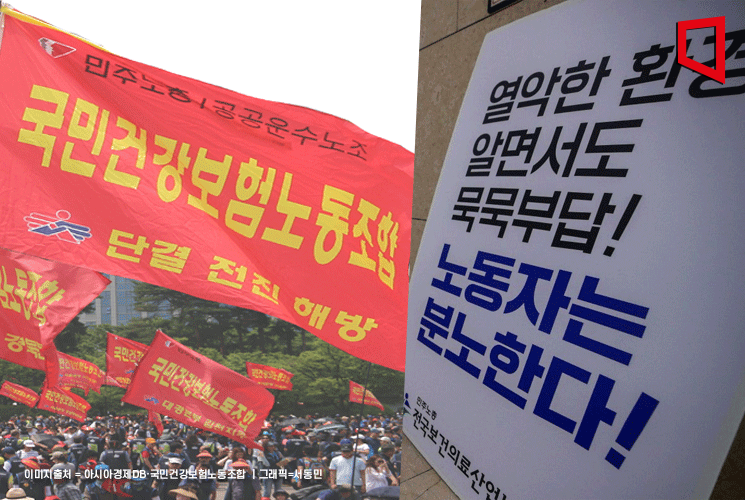
Amid widespread strikes across various sectors following the end of the COVID-19 pandemic, workers in the health insurance and public healthcare sectors are also preparing to strike over demands for improved working conditions. If their strike materializes, the public may face disruptions in resolving health insurance-related complaints and hospital treatments.
According to labor circles on the 5th, the National Health Insurance Labor Union has announced a rotating strike by headquarters starting on the 11th, citing reasons such as the failure of this year's wage negotiations and opposition to the performance-based wage system. The collective action was approved with 74.7% of all members and 90.0% of voters in favor in the strike referendum.
The rotating strike will begin at the Daejeon-Sejong-Chungnam headquarters of the National Health Insurance Corporation and continue until the headquarters on the 17th. If negotiations with management do not occur during this period, an indefinite full strike will commence from the 18th.
The Health Insurance Labor Union is also critical of the current government's policy to reduce health insurance coverage. During the previous administration, insurance benefits for MRI, CT scans, and other services were expanded, causing related health insurance expenditures to increase tenfold. As a result, starting this month, patients are required to bear 100% of the cost for MRIs taken for simple headaches or dizziness, effectively reducing coverage for frequently used high-cost treatments.
A union official stated, “Health insurance coverage is shrinking, and market-oriented health insurance policies are being promoted. Representative examples include a 30% increase in fees for non-face-to-face consultations and the simplification of claims for indemnity insurance, reflecting U.S.-style medical privatization policies.” The official added, “The second comprehensive health insurance plan (2024?2028), scheduled to be released by the Ministry of Health and Welfare by the end of the year, must include measures to strengthen coverage.”
This strike by the Health Insurance Labor Union is the first in seven years since the strike against the ‘performance-based pay system’ policy pushed by the Park Geun-hye administration in 2016. According to the union, there are 14,000 members, accounting for 90% of the employees. A union representative said, “Almost all employees at the team leader level and below who are eligible to join the union have actually joined,” adding, “The strike could significantly impact public-facing tasks related to health insurance.” The National Health Insurance Corporation, which has the largest number of branches nationwide among public institutions, is responsible not only for managing subscriber qualifications and paying insurance benefits but also for collecting contributions for the four major social insurances.
With strikes also looming at national hospitals, disruptions in medical services have become inevitable. The Seoul National University Hospital and Kyungpook National University Hospital branches of the Public Transport Workers’ Union Medical Solidarity Headquarters have demanded strengthening medical publicness, increasing staffing, and improving working conditions, and if no compromise is reached, they will begin striking on the 11th.
There are expectations that other national university hospitals may join the strike in the future. A union official said, “Healthcare workers experienced significant burnout during the COVID-19 pandemic,” adding, “If substantial improvements in working conditions and staffing are not made, strikes are likely to increase further.”
© The Asia Business Daily(www.asiae.co.kr). All rights reserved.

















