Severe Drought in Australian Outback Due to Climate Change
Cattle Slaughter Increases as Pastures Shrink
Beef Supply Rises, Prices Plummet
The price of Australian beef has plummeted by 60% this year. As drought conditions have worsened in the Australian interior due to climate change, the cost of raising cattle has surged, prompting livestock farmers to rush to slaughter their cattle.
On the 4th (local time), the US financial media outlet Bloomberg reported, citing Australia's "Eastern Young Cattle Indicator," that "the price of Australian beef cattle has fallen by 60% this year, marking the lowest level since December 2014."
The Eastern Young Cattle Indicator is a metric compiled by Meat & Livestock Australia (MLA) that calculates the price of beef per kilogram. At the end of last year, the price of Australian beef soared to 8.6 Australian dollars per kilogram (approximately 7,400 KRW), but it currently stands at only 3.57 dollars (about 3,066 KRW).
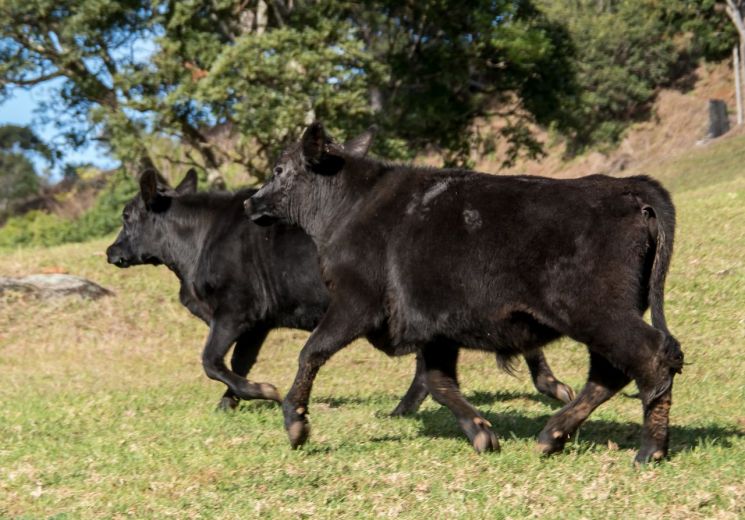
So why has the price of Australian beef collapsed in just one year? The reason lies in the climate. According to Bloomberg, Australia recently experienced the driest September on record due to the 'El Ni?o' phenomenon, which causes rising temperatures and reduced rainfall.
As this weather persisted, many parts of the Australian interior suffered from drought, causing the pastures that feed cattle to wither. Australian cattle primarily feed on pasture grass.
With pasture becoming scarce, the cost of raising a single cow skyrocketed, and ultimately, livestock farmers who could not afford the rising feed costs began putting their cattle on the market. Consequently, the volume of beef being slaughtered suddenly increased, leading to a sharp drop in meat prices.
Markets that import Australian beef, such as South Korea, Japan, and the United States, are expected to see an increased market share of Australian beef cattle. An Australian livestock expert told the media, "Our (beef) prices are currently the most competitive in history, and we can now compete directly with the United States."
The United States also experienced a collapse in beef prices in the past due to pasture shortages similar to Australia’s. However, as cattle values have risen, many farmers are expanding their livestock herds instead of sending cattle to slaughterhouses.
Stephen Bicknell, MLA's Market Information Manager, told Bloomberg in an interview, "The US will not be able to produce large amounts of beef for an extended period," adding, "This presents an opportunity for Australia's livestock industry."
© The Asia Business Daily(www.asiae.co.kr). All rights reserved.
!["The Woman Who Threw Herself into the Water Clutching a Stolen Dior Bag"...A Grotesque Success Story That Shakes the Korean Psyche [Slate]](https://cwcontent.asiae.co.kr/asiaresize/183/2026021902243444107_1771435474.jpg)
















