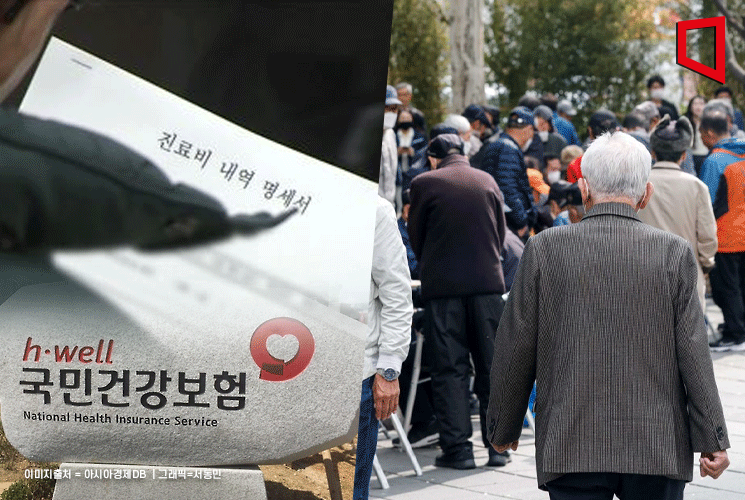
Last year, health insurance patient medical expenses surpassed 100 trillion won for the first time. It is analyzed that factors such as the lifting of COVID-19 social distancing measures and population aging contributed to this increase.
According to the "2022 Health Insurance Major Statistics (Insurance Benefits Edition)" released by the National Health Insurance Service on the 4th, the medical expenses paid to medical institutions and pharmacies through health insurance and patient out-of-pocket payments last year totaled 102.4277 trillion won. This is a 9.5% increase compared to the previous year. Medical expenses refer to the total amount covered by health insurance plus the patient's own payment. This is the first time that annual health insurance patient medical expenses have exceeded 100 trillion won.
First, the simultaneous outbreak of various respiratory infectious diseases due to the spread of the COVID-19 Omicron variant and the easing of quarantine measures led to an increase in medical expenses. Last year, COVID-19 medical expenses amounted to 5.7206 trillion won, more than tripling compared to 2021 (1.3033 trillion won). Additionally, medical expenses for respiratory diseases increased by 37.3%, from 4.515 trillion won to 6.2003 trillion won during the same period.
As the COVID-19 outbreak subsided, more people visited medical institutions in person. Last year, the total number of outpatient and inpatient days at medical institutions reached 1.05833 billion days, a sharp increase of 10.5% compared to the previous year. This follows decreases of 11.5% and 0.5% in 2020 and 2021, respectively, before the significant rise.
Medical expenses for the elderly population aged 65 and over increased by 8.6% last year to 44.1187 trillion won. Although the elderly make up only 17.0% of the total population, their average monthly medical expenses per person were 429,585 won, more than twice the overall average of 160,673 won. The average monthly inpatient days per person for the elderly was also nearly three times longer than the overall average, at 3.75 days compared to 1.31 days.
Last year, the payment for benefits to medical institutions was 76.725 trillion won, an increase of 9.3%. General hospitals accounted for the largest share at 34.3% (26.331 trillion won), followed by clinics (including dental clinics and Korean medicine clinics) at 30.0% (23.007 trillion won). The growth rate for clinics was steep at 18.2%. The benefit rate, which is the proportion of benefits in medical expenses, was 74.9%, similar to 75.3% in 2020 and 75.0% in 2021.
© The Asia Business Daily(www.asiae.co.kr). All rights reserved.

















