The U.S. government has begun full-scale preparations as the possibility of a 'shutdown'?a temporary halt in operations due to delays in Congress passing next year's budget?increases. The International Monetary Fund (IMF) called the situation a "preventable risk" and urged a resolution.
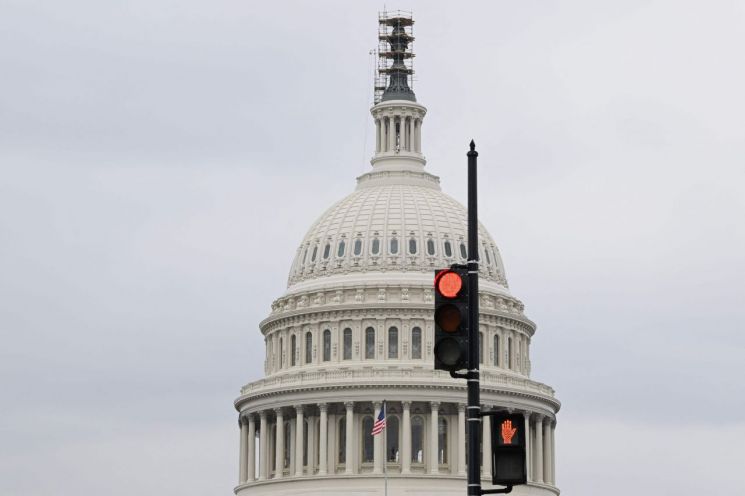
According to the Washington Post (WP) and others, U.S. government agencies started providing federal employees with work guidelines in case of a shutdown on the 28th (local time). A shutdown occurs if Congress fails to pass the budget before the start of the 2024 fiscal year on October 1.
The Department of Homeland Security (DHS) informed its staff that "during the shutdown, some employees will be placed on temporary leave, while those performing essential duties will continue to carry out their assigned tasks."
During a shutdown, federal employees except for essential personnel will enter unpaid leave without receiving salaries. Only civil servants performing essential duties related to security and safety will work without pay during the shutdown and receive retroactive pay once Congress passes the budget. Approximately 1.3 million active-duty military personnel will also serve without pay.
All official travel except for cases critical to national security will be suspended. Passport and visa issuance services will continue to operate normally as they are funded by applicant fees. Although aircraft operations are classified as essential, prolonged shutdowns will inevitably cause disruptions. More than 25,000 employees of the Federal Aviation Administration (FAA), including air traffic controllers, accident investigators, and counterterrorism and safety personnel, are expected to work without pay. However, even during the 2018 shutdown that lasted over a month, cancellations and delays were reported.
Disruptions are also expected in the execution of some social welfare programs. Medicaid for low-income individuals, Medicare for the elderly, and Social Security benefits are funded through procedures other than the annual appropriations bill, so payments will continue without interruption. However, food assistance payments to low-income groups may be immediately halted if reserve funds run out.
The shutdown could also impact financial markets. At a critical time when inflation concerns are resurfacing, delays or suspensions in the release of key economic indicators are expected to increase uncertainty surrounding monetary policy.
Typically, if Congress fails to reach a budget agreement before the new fiscal year begins on October 1, it prioritizes passing a temporary budget to prevent government funding from stopping. However, this time, hardliners within the House Republican majority, who hold the authority to review the budget bill, are demanding significant cuts, causing difficulties not only in budget negotiations but also in passing the temporary budget.
The U.S. Congress has experienced two shutdowns in history. The most recent shutdown occurred at the end of 2018 during the Trump administration, lasting about five weeks due to a congressional standoff over border wall funding.
The IMF urged a resolution. Julie Kozack, IMF spokesperson, said at a briefing that day, "We urge the parties to come together, reach an agreement, and find a way forward," adding, "A shutdown is a preventable risk to the U.S. economy." However, she did not comment on the specific impact the shutdown might have on the U.S. economy.
© The Asia Business Daily(www.asiae.co.kr). All rights reserved.
















