Foreign Exchange Market Volatility↑ · Profitability of Major Export Companies↓
Although concerns are spreading within the global financial market due to instability in the Chinese real estate market, it has been assessed that the likelihood of this risk transferring to the domestic system is low. However, it is pointed out that attention should be paid to the latent risks arising from excessively accumulated real estate-related debt, especially since the Chinese government is unlikely to implement structural improvements in the real estate market in the short term.
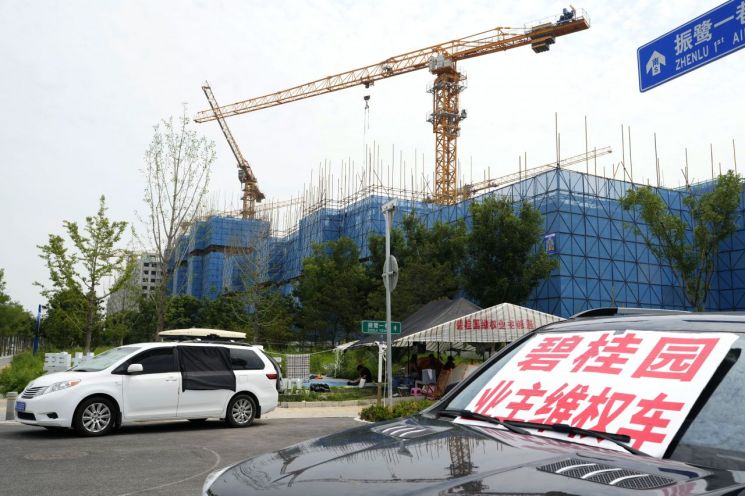
The Bank of Korea stated in its recently published Financial Stability Report's analysis titled "Impact of Instability in the Chinese Real Estate Market on the Domestic Financial System" that "the total borrowings of Country Garden, which caused recent real estate market instability, amounted to 162.5 billion yuan (as of the end of last year), accounting for only 0.05% of the total assets of Chinese banks."
Considering Country Garden's asset and liability scale, its low connectivity with other financial sectors, and the Chinese government's willingness to respond during the Evergrande crisis in September 2021, it is judged that the negative ripple effects will not be significant.
According to the report, the exposure of domestic financial institutions to Chinese real estate development companies and real estate trusts is not large, so the damage in case of defaults is expected to be limited. The exposure of domestic financial institutions is approximately 400 billion KRW, and even including exposure related to Chinese real estate trusts, the total is less than 1 trillion KRW.
Furthermore, the proportion of revenue from overseas branches in China and Hong Kong to the total revenue of domestic banks is less than 1.5%, which is not significant, so the impact through this channel is also expected to be limited.
In particular, the spread of instability in the Chinese real estate market could lead to yuan depreciation → KRW exchange rate depreciation → increased foreign currency funding costs, which may constrain the foreign currency funding conditions of domestic financial institutions. However, considering the foreign currency liquidity status of domestic financial institutions, it is expected that the financial system can sufficiently maintain stability even in the event of short-term foreign exchange market shocks.
Regarding the possibility that margin calls at domestic securities firms may occur during a sharp decline in global stock markets such as Hong Kong, affecting the foreign currency liquidity status of financial institutions, it was judged that this is a manageable level given each firm's foreign currency funding contingency plans.
Although global stock market instability may cause some losses to domestic investors, mainly in equity-linked securities (ELS) products linked to overseas stock indices, considering the maturity status of ELS products that have entered the principal loss zone (knock-in) this year, the impact of investor losses on the financial system is also expected to be limited.
According to the Financial Supervisory Service, the balance of products with principal losses amounts to 7.046 trillion KRW, with products maturing this year totaling 42 billion KRW. However, products maturing in the first half of next year amount to 6.028 trillion KRW, and those maturing in the second half of next year total 672 billion KRW.
The Bank of Korea stated, "The short-term impact of instability in the Chinese real estate market is limited, but there is concern that it may act as a stress factor in the medium to long term. Not only does it contribute to increased volatility in the foreign exchange market, but for export companies to China that are directly affected by China's economic slowdown and export restrictions, there is a possibility of deterioration in profitability and financial conditions. Therefore, the soundness of financial institutions holding loans to these companies may also be negatively affected."
© The Asia Business Daily(www.asiae.co.kr). All rights reserved.

















