Bloomberg Report
China Dominates Key Battery Minerals and Materials
Battery Factory Construction Costs: US·EU $12 Billion vs China $9 Billion
Despite US·EU Checks, Difficult to Exclude China from Supply Chain
Analysis suggests that it is impossible for the United States and Europe to reduce their dependence on China in the global electric vehicle market. In Europe, the amount required for battery supply chain independence is estimated to reach 550 trillion won.
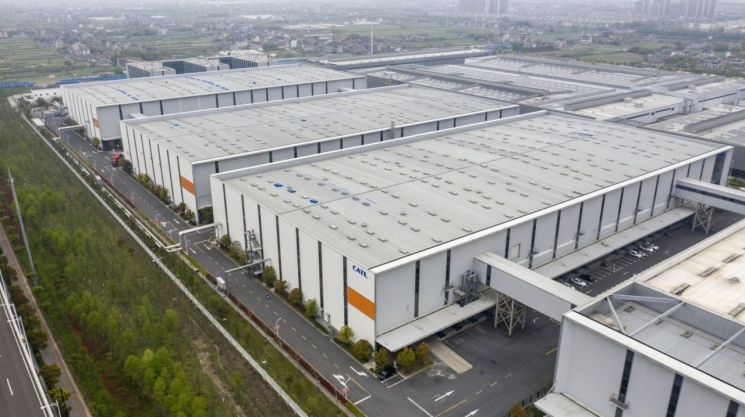
According to Bloomberg on the 26th (local time), China accounts for 80% of the global supply of electric vehicle battery cells. Battery cells are the smallest unit of electric vehicle batteries, produced through the process of 'cell → module → pack.'
China controls the entire process from mineral mining to processing in the key minerals and materials market necessary for battery manufacturing. According to the International Energy Agency (IEA), more than half of the world's lithium processing takes place in China. China refines about 65% of cobalt, 70% of graphite, and 35% of nickel.
China has also dominated the battery cell materials market. It holds 70% and 80% shares in the anode and cathode materials markets, respectively, and records over 50% market share in electrolytes and electric vehicle separators. Based on this enormous influence, China is estimated to occupy 75% of the lithium-ion battery market, which is currently the mainstream for electric vehicle batteries.
This leads to securing the lead in battery supply for overseas electric vehicle manufacturers as well as price competitiveness of Chinese electric vehicles based on 'economies of scale.' Bloomberg's survey of battery pack prices in major countries found that Chinese products cost $127 per kilowatt-hour (kWh), while prices in North America and Europe were 24% and 33% higher, respectively.
China's market dominance is cited as a reason why the deterrent effects of the United States and Europe are difficult to manifest. The United States introduced the Inflation Reduction Act (IRA) last August to reduce dependence on Chinese batteries, and the European Union (EU) recently launched an investigation into China's electric vehicle subsidies. Ilaria Mazzocco, a senior researcher at the Center for Strategic and International Studies (CSIS), a U.S. think tank, said, "Is it feasible to completely separate China from the supply chain? Certainly not at this time."
Building battery production plants in the United States and Europe also requires much higher costs than in China. Bloomberg estimates that constructing a single battery plant in the U.S. or Europe costs $865 million (about 1.17 trillion won), which is significantly higher than in China, where labor and construction costs are relatively cheaper at $650 million (about 880 billion won). It is also estimated that building the necessary battery plants in the U.S. and Europe will require $82 billion (about 110 trillion won) and $98 billion (about 130 trillion won) respectively by 2030. In particular, if the EU fully localizes its electric vehicle supply chain by 2030, it is estimated to incur costs as high as €382 billion (about 550 trillion won).
In this situation, Bloomberg reported that it seems difficult for the EU, which is investigating China's electric vehicle subsidies, to raise tariffs on imported Chinese electric vehicles from the current 10% to the U.S. level of 27.5%. Pierre-Olivier Essig, a researcher at Air Capital, stated, "China completely controls the battery supply chain," and "there are no measures the EU can currently take regarding the entry of Chinese automakers into Europe."
© The Asia Business Daily(www.asiae.co.kr). All rights reserved.
![Clutching a Stolen Dior Bag, Saying "I Hate Being Poor but Real"... The Grotesque Con of a "Human Knockoff" [Slate]](https://cwcontent.asiae.co.kr/asiaresize/183/2026021902243444107_1771435474.jpg)
















