The health insurance premium rate for next year has been set at 7.09% of monthly salary, the same as this year.
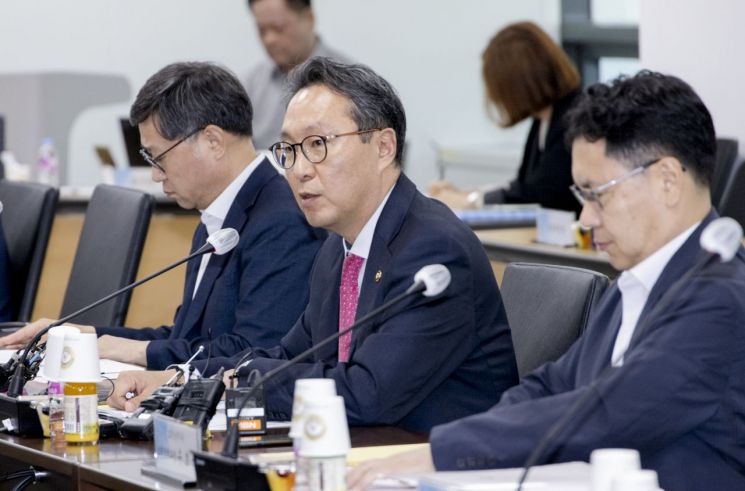
On the 26th at 2 p.m., the Ministry of Health and Welfare held the '19th Health Insurance Policy Deliberation Committee (hereinafter referred to as the Health Insurance Committee) of 2023' and announced that it decided to freeze the health insurance premium rate at this year's level. This marks the third freeze in history. The health insurance premium rate has increased every year since 2005, except in 2009 and 2017. It rose by around 1% over four years: 1.6% in 2013, 1.7% in 2014, 1.35% in 2015, and 0.9% in 2016. After the freeze in 2017, it increased to 2.04% in 2018, 3.49% in 2019, 3.20% in 2020, 2.89% in 2021, and 1.89% in 2022. This year, the health insurance premium rate for workplace subscribers rose by 1.49% from the previous year to 7.09%, and the assessment points for regional subscribers are 208.4 won. The average monthly health insurance premium amounts are 146,712 won for workplace subscribers and 107,441 won for regional subscribers.
The reason for freezing the premium rate next year at the same level as this year is that the health insurance finances have recorded cumulative surpluses. The government views the health insurance finances as relatively stable. A surplus in health insurance finances is expected for three consecutive years. Last year, the health insurance finances recorded a current account surplus of 3.6291 trillion won. The reserve fund (covering 3 to 4 months of benefit payments) has grown from 959.2 billion won in 2010 to 1.56 trillion won in 2011, 8.2203 trillion won in 2013, 16.98 trillion won in 2015, and 23.9 trillion won in 2022. The current reserve fund is at an all-time high. In February, the government established the 'Health Insurance Sustainability Enhancement Plan' to streamline expenditures and comprehensively inspect financial leak factors, focusing on stabilizing the health insurance finances.
Recent difficult economic conditions for the public due to rising prices and interest rates were also taken into account. The consumer price inflation rate rose from 0.4% in 2019 to 5.1% at the end of last year, the highest since 1998. The base interest rate is currently 3.5%, the highest since 2008.
Some voices suggest that this decision was influenced by the upcoming National Assembly general election in half a year. The Ministry of Health and Welfare is likely to include an increase in pension insurance premiums in the pension reform plan to be announced next month. Increasing both pension and health insurance premiums is seen as a burden.
Through this decision on the health insurance premium rate, the government plans to ease the burden on the public while establishing the '2nd Comprehensive Health Insurance Plan (2024?2028)' to expand support for essential medical care and improve the financial sustainability of health insurance.
Park Min-su, the 2nd Vice Minister of the Ministry of Health and Welfare, said, "We have decided to freeze the premium rate for the first time in seven years since 2017," adding, "In these economically challenging times, the government will do its best to ensure that precious insurance premiums are used appropriately without waste or leakage, and will especially proceed smoothly with reforms for essential medical care."
© The Asia Business Daily(www.asiae.co.kr). All rights reserved.

















