"Finding Alternatives to ABS Plastic Materials Is Difficult"
Global assembly toy manufacturer Lego has halted its ambitious project to make blocks by recycling PET bottles after two years. It was confirmed that the production process using recycled plastic actually emits more carbon.
According to foreign media including the British daily The Guardian on the 24th (local time), Lego announced that it concluded that producing Lego blocks using recycled plastics such as PET bottles could ultimately cause more carbon emissions.
Since 2018, Lego has employed over 150 scientists, including materials engineers, to research more than 250 types of eco-friendly materials. The ABS plastic used in about 80% of existing Lego blocks requires roughly 2 kg of crude oil to produce 1 kg. The research tentatively concluded that making blocks from PET bottles certified in the US and Europe is the best option. One 1ℓ PET bottle can be recycled into about 10 Lego blocks.
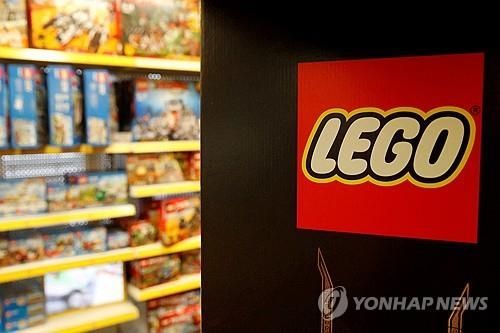
Accordingly, in 2021, as part of sustainable development and eco-friendly efforts, Lego began full-scale research on manufacturing blocks recycled from PET bottles instead of ABS plastic. However, after two years, Lego decided that it could not find a 'magic material' to solve the problem.
Tim Brooks, Lego's Vice President of Environmental Responsibility and Sustainable Materials, explained, "Making blocks from PET bottle waste plastic is like trying to make a bicycle out of wood instead of iron. To achieve the hardness of ABS plastic, reinforcing components must be added to PET bottles for durability, which requires expanding factory facilities and consumes more carbon."
Niels Christiansen, Lego's Chief Executive Officer (CEO), also said, "Since 2021, we have experimented with tens of thousands of materials but could not find the 'magic material' to solve sustainability issues," adding, "Going forward, we plan to enhance the sustainability of ABS plastic by increasing the content of eco-friendly and recycled materials." He also stated, "We will triple our annual investment to $3 billion by 2025 to secure sustainability, and the company will bear these costs without passing them on to consumers."
Founded in 1932 by Danish carpenter Ole Kirk Christiansen, Lego started as a wooden toy manufacturer but began seeking new materials after a factory fire in 1942. In 1947, it imported plastic injection machines from the UK and started producing the first plastic toys, and in 1958 developed technology to interlock blocks. Since 1963, Lego has been producing ABS plastic blocks with strong bonding, continuing to this day.
© The Asia Business Daily(www.asiae.co.kr). All rights reserved.

![Clutching a Stolen Dior Bag, Saying "I Hate Being Poor but Real"... The Grotesque Con of a "Human Knockoff" [Slate]](https://cwcontent.asiae.co.kr/asiaresize/183/2026021902243444107_1771435474.jpg)















