Hyundai Motor Company and Kia are significantly lowering the prices of electric vehicles in line with the government's policy to expand electric vehicle subsidies. When combining Hyundai's own discounts with the expanded government subsidies, the actual purchase price of the Ioniq 5, originally priced at around 54 million KRW, drops to approximately 39.9 million KRW.
On the 25th, Hyundai and Kia announced the operation of the EV Sale Festa and stated that they will offer electric vehicle discounts until the end of the year. Compared to the regular price, Hyundai offers discounts of ▲4 million KRW on the Ioniq 5 ▲4 million KRW on the Ioniq 6 ▲2 million KRW on the Kona EV, and Kia offers ▲3.2 million KRW on the EV6 ▲1.2 million KRW on the Niro EV and Niro Plus.
Considering the government's additional subsidy expansion policy, the discounts amount to ▲4.8 million KRW on the Ioniq 5 ▲4.8 million KRW on the Ioniq 6 ▲2.4 million KRW on the Kona EV, and for Kia ▲3.84 million KRW on the EV6 ▲1.44 million KRW on the Niro EV and Niro Plus.
On the same day, the government announced a plan to temporarily expand subsidy support until the end of the year for passenger cars priced below 57 million KRW. The core of the policy is to temporarily increase national subsidies proportionally to the manufacturers' price reductions on passenger cars. The national subsidy per vehicle increases by 1 million KRW from the existing 6.8 million KRW to a maximum of 7.8 million KRW.
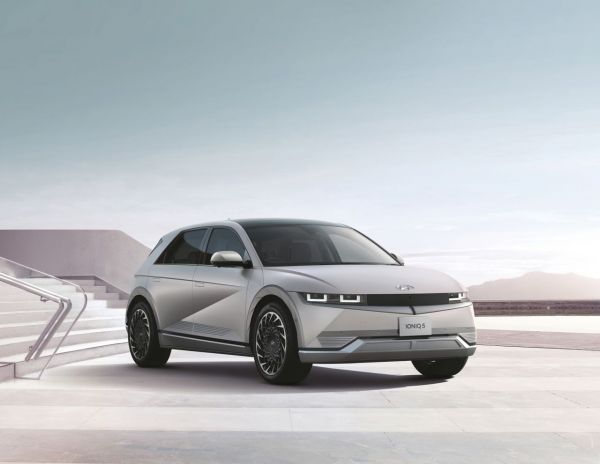
Accordingly, Hyundai and Kia have significantly lowered the delivery prices of major electric vehicle models by 1.2 million to 4 million KRW. For example, when purchasing a Hyundai Ioniq 5 Exclusive in Seoul, customers first receive a 4 million KRW discount (3.2 million KRW price discount + 800,000 KRW electric vehicle charging credit) under the manufacturer's own price reduction policy.
Then, combined with the national and Seoul city subsidies (existing purchase subsidy of 8.6 million KRW) plus the additional 800,000 KRW from the new policy, a total purchase subsidy of 9.4 million KRW is provided. This means the Ioniq 5 can be purchased at 40.7 million KRW after a 13.4 million KRW discount from the original price of 54.1 million KRW. Additionally, if using Hyundai Card or Hyundai Capital's installment program, an 800,000 KRW electric vehicle charging credit is provided, lowering the actual purchase price to 39.9 million KRW.
Hyundai and Kia have also prepared various electric vehicle promotions. Kia offers low-interest benefits for up to 60 months on all electric vehicle models. Including electric vehicle subsidies, if the down payment is 50% or more, special interest rates of ▲3.0% for 36 months ▲3.5% for 48 months ▲4.0% for 60 months can be applied.
For individuals and sole proprietors purchasing the EV9 vehicle, members points equivalent to one year’s charging fee (worth 1 million KRW) are provided. For the Ray EV, individual and sole proprietor buyers receive a 150,000 KRW discount on the vehicle price plus a 150,000 KRW cashback, supporting six months’ worth of charging fees (worth 300,000 KRW).
Meanwhile, Hyundai Motor Group is also expanding its ultra-fast charging infrastructure business through 'E-pit,' an ultra-fast electric vehicle charging station. E-pit was established to enhance electric vehicle charging convenience and contribute to the activation of electric vehicle adoption in Korea. It features ultra-fast charging equipment with a domestic top-level output of 350kW. Hyundai Motor Group operates a total of 214 E-pit charging stations across urban and highway locations, including Hwaseong Rest Area on the West Coast Expressway, Euljiro Center One, and the National Science Museum.
A Hyundai Motor Company representative said, "In connection with the expanded support policy for electric passenger car purchase subsidies, we have prepared discount benefits to repay customers' support and love," adding, "We ask for the interest of those considering purchasing a vehicle."
© The Asia Business Daily(www.asiae.co.kr). All rights reserved.

![Clutching a Stolen Dior Bag, Saying "I Hate Being Poor but Real"... The Grotesque Con of a "Human Knockoff" [Slate]](https://cwcontent.asiae.co.kr/asiaresize/183/2026021902243444107_1771435474.jpg)















