Outstanding Currency Issuance Balance Approaches 90% for 50,000-Won Bills
Redemption Rate Remains Low...Cash Holding Tendency Estimated to Strengthen
10,000-Won Bills Account for Less Than 10%... 'All-Time Low'
The 50,000 won bill accounts for nearly 90% of the currency issuance balance. The currency issuance balance refers to the amount of money remaining in circulation after the Bank of Korea (BOK) subtracts the money it has withdrawn from the currency it has supplied to the market.
Congratulatory and Condolence Money, Holiday Allowances, Everyday Payments... The 50,000 Won Bill Becomes Mainstream Due to 'Economic Expansion and Inflation'
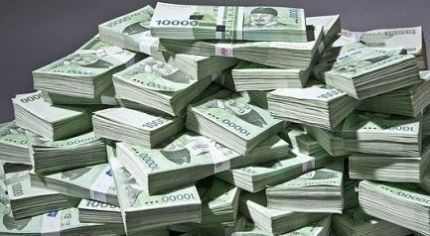
According to the Bank of Korea on the 25th, as of the end of August, out of the total currency issuance balance of 176.8 trillion won, 155.7 trillion won was in 50,000 won bills. This means that 88.1% of the currency issuance balance is in 50,000 won bills.
On the other hand, the share of 10,000 won bills fell below 10%, and the shares of 5,000 won and 1,000 won bills were less than 1%, indicating that the 50,000 won bill has become dominant in congratulatory money, holiday allowances such as Chuseok, and everyday payments.
The share of the 50,000 won bill surpassed 88% for the first time since its issuance in June 2009. At the time of its first issuance, the 50,000 won bill accounted for only 7.7% of the currency in circulation, but it quickly exceeded 10% in July at 12.9%, and surpassed 20% in September at 20.5%.
Since then, with the expansion of the economy and rising prices, demand for high-denomination bills that are convenient to use increased, and the circulation of the 50,000 won bill continued to grow rapidly.
The share of the 50,000 won bill exceeded 30% of the currency issuance balance in February 2010, 40% in September 2010, and even broke through the 50% barrier in August 2011.
It then surpassed 60% in December 2012, 70% in January 2015, 80% in November 2017, and 85% in June 2021.
"Where Are King Sejong and the Others?"... The 10,000 Won Bill at an All-Time Low of 8.8% of Currency Issuance Balance, 5,000 and 1,000 Won Bills Losing Presence
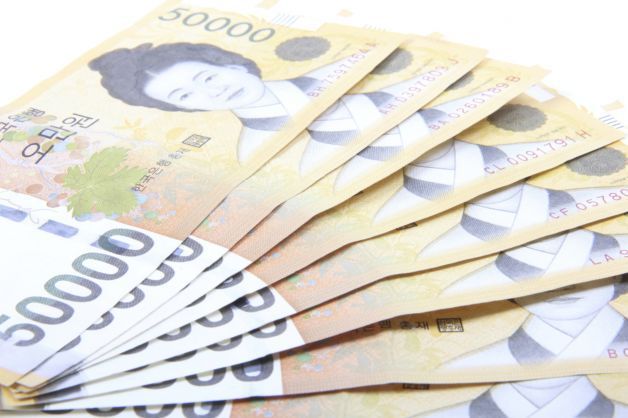
Meanwhile, the share of the 10,000 won bill has decreased as it was overshadowed by the 50,000 won bill.
As of August, the currency issuance balance of the 10,000 won bill was 15.6 trillion won, accounting for 8.8% of the total currency issuance balance, marking an all-time low.
In May 2009, just before the issuance of the 50,000 won bill, the 10,000 won bill accounted for 86.6%, but its share has continuously declined as the 50,000 won bill spread.
The share of the 10,000 won bill fell below 50% in September 2010 (49.7%), dropped to the 10% range in November 2015, and has been below 10% since July last year.
The presence of the 5,000 won and 1,000 won bills has virtually disappeared.
As of the end of August, the issuance balances of the 5,000 won and 1,000 won bills were about 1.4 trillion won and 1.6 trillion won, respectively, accounting for only 0.8% and 0.9% of the total currency issuance balance.
The 10,000, 5,000, and 1,000 Won Bills Are Making a Comeback... But "The 50,000 Won Bill Recovery Rate Is Only About Half"
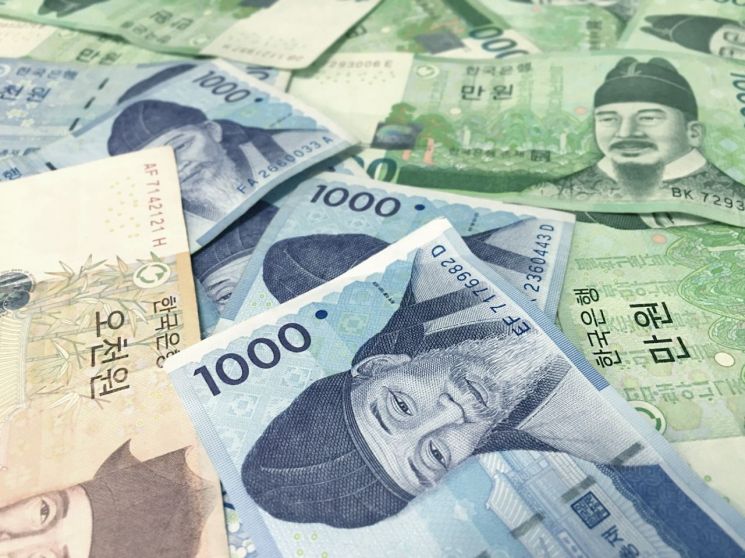
While the 50,000 won bill accounts for nearly 90% of the currency issuance balance, the proportion returned to the Bank of Korea after circulation is only about half.
Since the issuance of the 50,000 won bill, the recovery rate (the amount recovered relative to the amount issued) has remained between 40% and 60%, but during the COVID-19 pandemic, it dropped to 24.2% in 2020 and 17.4% in 2021.
A low currency recovery rate means that the currency is not actively circulating in the market but is being held by economic agents such as stores, companies, and financial institutions for transactions or reserve purposes.
This is interpreted as a tendency to hoard high-denomination 50,000 won bills as emergency cash due to reduced face-to-face transactions and increased economic uncertainty caused by the COVID-19 situation.
After the easing of quarantine measures, the recovery rate of the 50,000 won bill returned to the usual level at 56.5% last year, surged to 112.4% in the first quarter of this year, but fell back to 41% in the second quarter.
The recovery rates for the 10,000 won bill were 95.9% in 2021 and 127.6% last year; for the 5,000 won bill, 90.9% and 97.6%; and for the 1,000 won bill, 106.9% and 98.2%, respectively.
© The Asia Business Daily(www.asiae.co.kr). All rights reserved.



















