S-1, Analysis of Theft Crime Trends in Unmanned Stores
High Proportion of Unmanned Store Crimes Among Teens, Weekends, and Late Night Hours
Security alarms have been triggered for unmanned stores during the holiday period. The majority of criminals targeting unmanned stores are teenagers, and the incidents mainly occur during weekends and late-night hours. The stolen items are primarily cash within the stores.
On the 25th, S-1 announced the analysis results from its Crime Prevention Research Institute, which included this information. This analysis examined theft crime trends in unmanned stores over three and a half years, from 2019, when unmanned stores began to spread significantly, until June of this year, based on big data from client companies.
As unmanned stores have become a 'trend' in the distribution industry, related crimes have increased significantly. Since there is no one guarding the stores, various crimes occur, including theft of cash, causing disturbances inside the store, prolonged stays, and damaging the store.
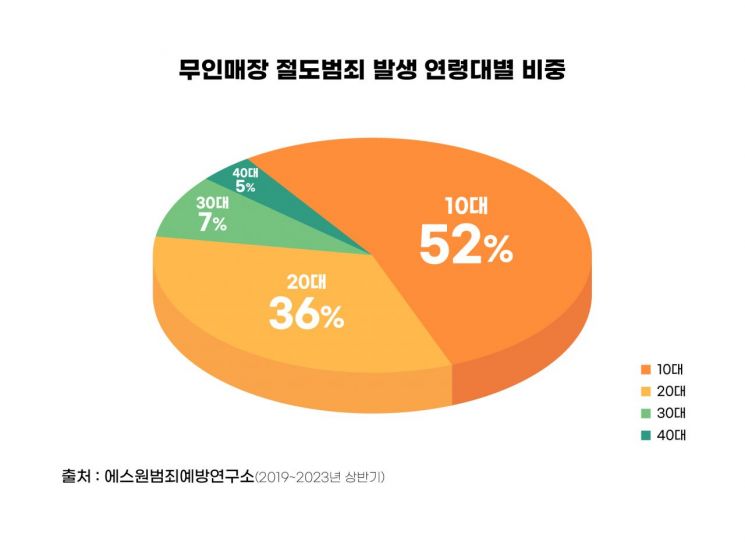
According to S-1's investigation, a major characteristic of theft crimes in unmanned stores is the high number of juvenile offenders. Looking at the age distribution, teenagers accounted for the highest proportion at 52%, followed by people in their 20s at 36%, 30s at 7%, and 40s at 5%. One out of every two thieves is a teenager. In particular, among teenagers recently, methods for stealing from unmanned stores are being shared through social networking services (SNS), spreading like a form of 'play,' which has become a serious social issue. An S-1 official stated, "Unmanned stores located in alleyway commercial districts near schools have become hangouts for local middle and high school students, leading to theft crimes."
The occurrence of theft crimes in unmanned stores is concentrated on weekends. Saturdays and Sundays accounted for 34%, with Sunday having the highest crime rate at 24%. By time of day, late-night hours (midnight to 6 a.m.) had the highest crime rate at 61% of total crimes, followed by morning hours (6 a.m. to noon) at 27%. This is analyzed to be because teenagers commit crimes during times when they do not attend school and when there are fewer people around.
Additionally, theft crimes in unmanned stores mainly targeted 'cash' (91%). The perpetrators mainly damaged kiosks using tools such as crowbars, hammers, and screwdrivers to steal cash. Some even fled after carrying away entire kiosks or coin exchange machines (9%). The methods are becoming more daring. The targets of theft crimes were mainly small-scale stores located in alleyway commercial districts with many cash transactions. By industry, crimes were most frequent in unmanned laundromats (33%) and unmanned photo studios (33%), followed by unmanned ice cream shops (17%) and claw machine arcades (17%).
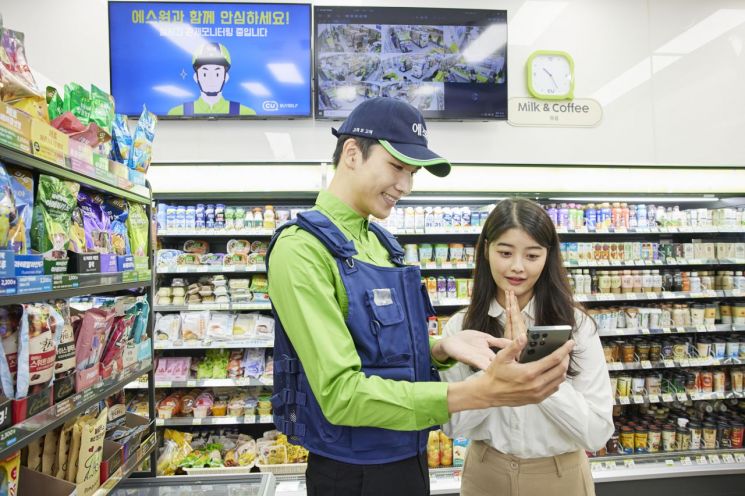
In response, S-1 launched 'S-1 Anshim24,' a dedicated solution for unmanned stores that enables video security, emergency dispatch, and kiosk monitoring. In emergency situations where kiosks are forcibly opened or damaged, the S-1 control center immediately detects this, notifies the store owner, and minimizes crime damage through emergency dispatch. Furthermore, using intelligent CCTV with artificial intelligence (AI) video monitoring, it detects disturbances and lingering individuals inside the store in real time, supporting stable store operation through remote warning broadcasts from the control center and emergency dispatch.
An S-1 official said, "To prevent the increasing crimes in unmanned stores, we share crime trend information using big data and provide crime prevention information to store owners," adding, "We will continue to introduce unmanned store solutions that not only prevent crimes but also improve operational efficiency for store owners."
© The Asia Business Daily(www.asiae.co.kr). All rights reserved.


















