Insufficient Investigation into Newborn Trafficking
Most Offenders Receive Only 'Light' Punishments
Experts Say "Punishment Levels Must Be Significantly Increased"
A real-life version of the movie Broker, which deals with illegal newborn adoptions, is unfolding nationwide. While the film portrays a group secretly adopting babies abandoned in baby boxes, actual newborn trafficking brokers buy babies from birth mothers with money and then sell them at a higher price.

In August, a woman in her 20s, Kim (20s), who bought a newborn from a single mother for 980,000 KRW and sold the baby to another woman seeking adoption for 3 million KRW, was brought to trial. On August 24, 2019, Kim paid 980,000 KRW for hospital bills at a maternity hospital in Incheon on behalf of a woman in her 20s, Lee, and received a newborn who was six days old. Within two hours, Kim sold the baby to a woman in her 50s, Na, for 3 million KRW. Kim’s crime was uncovered during a recent government-wide investigation into unregistered births. When Incheon Namdong District Office found the child’s whereabouts unknown, they requested an investigation from the Incheon Namdong Police Station, which revealed Kim’s newborn trafficking. The woman who bought the baby, Na, abandoned the child in a baby box after realizing she could not register the baby as her own daughter.
On December 30, 2019, Kim also received a newborn from the birth mother in Anseong, Gyeonggi Province, and handed the baby over to Song, who was waiting at a nearby motel. Kim earned 6.9 million KRW from this transaction. The birth mother had posted on a Naver cafe in the summer before the baby was born, seeking someone to “raise the child instead.” Kim approached her after reading the post and brokered the illegal adoption. During the process, Kim deceived Song by claiming, “I am going to give birth to a child and need financial help,” pretending the trafficked newborn was her own. This crime was exposed when the birth mother was prosecuted for applying for childcare and child allowance totaling 6.1 million KRW despite not raising the child after handing the baby to Kim. Ultimately, Kim was sentenced to 1 year and 2 months in prison with a 2-year probation by the Jeonju District Court in October last year on charges of child trafficking.
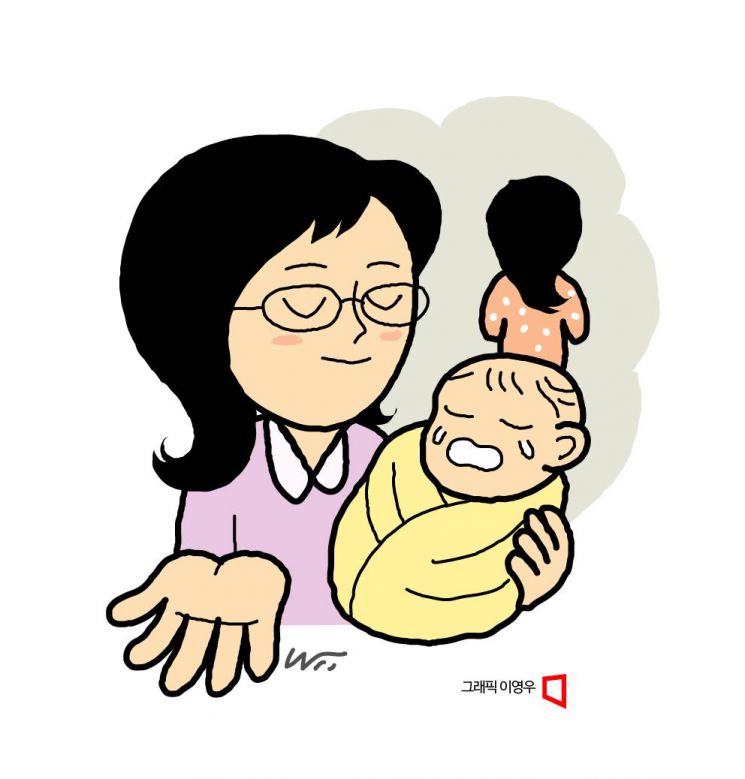
Along with Kim’s case, newborn trafficking is secretly thriving nationwide. While some birth mothers attempt illegal adoptions themselves, most cases are believed to involve brokers who mediate the transactions for money. However, the police and government have not even grasped the full extent of the issue.
Based on the recent arrests of newborn trafficking brokers in Incheon, Daegu, and Asan, Chungnam this year alone, the police believe such crimes are occurring nationwide. Yet, the number of brokers arrested under the Child Welfare Act for child trafficking remains low: one in 2018, one in 2019, one in 2020, zero in 2021, and six in 2022.
The complicated formal adoption procedures are thought to contribute to the active underground newborn trafficking, including online. Going through adoption agencies takes a long time before the adoption is finalized, and it is difficult to select the baby’s gender directly. Prospective adoptive parents must undergo various screening processes, including financial capability, mental health history, criminal record, and personality evaluation.
According to the Adoption Special Act revised in 2012, only babies with registered births can be adopted in principle, and private adoptions without state or agency involvement are punishable by law. Especially when money is involved, the crime is classified as ‘child trafficking,’ punishable by up to 10 years in prison. However, few private adoption cases have actually been prosecuted under child trafficking charges. A police official said, “Most money exchanged during illegal adoptions through newborn trafficking is in cash, making it difficult to prove financial transactions.”
Exploiting this loophole, brokers who mediate newborn trafficking are thriving. Most brokers are women in their 20s to 30s, as they can impersonate birth mothers due to their childbearing age. Their common method is to approach single mothers who cannot raise their babies and lure them by saying, “We will give you money if you hand over the baby.” A police official said, “Newborn trafficking brokers prefer babies without birth registration to register them as adoptive parents’ children.”
The ‘birth mother swap’ case that occurred in Daegu earlier this year is a similar example. On March 13, a 30-year-old broker, Kang, was arrested at a university hospital in Daegu after paying the hospital bill and attempting to take a baby boy who was not hers. The birth mother gave birth on March 1 and disappeared without a word. Kang came to the hospital on the 13th, paid 1.7 million KRW for the bill, and tried to take the baby, but hospital staff noticed the physical differences between Kang and the birth mother and reported the incident, exposing the crime. Police investigation revealed that the birth mother had initially registered Kang’s personal information during her hospital admission and delivery.
Kang is also charged with buying newborns for 1.9 million KRW and 1.5 million KRW in September 2020 and June 2021, respectively, after approaching single mothers through online posts. In 2020, Kang falsely registered the baby as a child of another couple, and in 2021, the baby was adopted by a couple living overseas. In December 2020, Kang contacted the single mother who had handed over the baby in September and offered 10 million KRW if she gave birth through artificial insemination using sperm injection, but the mother refused. Additionally, in March 2021, Kang gave birth as a surrogate mother for an infertile couple and handed over the baby for 55 million KRW.
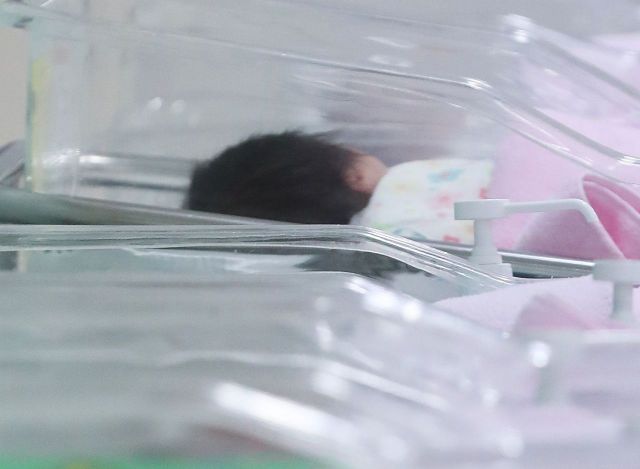
In Asan, Chungnam, a broker who tried to buy a newborn from a single mother was caught by the police. In May, a broker in his 30s, A, received 850,000 KRW through a KakaoTalk open chat room from a 20-year-old woman, B (birth mother), who asked him to find someone to adopt her baby. However, when the birth mother changed her mind within a day and wanted to cancel the adoption, A extorted an additional 2 million KRW as a service fee and refund. The birth mother reported this to the police, bringing the crime to light. A was arrested and is currently on trial. The baby was returned safely to the birth mother, who completed the birth registration.
Even without brokers, newborn trafficking is already happening secretly online. Searching for terms like ‘single mother,’ ‘newborn,’ or ‘private adoption’ on KakaoTalk reveals many anonymous chat rooms. Conversations between single mothers wanting to give up babies and individuals seeking private adoptions have been confirmed. One user, claiming to be from a ‘small business owner’s household,’ asked about the birth timing, baby’s gender, and current residence, then encouraged private adoption by offering financial support. Infertile couples have also attempted private adoptions through this underground market.
Most suspected newborn trafficking cases involving first-time offenders end with suspended sentences or light punishments. Since investigative agencies cannot confirm cash transactions, cases are often prosecuted under child abandonment rather than child trafficking, resulting in lower sentencing standards.
Experts say the government must start by assessing the actual situation of newborn trafficking. Professor Lee Su-jeong of the Department of Criminal Psychology at Kyonggi University said, “Illegal newborn adoptions involving money are conducted secretly, making it difficult for the police to detect cases,” and urged, “The Ministry of Gender Equality and Family should begin with a thorough investigation in cooperation with related agencies.” She added, “The police should expand undercover operations, currently applied only to digital sex crimes, to include newborn trafficking and conduct active investigations.”
There are also calls for strict punishment of newborn trafficking as a serious crime. Gong Hye-jung, head of the Korea Child Abuse Prevention Association, said, “It is problematic that child trafficking targeting newborns is rampant, but even more so that most offenders are released on probation after being caught,” adding, “The punishments are too lenient, which is why child trafficking persists.” Kim Bok-jun, a research fellow at the Korea Institute of Criminology, said, “In trials of illegal newborn adoption cases, courts often show sympathy, citing unavoidable circumstances like infertility,” and emphasized, “Criminals who commit the crime of buying and selling life must be punished harshly without leniency.”
© The Asia Business Daily(www.asiae.co.kr). All rights reserved.
![Clutching a Stolen Dior Bag, Saying "I Hate Being Poor but Real"... The Grotesque Con of a "Human Knockoff" [Slate]](https://cwcontent.asiae.co.kr/asiaresize/183/2026021902243444107_1771435474.jpg)


















