Increase in Recognized Cases Due to Improved Interfloor Noise Range and Standards
Gap with Actual Victims Remains... Standards Need to Be Lowered Further
Cases of recognized noise between floors have increased this year. This is analyzed as a result of lowered standards. However, the recognition rate still falls below 20%.
According to data received by Lee Joo-hwan, a member of the National Assembly’s Environment and Labor Committee from the People Power Party, from the Korea Environment Corporation on the 24th, there were 56 cases recognized as noise between floors in on-site diagnoses by the ‘Noise Between Floors Neighbor Center’ up to last August. This accounts for 19.2% of the total diagnoses (291 cases).
With the revision of the ‘Regulations on the Scope and Standards of Noise Between Floors in Multi-family Housing’ in January, the ‘1-minute equivalent noise level of direct impact noise’ was lowered by 4dB each to 39dB during the day (6 a.m. to 10 p.m.) and 34dB at night (10 p.m. to 6 a.m. the next day). Accordingly, the recognition rate of noise between floors has steadily increased from 7.6% in 2019, 9.8% in 2020, 10.5% in 2021, to 14.0% in 2022.
However, since the recognition rate does not reach 20%, there are continuous criticisms that there is still a gap between the standard and the ‘noise between floors perception’ of those who actually suffer damage. In the past, the Ministry of Environment proposed even lower standards.
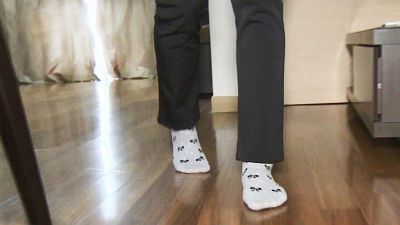
Noise between floors in multi-family housing is legally classified into direct impact noise caused by the activities of residents or users (noise generated by actions such as jumping or walking) and airborne noise (noise generated by the use of TVs, musical instruments, audio devices, etc.).
The standard for direct impact noise is divided into 1-minute equivalent noise level and maximum noise level. The equivalent noise level is the average of various noise levels occurring within a certain period, and the maximum noise level refers to the loudest noise occurring during that period. Airborne noise is regulated by a 5-minute equivalent noise level.
According to the 2019 report titled ‘Study on Improvement Measures for the Management System to Resolve Noise Between Floors Conflicts’ published by the Ministry of Environment and the Korea Environment Institute (KEI), it is appropriate to lower the standard for 1-minute equivalent direct impact noise to 38dB during the day and 33dB at night. The researchers added, “The maximum noise level standard for direct impact noise should also be lowered by 7dB from the current level to 50dB during the day and 45dB at night to correspond with international standards.” The World Health Organization (WHO)’s indoor noise recommendation standards are 35dB during the day and 30dB at night for the 1-minute equivalent noise level, and 45dB at night for the maximum noise level.
Rep. Lee said, “The government has introduced various measures to solve the noise between floors problem that causes social conflicts,” but added, “The policy’s perceived effectiveness and reduction of inconvenience on the ground are still insufficient.” He emphasized, “Efforts at the inter-ministerial level are needed not only for newly constructed apartments but also to resolve noise between floors in existing apartments.”
© The Asia Business Daily(www.asiae.co.kr). All rights reserved.

















