Tokyo Electric Power "Trace Detection of Four Radioactive Nuclides"
Above Detection Limit, Below Official Concentration Limit
Tokyo Electric Power Company (TEPCO) is expected to begin the second discharge of contaminated water from the Fukushima Daiichi Nuclear Power Plant (referred to as "treated water" by the Japanese government) around the end of this month.
According to TEPCO's website on the 23rd, analysis of samples taken before the discharge from Tank Group C, used for measurement and verification, detected trace amounts of four radioactive nuclides: carbon-14, cesium-137, cobalt-60, and iodine-129.
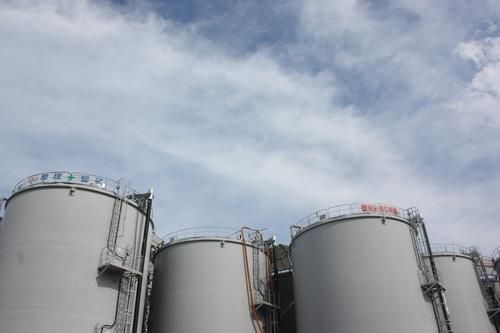 A group of tanks used to store and measure the radioactivity concentration of the rough contaminated water from the multi-nuclide removal facility (ALPS) at the Fukushima Daiichi Nuclear Power Plant before discharge.
 [Photo by Yonhap News]
The samples were collected on June 26, and the measurement and verification tanks are facilities used to analyze and store contaminated water purified by the Advanced Liquid Processing System (ALPS) before discharge. Tank Group C contains the contaminated water scheduled for the second discharge.
The analysis showed that among the 29 nuclides measured, four were detected above the detection limit, but all were well below the regulatory concentration limits.
For example, carbon-14 was detected at about 13 Bq per liter, exceeding the detection limit (approximately 2.2 Bq) but remaining below the regulatory concentration limit (200 Bq). Cesium-137 was detected at 0.45 Bq per liter, above the detection limit (0.026 Bq) but below the regulatory concentration limit (90 Bq).
Results from analyses conducted by external organizations showed slight variations in values, but the four nuclides were still measured at trace levels below the regulatory concentration limits.
In response, TEPCO stated, "Not only the 29 measured nuclides but also 39 additional nuclides checked voluntarily, including tritium, were all confirmed to meet the discharge standards based on this sample analysis."
TEPCO plans to discharge approximately 7,800 tons of ALPS-treated contaminated water during the second discharge, similar to the first discharge conducted from May 24 to June 11.
Japan plans to discharge a total of 31,200 tons of contaminated water in four phases by March next year. This amount corresponds to about 2.3% of the contaminated water stored at the Fukushima nuclear power plant.
© The Asia Business Daily(www.asiae.co.kr). All rights reserved.

![Clutching a Stolen Dior Bag, Saying "I Hate Being Poor but Real"... The Grotesque Con of a "Human Knockoff" [Slate]](https://cwcontent.asiae.co.kr/asiaresize/183/2026021902243444107_1771435474.jpg)














