Implemented since February 2018... Available to all adults
1.94 million intention forms registered as of the end of August this year
It is reported that nearly 2 million people have pledged not to receive meaningless life-sustaining treatment at the end of life.
According to the monthly estimated registrations of advance directives for life-sustaining treatment by the National Agency for Management of Life-Sustaining Treatment on the 23rd, the number of registrations as of the end of August was 1,941,231. An advance directive for life-sustaining treatment is a document in which individuals express their intentions regarding life-sustaining treatment and hospice care in preparation for their end of life.
An advance directive for life-sustaining treatment is a document in which individuals express their intentions regarding life-sustaining treatment and hospice care in preparation for their end of life.
Considering that about 50,000 cases were additionally registered in the past month alone, the cumulative number is expected to exceed 2 million either this month or next month. By gender, 1,319,812 are women, accounting for 68%, and 621,419 are men.
The life-sustaining treatment decision system was created with the purpose of allowing individuals to choose to discontinue meaningless life-sustaining treatment so that they can end their lives with dignity. It was first implemented in February 2018 under the so-called “Dignified Death” or “Well-Dying Act,” officially known as the Act on Decisions on Life-Sustaining Treatment.
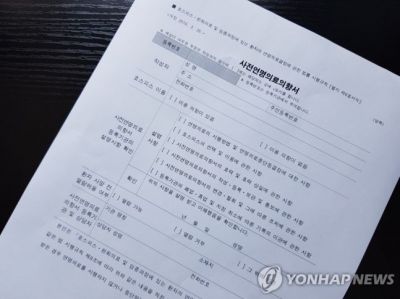
Any adult aged 19 or older can visit one of the 429 designated registration institutions nationwide, consult with a counselor, understand the guidance, and sign a statement agreeing that “if medically judged to be in the dying process, life-sustaining treatments such as cardiopulmonary resuscitation, mechanical ventilation, and chemotherapy will not be performed or will be discontinued.”
The completed directive is registered in the Life-Sustaining Treatment Information Processing System and can be changed or withdrawn at any time according to the writer’s change of intention.
Also, even if an advance directive for life-sustaining treatment is not registered in advance, it is possible for the attending physician to leave a “life-sustaining treatment plan” reflecting the wishes of terminal or dying patients regarding withholding or discontinuing life-sustaining treatment.
The number of advance directive registrations did not reach 100,000 in the first year of introduction but has continued to increase, reaching 530,000 by the end of 2019, 790,000 by the end of 2020, 1,160,000 by the end of 2021, and 1,570,000 by the end of last year.
According to advance directives, life-sustaining treatment plans, or statements from patients’ families, the actual number of cases where life-sustaining treatment was discontinued or similar actions were implemented has exceeded 300,000 in just over five years, recording 303,350 cases as of the end of August.
Meanwhile, the Ministry of Health and Welfare plans to establish the 2nd Comprehensive Plan for Life-Sustaining Treatment (2024?2028) next year to further develop the life-sustaining treatment decision system.
© The Asia Business Daily(www.asiae.co.kr). All rights reserved.
!["The Woman Who Threw Herself into the Water Clutching a Stolen Dior Bag"...A Grotesque Success Story That Shakes the Korean Psyche [Slate]](https://cwcontent.asiae.co.kr/asiaresize/183/2026021902243444107_1771435474.jpg)
















