'Premium Fruit' Japanese Shine Muscat Price Decline
Grape Export Reversal Due to No Variety Registration in Korea
"Japanese Farmers at a Crossroads to Transform into Popular Fruit"
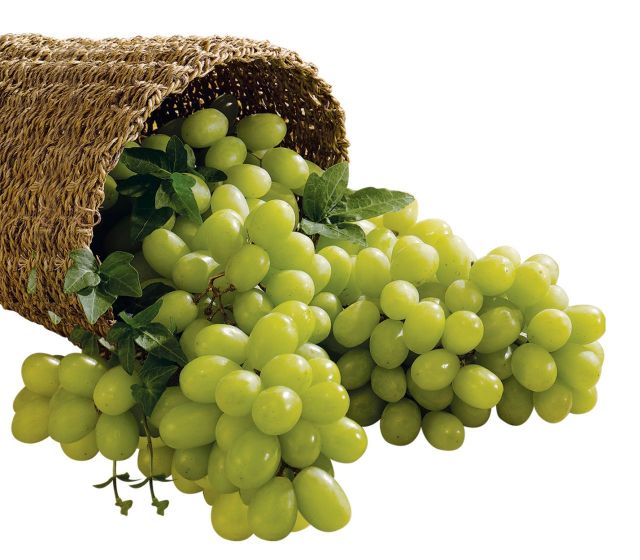
The seedless green grape 'Shine Muscat,' developed in Japan, has gained popularity overseas, including in Korea, leading to increased production and causing concern among Japanese farmers.
Known as a premium fruit, Shine Muscat grapes were originally traded in Japan at around 1500 to 2000 yen per bunch (approximately 14,000 to 18,000 KRW), but recently prices have dropped by about 20-30%, Asahi Shimbun reported on the 18th. This is due to a significant increase in supply both domestically and internationally. Currently, a bunch of Shine Muscat grapes is sold in Japan for about 7,000 to 9,000 KRW.
According to the Japan National Fruit Production and Shipment Stabilization Council, the average price of Shine Muscat last year was 1,966 yen per kilogram (about 17,000 KRW), a 60% plunge compared to 2012. Compared to the past when prices were traded in the 20,000 to 30,000 KRW range, the recent drop to around 7,000 KRW represents an even greater decline.
Shine Muscat is a fruit developed in Japan, known for its high sweetness and edible skin without seeds, earning it the nickname "Herm?s of fruits." Japan first crossbred it in 1988 and, after repeated improvements, began producing Shine Muscat in 2006.
However, Japan made a critical mistake. After developing Shine Muscat, it did not register the variety in Korea. Korea was able to cultivate Shine Muscat without paying royalties to Japan, leading to a rapid increase in supply from Korean farms.
As a result, Korea gained an advantage in the export market, reversing the grape export volume between Korea and Japan in 2019. Although Japanese authorities belatedly implemented a Seedling Law in April 2021 to prevent the overseas export of the Shine Muscat variety, prices have continued to fall.
Hiroshi Watanabe, Senior Economist at Sony Financial Group, stated, "Competition with Korean and Chinese Shine Muscat is intensifying, and oversupply is causing the price decline," adding, "Having a 500 yen (about 4,500 KRW) image attached to a bunch of Shine Muscat is a significant loss."
Asahi Shimbun explained, "Japanese farmers are at a crossroads whether to maintain Shine Muscat's image as a premium fruit or transform it into a popular fruit."
Ahead of the Chuseok holiday, Shine Muscat continues to enjoy strong popularity domestically. According to Wadiz, in this year's Chuseok special funding opening, the food category saw 'Hanwoo,' 'Yakgwa,' and 'Shine Muscat' items occupying a high proportion. Shine Muscat attracted attention by surpassing traditional Chuseok gifts like apples and pears.
© The Asia Business Daily(www.asiae.co.kr). All rights reserved.

















