China monopolizes Zimbabwe Petalite mine for lithium
Japan's earthenware raw material... production suspension risk within the year
A sudden 'Ttukbaegi crisis' has erupted in Japan due to the global market competition surrounding electric vehicles (EVs). This is because China has monopolized petalite minerals, an essential material for making Ttukbaegi, to produce EV lithium batteries, making production extremely difficult. As China strengthens its monopoly over rare earth and other minerals, there are concerns that such phenomena will occur more frequently in the future.
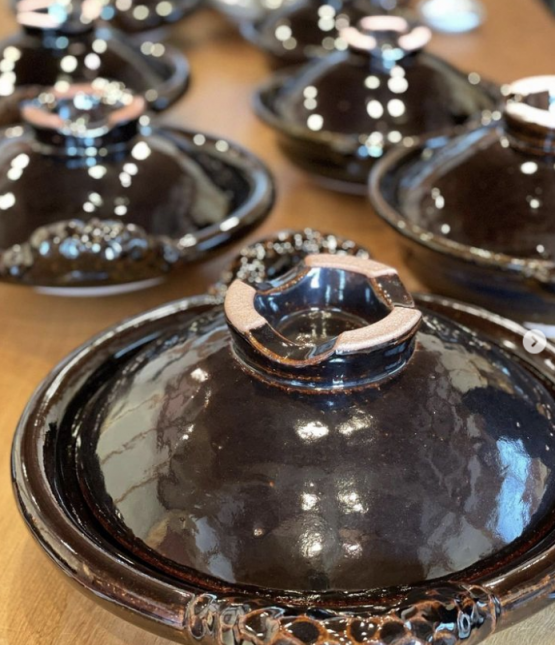 Donabe from 'Doraku' in Yokkaichi City, Mie Prefecture, continuing the family business for eight generations. (Photo by Doraku)
On the 21st, Mainichi Shimbun reported that the production of 'Donabe (土鍋)', a ceramic dish familiar in Japanese households and similar to Korea's Ttukbaegi, will face a crisis within the year. This is because China has monopolized petalite, the main raw material for Donabe, making it difficult to secure the raw materials.
The Japanese-style Ttukbaegi called Donabe, known as 'Jilnaembi' in Korea, has been made since the 1950s by mixing petalite with clay and firing it to enhance heat resistance. In particular, Mie Prefecture's 'Yokkaichi Bankoyaki' was the first to introduce Donabe containing 40-50% petalite, and now it occupies nearly 80% of the domestic market. In fact, the Ttukbaegi industry effectively drives the regional economy.
Petalite is a lithium-containing mineral with excellent heat resistance, characterized by its durability against heating and direct flame. Because of this, it has been widely used in the production of heat-resistant ceramic products like Ttukbaegi. However, as lithium extraction from petalite became possible and it gained popularity as a raw material for EV battery production, securing supply has become extremely difficult.
Especially, petalite cannot be procured in Japan and is mostly imported from Zimbabwe in southern Africa. The demand for petalite in Japan has been relatively low outside the ceramics industry, so price fluctuations were minimal. Therefore, most ceramic production areas in Japan, such as Saga Prefecture, relied heavily on Zimbabwe for raw materials.
However, as Chinese companies rushed to acquire petalite mines in Zimbabwe, securing supply became very difficult. Zimbabwean mines notified Japan that "in the future, only petalite exclusively for China will be shipped." Tetsuya Kumamoto, director of the Ceramic Industry Cooperative in Yokkaichi City, Mie Prefecture, said, "Even if we gather all the stock available domestically and abroad, production will barely last through the year."
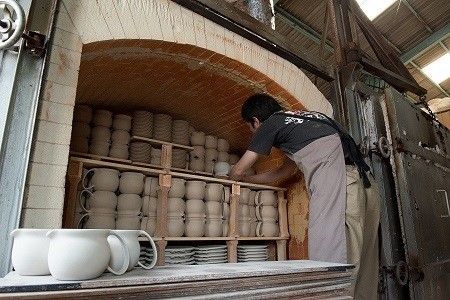
Petalite had not attracted much attention in the lithium-related industry until now, so the impact of this situation appears to be even greater. Petalite contains about 4% lithium, while spodumene, which generally contains about 6% lithium, is commonly used for lithium extraction.
Mainichi quoted a business insider saying, "The difference in lithium content is significant. Petalite was a mineral that was not even considered economically viable," and "In the past, the mines would ask if there were any other uses besides ceramics since it was leftover anyway." However, as the prices of resources that can be used for lithium batteries have soared, the situation has changed.
In response, Donabe production areas are hastening research on alternative technologies. They aim to develop fuels that minimize the use of petalite. The Ceramic Research Laboratory of the Mie Prefectural Industrial Research Institute has been studying alternative raw materials for over ten years. While they have made progress in developing technology to reduce usage, they have not yet found a substitute raw material. The laboratory stated, "Petalite is practically a material exclusively for Donabe."
However, amid China's economic slowdown, there are signs that Zimbabwean mines are gradually seeking negotiations with Japan. Accordingly, the Japan Ceramic Industry Cooperative plans to request information gathering and support from the Ministry of Economy, Trade and Industry and other agencies.
© The Asia Business Daily(www.asiae.co.kr). All rights reserved.


















