Operating in over 50 locations but... Virtually on the verge of closure
Conflict between strict Paju City and sex workers
"Relocation within 3 months from business approval is appropriate"
On the morning of the 20th in Yeonpung-ri, Paju-eup, Paju-si, Gyeonggi Province, elderly people were walking through the rain with umbrellas, and postal workers were delivering parcels and mail on motorcycles, presenting an ordinary rural scene. However, by 10 a.m., pink lights began to illuminate the buildings along the Galkokcheon stream that runs through Paju-si. This marked the start of a day in the so-called 'Yongjugol' red-light district.
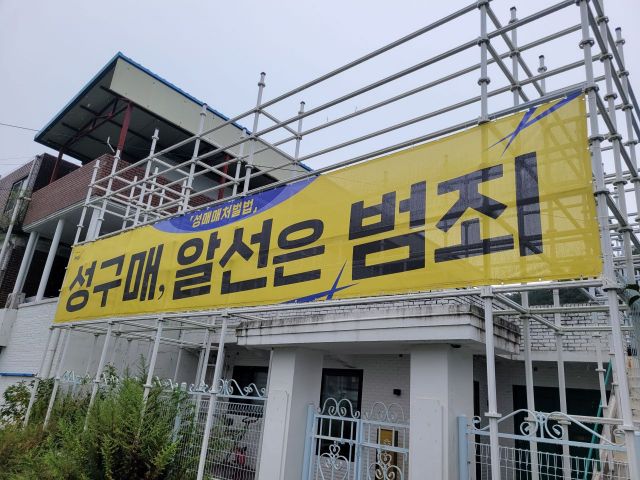 On the 20th, a banner reading "Purchasing and brokering sex is a crime" was hung in Yongjugol, Yeonpung-ri, Paju-si, a red-light district.
 [Photo by Gong Byung-seon]
According to the Paju 1-3 District Redevelopment Association, which is promoting redevelopment in the area, about 50 prostitution establishments are still operating in Yongjugol. Although a police warning sign stating "Prostitution is illegal" is posted in front of Yongjugol, some sex workers were soliciting customers from early in the morning. When the reporter passed by, a woman sitting on a small chair kept trying to make eye contact and waved her hand. There were also people who came for prostitution. A man who got off a city bus wandered inside Yongjugol, observing the sex workers before entering one of the establishments.
Yongjugol, known to have formed in the late 1950s, is now on the verge of closure. Once the largest red-light district in the country, it is now so empty that the large parking lot complex stands vacant. As it became difficult to continue operations, each establishment posted "For Rent" signs on their doors. Some even hung chili peppers out to dry. Jang (82, female), who runs a rice shop, said, "Only old people remain here," adding, "In the past, many people visited Yongjugol, but now there are no outsiders. The interest of local residents has also declined."
Yongjugol Red-Light District on the Verge of Closure... Paju City: "We Will Achieve Complete Closure"
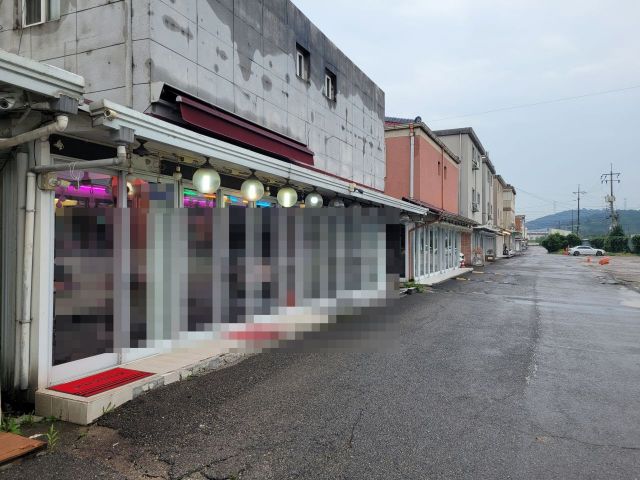 On the 20th, there were businesses operating with lights on from the morning in the Yonjungol red-light district in Yeonpung-ri, Paju-si.
 [Photo by Gong Byung-seon]
Yongjugol is under intense tension. In February, Paju City announced the complete closure of Yongjugol and issued voluntary correction orders to about 100 building owners of illegal and violating structures. However, only six buildings were voluntarily demolished, prompting administrative action. In May, Paju City imposed a penalty of 302 million won on 70 buildings with confirmed owners and issued administrative execution warrants for 32 violating buildings targeted in the first phase of redevelopment, planning to forcibly demolish them this month. However, building owners opposing this filed injunctions with the Uijeongbu District Court to cancel the voluntary correction orders for violating buildings, and the court ordered Paju City to halt administrative execution until the injunction decision on the 12th of next month.
Paju City is determined to demolish Yongjugol promptly. Since prostitution has been clearly illegal under the 2004 Prostitution Punishment Act and local residents view the red-light district very negatively, the city intends to accelerate redevelopment. They have already established a roadmap to support the self-reliance of sex workers, including enacting the 'Ordinance on Self-Reliance Support for Victims of Prostitution.' A Paju City official said, "Until now, Paju City has had the will to demolish Yongjugol but lacked consistency," adding, "We will achieve complete closure."
Sex Workers Resist... But Red-Light Districts Are 'Powerless' Against Local Government Will
In fact, famous red-light districts are disappearing under the will of local governments. Since the 1960s, the area around Suwon Station was a representative red-light district with 99 establishments. Suwon City began full-scale redevelopment in 2017 and enacted the 'Suwon City Ordinance on Self-Reliance Support for Victims of Prostitution' in 2019 to provide exit routes for sex workers while continuously persuading business owners and land/building owners. The police also established a 'Detailed Plan for Closing Prostitution Gathering Areas' in February 2021 and worked with Suwon City to encourage voluntary closure through inspections. Eventually, the Suwon Station red-light district was completely closed in May 2021 and has since been transformed into a cultural street where exhibitions can be viewed.
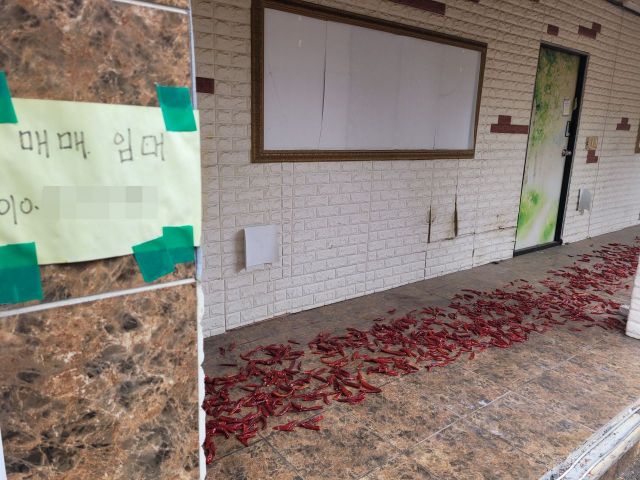 On the 20th, a paper announcing sale and lease is posted on a building located in Yongjugol, Yeonpung-ri, Paju-si, a red-light district.
 [Photo by Gong Byung-sun]
The 'Miari Texas' located in front of Exit 10 of Seoul Subway Line 4's Gireum Station was also a representative red-light district but is set to disappear into history. In 2015, about 100 sex workers at Miari Texas clashed physically with police pressuring for closure in front of the Jongam Police Station in Seoul, but now most sex workers have disappeared. Redevelopment procedures, which began in 2009, are scheduled to start resident relocation next month and construction in the second half of 2025. A sex worker at Miari Texas, Ms. A, said, "I will just relocate as the association says," adding, "Yongjugol won't be able to hold out any longer like Miari."
However, some sex workers in Yongjugol are resisting. They live and work there and claim it is difficult to find jobs immediately, demanding a two-year grace period. The civic group 'Juhongbit Solidarity Chacha,' which supports them, argues, "Even if Paju City enforces forced closure, they must communicate with the affected parties and prepare reasonable relocation compensation measures." Yoo Shin-soon, head of the Paju 1-3 District Redevelopment Association, said, "There are concerns that intensified conflicts could hinder redevelopment progress," adding, "We conveyed that setting a fixed two-year grace period is unreasonable. We believe it is appropriate to complete relocation within three months from the approval of the project implementation."
© The Asia Business Daily(www.asiae.co.kr). All rights reserved.



















