Sustained High Inflation... Half-Price Discounts as Standard
Price Disruption Across Dining, Food & Beverage, Marts, and Convenience Stores
Typically Occurs During Economic Recession
Companies May Have No Immediate Profit or May Incur Losses
However, Effective for Attracting New Customers and Securing Loyal Customers
Must Guard Against Profitability Decline and Service Quality Deterioration
As high inflation and economic recession prolong, the ‘ultra-low price competition’ that briefly disappeared around the 2010s is resurfacing. This phenomenon is occurring throughout the distribution industry, with products that practically break prices, such as half-price discounts, 990-won coffee, and 780-won burgers, emerging. This trend affects not only specific companies but also the entire distribution sector, including large supermarkets, convenience stores, and franchises. Due to the recent rise in electricity and city gas prices, this ultra-low price marketing is expected to continue for the time being.
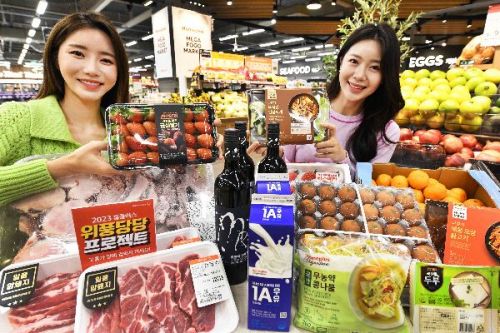
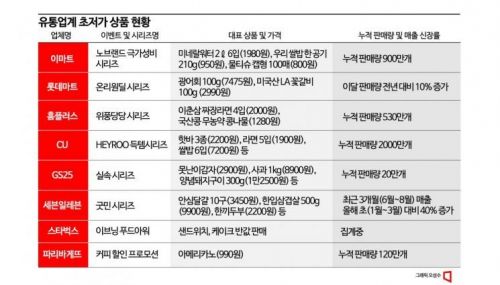
◆Recession-type sales strategy... ‘Super special price’ competition= According to the distribution industry on the 22nd, the Dangdang series products launched as part of Homeplus’s ‘2023 Wipungdangdang’ project to alleviate consumer price burdens have surpassed a cumulative sales volume of about 5.3 million units as of the 18th. Through this project, Homeplus sells products such as Ichunsam Jjajang Ramen 4-pack (2,000 won) and domestic pesticide-free soybean sprouts 300g (1,280 won) at prices about half cheaper than regular products. Lotte Mart is focusing on offering livestock and seafood products. The sales volume this month of flatfish sashimi (100g·7,475 won) and U.S. LA-style short ribs (100g·2,990 won), launched through the ‘Only One Deal’ project, increased by about 10% compared to the previous year.
Emart has expanded its private brand (PB) No Brand ‘extreme cost-effectiveness’ product line and offered daily necessities such as bottled water and wet tissues at low prices. The cumulative sales volume of these product lines reaches 9 million units.
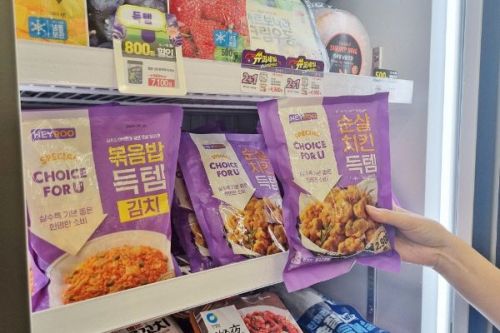
Convenience stores are also experiencing a craze for super special price products. CU’s ‘HEYROO’ Deuktem series, launched in March 2021, saw sales increase by 342.7% year-on-year this year, surpassing 20 million cumulative sales this month. By product, 7.3 million units of three types of hot bars (2,200 won) and 4.2 million units of 5-pack ramen (1,900 won) were sold.
GS25 launched the ‘Silsok’ (carefully selected practical items) series, offering products such as imperfect potatoes (2,900 won) and 1kg of apples (8,900 won) at prices about half cheaper than regular products, with cumulative sales of these products exceeding 200,000 units this month.
Seven Eleven introduced the ‘Goodmin’ (good people) series in June last year, offering affordable products such as 10-pack safe eggs (3,450 won) and 500g bite-sized pork belly (9,900 won). Sales of Goodmin series products in the recent three months (June to August) increased by more than 40% compared to early this year (January to March).
As consumers tired of high prices show signs of reducing coffee consumption, franchise companies selling ultra-low price coffee in the 990-1,000 won range have also emerged. Paris Baguette ran a promotion selling Americano coffee for 990 won from the 8th to the 21st of this month, resulting in over 2 million Americanos sold at more than 3,000 stores nationwide. This shocking promotion, offering a 3,000-won Americano at about a 67% discount for 990 won, is interpreted as consumers eagerly opening their wallets.
◆Beware of quality decline and bait-and-switch tactics= The strong sales of ultra-low price products are typically seen as a recession-type sales strategy that appears mainly during economic downturns. It is now difficult for products with mediocre prices to be chosen by consumers, and this phenomenon is interpreted as a result of severe consumption stagnation.
If ultra-low price products are continuously sold, companies may have no profit or even incur losses if they only consider the cost of discounts. However, if consumers attracted by these products purchase other items or if new customers are acquired and become loyal through repeated visits, companies can enjoy brand promotion effects, making ultra-low price marketing an attractive strategy.
However, the common view in the industry is that ultra-low price marketing is not desirable from a macro perspective because frequent promotions lead to qualitative deterioration of products and services. The biggest pitfall of ultra-low price marketing is low quality and excessive baiting. A representative example is the half-price Korean beef pork belly that became notorious for being full of fat.
Earlier, on March 3rd, marking the 20th anniversary of so-called Samgyeopsal Day, the distribution industry held a large-scale promotion offering 40-50% discounts on Korean pork. However, consumers flooded complaints about excessive fat in the purchased pork, forcing companies to offer exchanges and refunds, resulting in embarrassment.
Another problem is that ultra-low price products can stimulate consumers’ impulse buying, leading to overconsumption. For example, purchasing food and beverage products on a 1+1 discount even when not immediately needed may result in waste if the products expire before use, which is not a wise consumption behavior.
Professor Eunhee Lee of Inha University’s Department of Consumer Studies advised, “Excessive discount strategies such as ultra-low price sales and bait products may attract many consumers in the short term, but in the long term, they can damage brand image and lead to consumer rejection, so they should be avoided.”
© The Asia Business Daily(www.asiae.co.kr). All rights reserved.
![Clutching a Stolen Dior Bag, Saying "I Hate Being Poor but Real"... The Grotesque Con of a "Human Knockoff" [Slate]](https://cwcontent.asiae.co.kr/asiaresize/183/2026021902243444107_1771435474.jpg)


















