RE100 Supplementary Concept... Welcomed by the Business Community
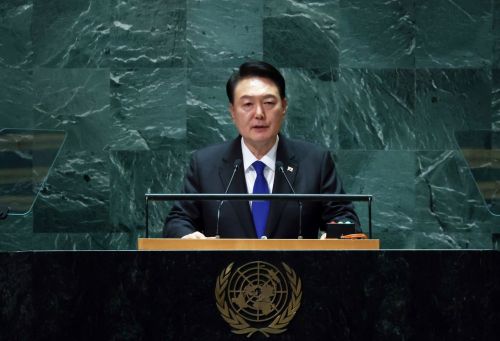
On the 20th (local time), President Yoon Suk-yeol proposed the establishment of the ‘CF Alliance,’ an open platform for the international expansion of Carbon-Free Energy (CFE), during his keynote speech at the United Nations (UN) General Assembly, drawing attention to how governments and global companies will respond. The business community welcomed the proposal. If Korea leads the CFE initiative, the burden on domestic companies is expected to be significantly reduced, and it could also lead to an expansion of exports in new energy industries such as hydrogen and nuclear power.
CFE is a concept that complements the current ‘Renewable Energy (RE)100’ campaign, in which companies participate, to realize a carbon-neutral society. Proposed in 2014 by The Climate Group, a UK-based nonprofit organization, RE100 is a campaign urging companies to source 100% of their electricity consumption from renewable energy sources such as solar, wind, hydro, and geothermal by 2050. CFE is based on the idea that hydrogen and nuclear power, in addition to renewable energy, should be recognized as carbon-neutral energy.
RE100 has limitations in that it restricts implementation methods solely to renewable energy and does not sufficiently consider the differing conditions by country and region. It has also been criticized for acting as a trade barrier to countries where the production of renewable energy such as solar and wind is difficult. Domestically, major companies like Samsung, Hyundai, SK, and Naver have expressed their intention to participate in RE100 but have complained about the practical difficulties in implementation.
CFE reflects the international call to include a variety of carbon-free energies as means to achieve carbon neutrality, rather than specifying particular energy sources. It is a concept that complements, rather than replaces, RE100.
Internationally, nuclear power is increasingly recognized as an important base power source for achieving carbon neutrality. The United States’ Inflation Reduction Act (IRA) provides subsidies for nuclear power on par with renewable energy. BloombergNEF predicts that to achieve carbon neutrality by 2050, about 9% of global electricity will still need to rely on nuclear power. Various technologies are being developed to produce hydrogen without carbon emissions, including blue hydrogen using carbon capture technology, green hydrogen using renewable energy and nuclear power, and pink hydrogen. The 24/7 CFE initiative, led by UN Energy, a UN energy cooperation organization, and Google, recognizes nuclear power and hydrogen as direct carbon-free energy sources.
However, unlike renewable energy, the global expansion of carbon-free energies such as nuclear power and hydrogen requires solidarity and cooperation among countries, as each has different systems and standards. This is why President Yoon proposed the CF Alliance, involving governments and international organizations.
In the case of nuclear power, regulatory improvements such as power generation business permits are needed to allow manufacturers or private power companies to promote Small Modular Reactor (SMR) projects. For clean hydrogen, a concept encompassing blue and green hydrogen, countries need to unify standards and establish international safety standards for storage and distribution. For CCUS (Carbon Capture, Utilization, and Storage), international norms are necessary to facilitate smooth cross-border transport of captured carbon dioxide.
Following the official launch of the private sector-led CFE Forum in May, the government plans to promote the formation of the CF Alliance next month. While the CFE Forum is a discussion body without legal status, the CF Alliance will be a nonprofit corporation and a formal implementation organization. The government’s strategy is to form the first CF Alliance domestically and lead the international CFE initiative.
Through the CF Alliance, the government plans to promote private investment in the carbon-free energy sector and establish international standards and certification systems. The CF Alliance is also expected to serve as an opportunity for domestic companies to expand overseas. A government official explained, “We can support developing countries with technology, experts, and consulting in cooperation with companies,” adding, “It could also be an opportunity for overseas expansion in areas where Korea is competitive, such as nuclear power and clean hydrogen.”
Companies that have felt burdened by RE100 have expressed anticipation for the launch of the CF Alliance. Woo Tae-hee, Executive Vice President of the Korea Chamber of Commerce and Industry, said, “We welcome the proposal to establish the ‘CF Alliance’ to jointly address global issues such as the climate crisis and environmental problems,” and added, “CFE is expected to provide more realistic and broader options for companies pursuing carbon neutrality while opening new horizons for future growth.”
He continued, “We hope the CF Alliance initiative will promote private investment and innovation in the energy sector and provide an opportunity for our government and companies to strengthen global carbon neutrality efforts. The business community also promises to actively support this.”
© The Asia Business Daily(www.asiae.co.kr). All rights reserved.

















