Easing Conditions for Attracting Foreign Exchange Students
Measures to Strengthen Financial Independence of Regional Universities
Local universities facing financial difficulties will find it easier to close in the future. When a local university is dissolved, a portion of the remaining assets can be returned, and acquisition tax and property tax will be partially reduced during the process of monetizing university land. The reporting threshold for changes in the use of university property will be raised from 300 million KRW to 500 million KRW. This is intended to enhance the financial independence and autonomy of local universities to respond to 'local extinction' and 'population decline.'
The Regulatory Innovation Promotion Team of the Prime Minister's Office announced on the 20th that, after listening to voices from the field for a year to identify tasks for 'supporting the competitiveness of local universities,' it derived improvement measures with such content.

First, incentives were introduced to make voluntary dissolution easier for marginal universities facing management crises due to declining student numbers. Until now, even if a university wanted to dissolve, the university corporation's assets were required to be transferred to the school corporation or the state. The reasons for dissolution were also strictly limited. As a result, there was no incentive for local universities to dissolve.
The government has prepared a 'special provision on dissolution and disposal of remaining assets' in the draft 'Act on Support for Structural Improvement of Private Universities,' currently under discussion in the National Assembly. This paves the way for university corporations in financial crisis to voluntarily dissolve.
The scope of changes in the use of university property will be expanded. Until now, changes or utilization of university property required prior approval through a pre-authorization system. Even in cases of sale, donation, or exchange, prior approval from the Ministry of Education was necessary. However, going forward, this will be converted to a post-reporting system. The Ministry of Education's approval system in the procedure will be abolished. This is to allow universities to operate their finances autonomously and improve profitability.
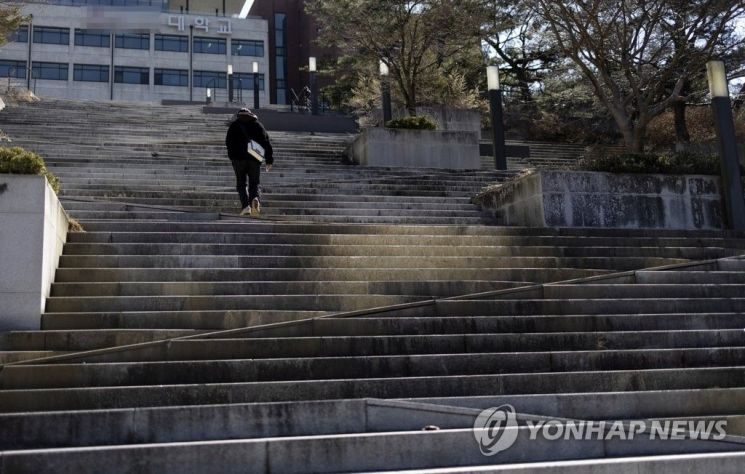
Local taxes incurred during the monetization of idle university land will be partially reduced. This is to improve financial conditions. Conditions for attracting international students will also be eased. When reorganizing the Education Internationalization Competency Certification System, evaluations will consider the characteristics of each university type to provide practical support for international students.
In addition, the government will ▲ ease conditions for attracting international students to a reasonable level in the future, and ▲ allow national universities that wish to expand educational and research facilities outside their location to install such facilities with the consent of the Minister of Education. Also, ▲ to cultivate customized talent desired by companies, the scope of contract departments for re-education of employees will be expanded.
A representative from the Prime Minister's Office stated, “We recognize that the crisis of local universities is directly linked to the risk of regional extinction, and we plan to promptly implement follow-up measures related to this regulatory improvement plan,” adding, “We will continue to make efforts to strengthen the competitiveness of local universities.”
© The Asia Business Daily(www.asiae.co.kr). All rights reserved.


















