Fare on Shinbundang Line to increase by up to 450 KRW from the 7th next month
One-way fare from Gwanggyo Station to Sinsa Station will be 4,100 KRW
"Commuting on the crowded train is tough enough, now we have to pay 8,000 KRW?"
Fares for the Shinbundang Line, which passes through Gangnam in Seoul and Pangyo and Gwanggyo in Gyeonggi Province, will increase by up to 450 won (based on transportation card) starting from the 7th of next month. A one-way trip from Gwanggyo Station, the end of the line, to Sinsa Station will cost 4,100 won.
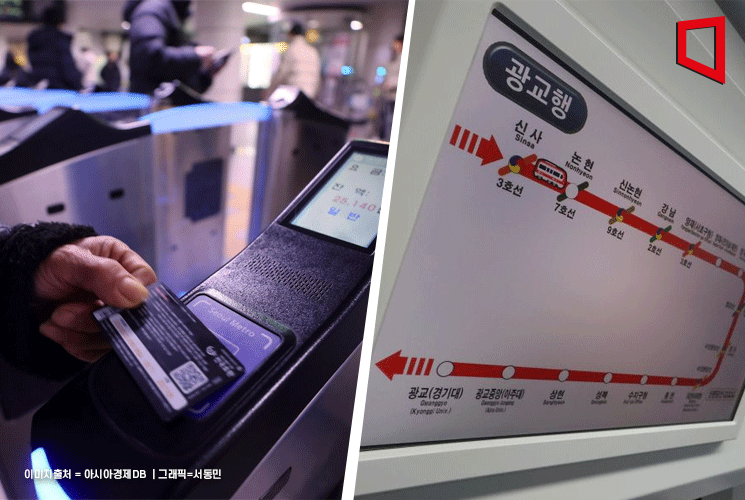
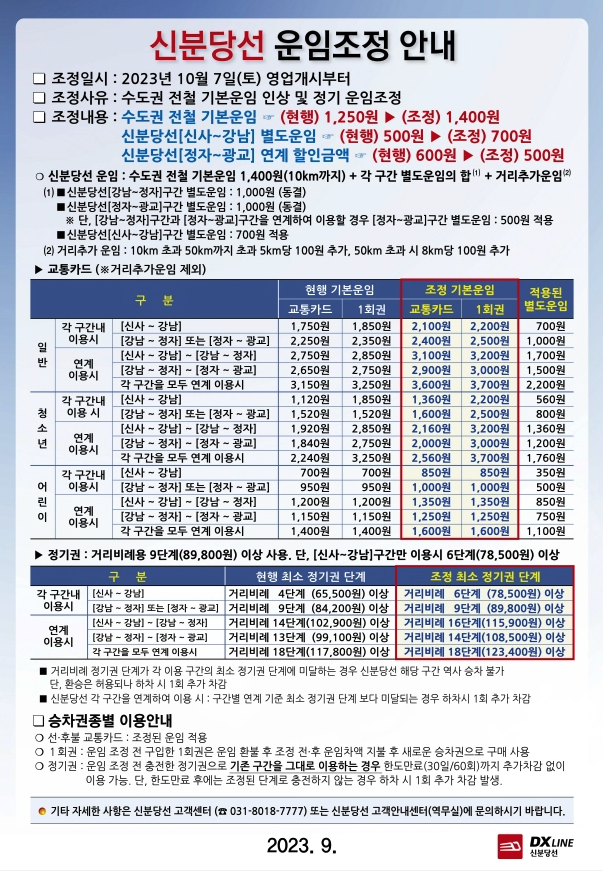
According to Shinbundang Line Corporation on the 19th, a fare adjustment plan containing these details was recently posted on their website. With the basic fare for metropolitan subway lines rising simultaneously, the basic adult fare will increase by 150 won from 1,250 won to 1,400 won. In addition, the Shinbundang Line raised separate additional fares charged for each section.
The separate fare for the Sinsa?Gangnam section will increase by 200 won from 500 won to 700 won. The 600 won discount for combined use of the Gangnam?Jeongja and Jeongja?Gwanggyo sections will be reduced by 100 won to 500 won.
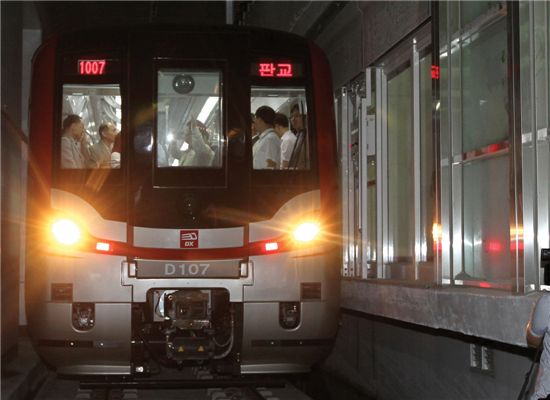 The fare adjustment for the Shinbundang Line comes about 1 year and 4 months after the fare adjustment following the opening of the Gangnam~Sinsa section in May last year. Since its opening in 2011, the Shinbundang Line has implemented fare adjustments four times in total: February 2012, August 2014, April 2019, and May 2022.
 [Photo by Asia Economy]
As a result, traveling directly from Gwanggyo Station to Sinsa Station at both ends of the line will cost 4,100 won. This amount includes ▲basic fare ▲section-specific additional fare ▲distance surcharge (an extra 100 won for every 5 km exceeding the basic distance of 10 km). A round trip will cost nearly 8,000 won.
This fare adjustment for the Shinbundang Line comes about 1 year and 4 months after the fare revision following the opening of the Gangnam?Sinsa section in May last year. Since its opening in 2011, the Shinbundang Line has implemented fare adjustments four times in total: February 2012, August 2014, April 2019, and May 2022.
Three Operators Running Different Sections... Complex Fare System
The reason the Shinbundang Line’s fare system is so complex is that it is a privately operated line and the three sections currently in operation are managed by different operators.
The Shinbundang Line is divided into three sections: 'Sinsa?Gangnam,' 'Gangnam?Jeongja,' and 'Jeongja?Gwanggyo.' The 'Gangnam?Jeongja' section, which started operating first in 2011, is managed by Shinbundang Line Corporation. The 'Jeongja?Gwanggyo' section is operated by Gyeonggi Railroad Corporation, and the 'Sinsa?Gangnam' section is run by Sae Seoul Railroad Corporation. Although there is a combined discount, additional fares set separately for each section must be paid.
While the advantage of the line is that it covers the distance from Gwanggyo to Sinsa in about 40 minutes, complaints about the high fares have also emerged. On online community cafes in the areas the line passes through, comments such as "This subway is like a taxi at this price," "I have to pay 8,000 won for a packed rush hour commute to Sinsa on a hellish subway," "It’s too expensive, so I take the nearby Suin Bundang Line or bus even if it takes longer," "How much does transportation cost when taking kids to Seoul once? It might be better to just drive," and "Commuting from Suji to Gangnam costs almost 200,000 won a month, and now it’s going up again" have been posted.
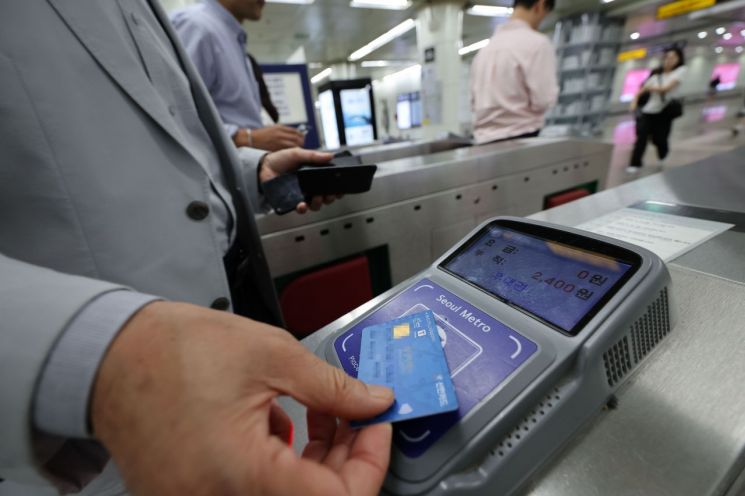 Meanwhile, there are also criticisms that the fare increase on the Shinbundang Line is contrary to the global standard emphasizing the role of public transportation in the era of climate crisis. Recently, various European countries have been selling passes that allow unlimited use of public transportation at reasonable prices.
 Photo by Yonhap News
Meanwhile, there are criticisms that the Shinbundang Line fare increase runs counter to the global standard emphasizing the role of public transportation in the era of climate crisis. Recently, various European countries have been selling unlimited-use passes at reasonable prices for public transportation.
Germany, Austria, and Paris, France are representative examples. Recently, Seoul City also announced the introduction of the 'Climate Companion Card,' which allows unlimited use of Seoul’s public transportation for 65,000 won per month. However, since the Climate Companion Card benefits apply only when boarding within Seoul and exclude the Shinbundang Line, it has been criticized as a half-hearted card.
© The Asia Business Daily(www.asiae.co.kr). All rights reserved.



















