Samsung Electronics Tops Foreigners' Net Buying in September
Q3 Operating Profit Likely to Miss Consensus... Improvement Expected from Q4
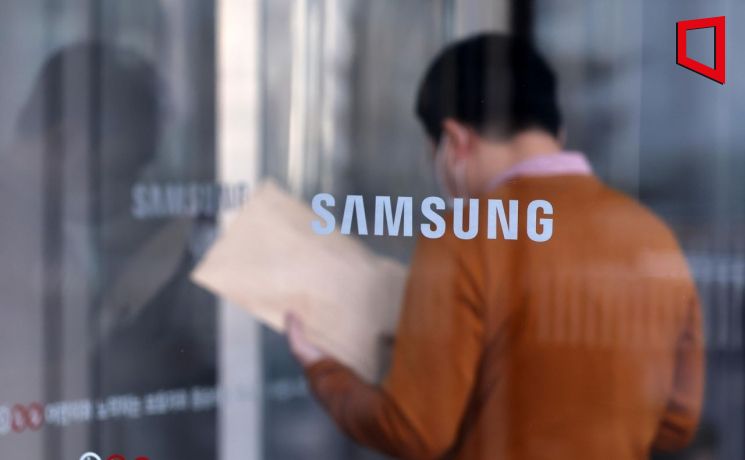
Samsung Electronics' stock price has been sluggish as the semiconductor division recorded a large-scale loss this year. Meanwhile, the third-quarter earnings are also expected to fall short of previous estimates. However, the securities industry views the poor performance as a buying opportunity.
According to the Korea Exchange on the 21st, Samsung Electronics' stock price fell 1.9% from 71,000 won to 69,600 won between the 1st of this month and the previous day. Although it settled in the 70,000 won range earlier this month, it dropped to the '60,000 won level' on the previous day after 13 trading days. It rose to 72,000 won on the 15th but gave up all gains after two consecutive days of decline.

The reason Samsung Electronics' stock price is struggling is due to growing expectations that third-quarter earnings will fall short of forecasts. According to FnGuide, the consensus for Samsung Electronics' third-quarter revenue is estimated at 68.1402 trillion won, down 11.2% year-on-year. Operating profit is expected to plunge 75.6% to 2.6473 trillion won, and net profit is projected to decrease 67.5% to 3.0443 trillion won.

The consensus for Samsung Electronics' third-quarter earnings has been steadily declining recently. The operating profit consensus was 4.7592 trillion won six months ago, 3.6964 trillion won three months ago, and 2.9666 trillion won one month ago. Notably, individual securities firms' operating profit forecasts are significantly below the consensus. Hyundai Motor Securities projects 2 trillion won, KB Securities 1.8 trillion won, and Kiwoom Securities 1.394 trillion won, with some estimates falling into the 1 trillion won range.
Investment views on Samsung Electronics are sharply divided. Foreign investors are net buyers, while individual investors are net sellers. Among the top net purchases by foreigners are Samsung Electronics (+647.7 billion won), NAVER (+380.5 billion won), and Rainbow Robotics (+107.2 billion won). Among the top net sales by individuals are Samsung Electronics (-1.3821 trillion won), NAVER (-194.3 billion won), and Rainbow Robotics (-103.4 billion won). Foreign and individual investors show completely opposite patterns.

Foreign investors are buying Samsung Electronics because they expect earnings to rebound from the fourth quarter. This is due to Samsung accelerating memory production cuts, which is expected to significantly reduce memory inventory. Dongwon Kim, a researcher at KB Securities, said, "Samsung Electronics is estimated to have increased DRAM and NAND production cuts by 15-25% in the third quarter compared to the second quarter," adding, "By the end of the year, memory semiconductor inventory is expected to decrease by more than 50% compared to the second quarter, leading to inventory normalization." He further stated, "From the fourth quarter, a clear trend of earnings improvement is expected, and considering the earnings outlook, it is judged to be a buying opportunity."
Yuak Park, a researcher at Kiwoom Securities, also said, "Although third-quarter earnings are weaker than expected, most of it is due to fixed cost burdens from large-scale production cuts, so the impact on short-term stock price movement will be limited," adding, "From now on, improvements in business fundamentals such as 'expansion of HBM sales and rebound in memory prices' will begin to support Samsung Electronics' stock price rise."
Meanwhile, individual investors still showed a clear preference for battery stocks. Among the top net purchases by individuals were POSCO Holdings, LG Energy Solution, and EcoPro BM. The slower-than-expected improvement in the memory semiconductor market due to weakened IT demand excluding artificial intelligence (AI) is also cited as a factor dampening individual investors' sentiment.
© The Asia Business Daily(www.asiae.co.kr). All rights reserved.



















