Lotte Shopping to Announce Mid-to-Long-Term Performance Targets and Six Core Strategies at CEO IR Day on the 19th
Targets 17 Trillion KRW in Sales and 1 Trillion KRW in Operating Profit by 2026
Focus on Key Commercial Area Market Leadership and Grocery Sector Dominance
"We will do our best with the hearts of employees and as a 'one team' to achieve an operating profit of 1 trillion KRW by 2026."
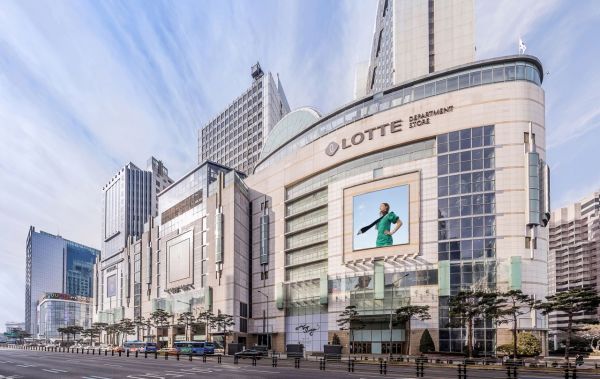
Lotte Shopping is embarking on a new challenge with the goal of achieving 17 trillion KRW in sales and 1 trillion KRW in operating profit by 2026.
Kim Sang-hyun, CEO (Vice Chairman) of Lotte Shopping, stated at the 'Lotte Shopping CEO IR Day' event held on the 19th at Lotte Hotel Seoul in Jung-gu, Seoul, "This year, we focused on improving profitability and efficiency, but next year, we will make customer-centric value our core management philosophy and make it the year to become 'the customer's first shopping destination.'"
At this event, where chief investment officers (CIOs) from major domestic asset management companies and securities analysts were invited, CEO Kim revealed Lotte Shopping's mid- to long-term performance goals and the core strategies to achieve them. The strategy is to create synergy among business divisions through six core strategies and respond quickly to rapidly changing customer trends to achieve the vision of being 'the customer's first shopping destination.'
The six core strategies are centered on innovation in existing business divisions: 'Rebuilding core commercial district market leadership,' 'Korea's No.1 grocery destination,' 'Optimization of e-commerce business and promotion of Ocado,' 'Turnaround of underperforming business divisions,' 'Expansion of Southeast Asian business' considering new growth engines, and 'Transformation into a retail tech specialized company.'
Rebuilding core commercial district market leadership is a strategy to leverage offline strengths to maximize customer experience and realize the number one shopping destination in each commercial district. Among existing stores, eight major stores in core commercial districts such as the main store, Jamsil store, and Suwon store will be strategically renewed first to become the number one store in each commercial district. The plan is to focus on shopping mall businesses with excellent growth potential and profitability, starting with the opening of the Songdo store in 2026 and continuously expanding to Gwangbok and Daegu.

The strategy for 'Korea's No.1 grocery destination' is also being accelerated. Lotte Shopping secured a stable profit structure last year through integrated operation of marts and supermarkets, and has strengthened cost reduction, quality, and price competitiveness starting with product code integration. CEO Kim said, "Through integrated sourcing and product development, we have been able to offer customers a wider variety of products and cost-effective items," adding, "In the second half of this year, we plan to open a new type of store that offers special customer experiences and specialized products." In the future, by building an integrated next-generation system, IT and logistics-related costs will be further reduced to improve profitability.
In e-commerce, the focus is on strengthening internal capabilities through a profitability-centered business strategy using specialized malls that leverage Lotte's distribution strengths. Vertical specialized malls centered on beauty, luxury, fashion, and kids categories reflecting customer lifestyles will be reinforced, and the product range will be continuously expanded.
Based on the partnership with Ocado Solutions signed last year, a total of six smart logistics automation centers (CFCs) will be established by 2030. The first CFC will be built in Busan, with construction starting at the end of this year and opening planned for 2025. When all six CFCs are fully operational, the goal is to achieve approximately 5 trillion KRW in sales. Plans include unifying product codes, improving cost of goods sold, and enhancing freshness to increase CFC utilization rates and improve the grocery business structure.
For business divisions requiring performance improvement such as home shopping and Hi-Mart, the approach is not only to focus on sales but also to implement differentiated services that provide necessary services from the customer's perspective. Hi-Mart will commercialize an integrated online and offline home total care service to provide a 'one-stop care service.' It plans to improve profitability by expanding private brand (PB) and global product offerings preferred by customers and reorganizing offline stores. Home shopping will innovate its business through efficient operations by expanding new content and commerce broadcasts favored by MZ generation (Millennials + Generation Z) customers, such as the Bellygom business, and reducing inefficient product categories.
Overseas business will expand mainly in Southeast Asia. Lotte Shopping has continuously expanded its Southeast Asian business over the past 17 years. On the 22nd of this month, it plans to grand open 'Lotte Mall Westlake Hanoi,' a complex combining the largest premium shopping mall, mart, hotel, aquarium, and cinema in Hanoi, Vietnam. Including Westlake, Lotte Shopping currently operates three department stores, 66 marts, and one complex mall mainly in Vietnam and Indonesia. A large-scale complex project concentrating Lotte's capabilities is also under development in Eco Smart City, Ho Chi Minh, Vietnam.
Along with improvements in existing businesses, the 'transformation into a retail tech specialized company' as a new growth engine is a strategy to create new revenue through B2B new businesses such as linking AI technology with distribution business and promoting data commerce, using Lotte's largest domestic asset of 42 million customer data.
They plan to develop an integrated media platform business that provides personalized advertising solutions by merging data assets with ad tech. Using the group's integrated data platform and online and offline media within the group, they will provide advertisers with high advertising effectiveness and consumers with customized marketing services. A generative AI promotion organization specialized in distribution will be formed to gradually launch services that maximize efficiency across retail, such as automated ad production and AI-based customer consultation. Lotte Shopping signed an MOU with AI startup 'Upstage' this month to this end. They expect generative AI to enable cost reduction, productivity improvement, and additional revenue generation, and plan to use it as a foundation for new business promotion.
Lotte Shopping also focuses on ESG (environment, social, governance) management for a sustainable company. They presented the 2040 carbon neutrality roadmap as an ESG promotion strategy and plan to practice carbon neutrality by reducing greenhouse gas emissions by 40% compared to 2018 by 2030, converting 100% of all business sites to renewable energy by 2040, and achieving zero carbon emissions throughout the entire supply chain by 2050. Through the integrated ESG campaign brand RE:EARTH, they are promoting various ESG activities tailored to the characteristics of distribution companies, such as developing eco-friendly products and dedicated spaces, introducing eco-friendly energy, and co-prosperity with partners.
© The Asia Business Daily(www.asiae.co.kr). All rights reserved.


















