Surging Dining Prices... Jajangmyeon Records a 10.98% Increase Rate
The prices of eight representative dining-out menu items, including Jajangmyeon and Gimbap, have sharply increased. This is expected to add to consumers' burdens ahead of the Chuseok holiday.
Now, in the Seoul area, one must pay 7,000 won to eat a bowl of Jajangmyeon. Kalguksu is priced at 9,000 won, and Samgyetang is approaching 17,000 won.
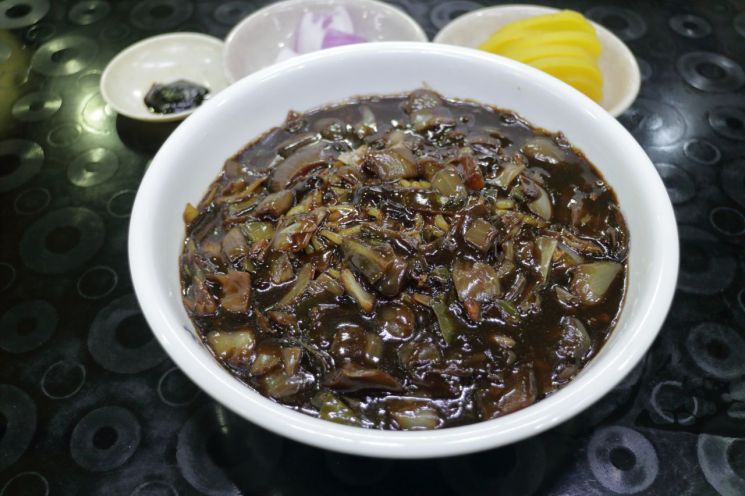
According to the Korea Consumer Agency's price information portal 'Chamgagyeok' on the 17th, the prices of eight popular dining-out items in Seoul last month rose by more than 10% compared to the same month last year.
The item with the highest price increase was Jajangmyeon. The average price of one bowl of Jajangmyeon, which was 6,300 won in August last year, rose by 10.98% to 6,992 won in August this year. Gwangju (6,800 won), Jeonnam (6,778 won), Jeju (6,750 won), and Gangwon (6,722 won) also recorded prices in the high 6,000 won range.
Samgyetang rose by 8.95%, from 15,462 won to 16,846 won, and Bibimbap increased by 7.96%, from 9,654 won to 10,423 won.
Additionally, prices of Naengmyeon (6.96%), Kalguksu (6.39%), Gimbap (5.54%), Kimchi Jjigae Baekban (4.85%), and 200g of Samgyeopsal (4.28%) also increased.
Among the eight items, five?Bibimbap, Jajangmyeon, Samgyetang, Kalguksu, and Gimbap?saw price increases compared to July this year as well.
Among 32 processed food items, prices of 18 items, including sugar (14.7%), cheese (13.6%), and cola (6.3%), rose in August compared to the previous month.
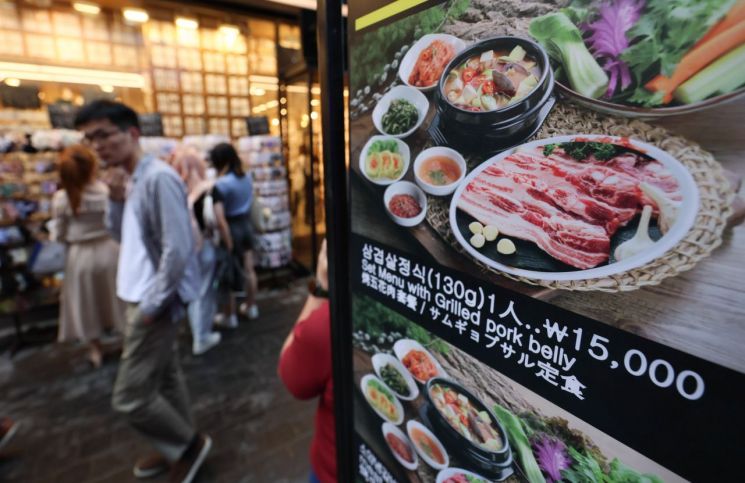
Sugar prices increased due to price hikes from major manufacturers, while cola and cheese prices were affected by changes in discount promotions by distribution companies.
According to the Korea Price Survey price trends, the prices of flour and cooking oil have risen by 38.8% and 30.6%, respectively, compared to two years ago.
According to Statistics Korea's recently released 'August 2023 Consumer Price Trends,' the consumer price inflation rate in August rose back to the 3% range after three months.
The rise in international oil prices significantly reduced the decline in petroleum product prices, and the heavy rains and heatwaves that continued last month caused fruit prices to surge, increasing the overall inflation rate compared to the previous month.
The Consumer Price Index stood at 112.33 (2020=100), up 3.4% from the same month last year. This is the highest rate in four months since April (3.7%).
© The Asia Business Daily(www.asiae.co.kr). All rights reserved.
!["The Woman Who Threw Herself into the Water Clutching a Stolen Dior Bag"...A Grotesque Success Story That Shakes the Korean Psyche [Slate]](https://cwcontent.asiae.co.kr/asiaresize/183/2026021902243444107_1771435474.jpg)

















