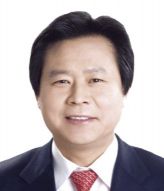
 Kang Ki-yoon, member of the People Power Party
As the number of foreigners receiving benefits from long-term care insurance is increasing faster than that of nationals, it has been found that Chinese nationals account for an overwhelmingly high proportion.
According to the 'Status of Foreigners Recognized for Long-Term Care Insurance' data submitted by the National Health Insurance Corporation to Kang Ki-yoon, a member of the Health and Welfare Committee of the National Assembly from the People Power Party, the number of foreigners recognized for long-term care insurance, which was 1,786 in 2018, increased to 2,284 in 2019, the early stage of the COVID-19 outbreak, and further to 3,564 in 2022, showing an average annual growth rate of 18.9%.
Among all recognized foreigners, the proportion of Chinese nationals was 1,408 in 2018, accounting for 78.8%, and last year it was 3,041, representing 85.3% of the total 3,564 recognized foreigners. Following China were the United States with 241 (6.8%), Taiwan with 128 (3.6%), Japan with 58 (1.6%), and Canada with 26 (0.7%).
In particular, looking at the health insurance qualification status of foreigners recognized for long-term care insurance last year, only 18 (0.5%) were workplace subscribers, but the number of foreign dependents receiving benefits from long-term care insurance was a staggering 1,904, accounting for 53.4% of all foreign long-term care insurance beneficiaries.
Among foreigners recognized for long-term care insurance, 918 (25.8%) were heads of households as regional subscribers, and 719 (20.2%) were household members. Females numbered 2,431 (68.2%), which was higher than males at 1,133 (31.8%).
Regarding the average benefit usage per person among foreigners recognized for long-term care insurance, it increased from 10,397,850 KRW in 2018 to 11,747,728 KRW in 2022, showing an average annual growth rate of 3.1%. In contrast, the average benefit usage per person for nationals was 11,459,595 KRW in 2022, which was lower than that of foreigners, and the average annual growth rate was also lower at 2.6%.
Assemblyman Kang Ki-yoon emphasized, "In a situation where the financial crisis of health insurance and the burden of health insurance premiums are increasing the medical expenses burden on the public, it is undesirable for our social insurance systems such as health insurance and long-term care insurance to become targets of concerns about foreigners exploiting the system or controversies over free-riding." He added, "More effective and thorough management and institutional improvements must be made to eliminate free-riding."
© The Asia Business Daily(www.asiae.co.kr). All rights reserved.
![Clutching a Stolen Dior Bag, Saying "I Hate Being Poor but Real"... The Grotesque Con of a "Human Knockoff" [Slate]](https://cwcontent.asiae.co.kr/asiaresize/183/2026021902243444107_1771435474.jpg)















